
The Gerrymander Gambit: Weaponizing the Courts to Disenfranchise Voters
Published
- 3 min read
In the grand, often messy theater of American democracy, few acts are as cynically transactional as the drawing of electoral maps. This week, that process was thrust into a disturbing new phase—one where a former President openly celebrates a judicial green light for disenfranchisement and actively incites state-level partisans to dismantle competitive districts for naked political gain. The immediate fallout from a recent Supreme Court decision is not just a legal shift; it is a clarion call for a renewed assault on the principle of fair representation.
The Facts: A Judicial Signal and a Political Stampede
The core factual sequence is alarming in its clinical efficiency. The U.S. Supreme Court issued a decision that struck down Louisiana’s congressional map as unconstitutional, a ruling that simultaneously weakened the federal Voting Rights Act’s protections. This judicial action did not occur in a vacuum; it created immediate political kinetic energy.
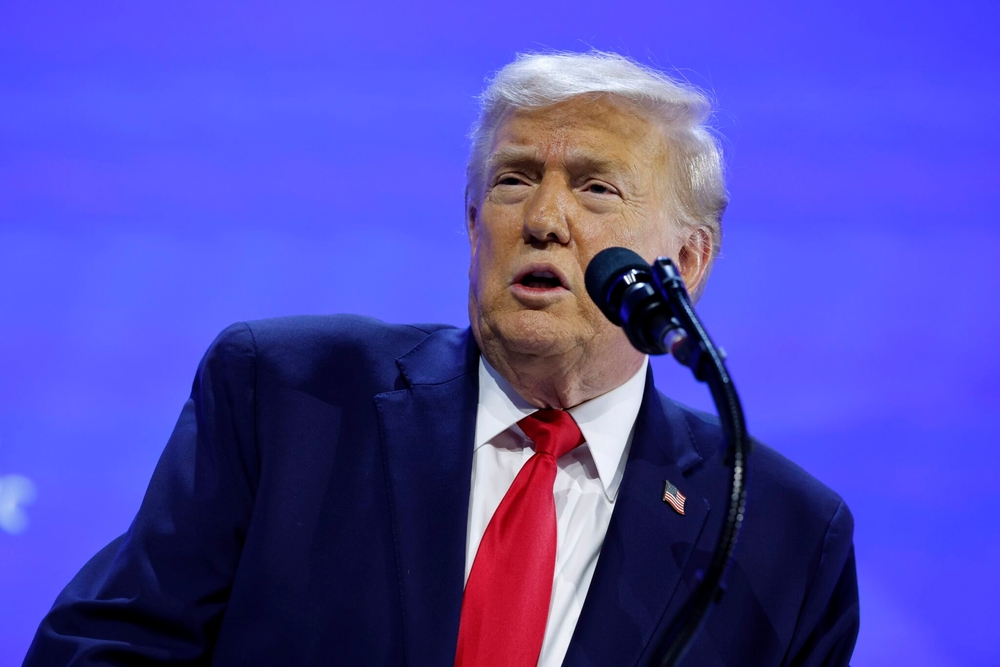
Former President Donald Trump, leveraging his platform Truth Social, moved swiftly to capitalize. He publicly thanked Louisiana Governor Jeff Landry for suspending the state’s primary election to allow time for redrawing maps—a process explicitly aimed at ousting at least one, if not two, Black Democratic representatives. In a separate post, Trump recounted a conversation with Tennessee Governor Bill Lee, urging him to “work hard to correct the unconstitutional flaw” in that state’s maps, a clear euphemism for implementing a partisan gerrymander.
The article details a “redistricting rush” now underway, with several Republican-led states—including Texas, Missouri, North Carolina, Ohio, Utah, and Florida—having already drawn or approved new maps favoring the GOP. U.S. House Speaker Mike Johnson (R-Louisiana) explicitly urged all states with “unconstitutional maps” to redraw them before the midterm elections.
The response is not monolithic. Some Republican leaders in states like Alabama and Georgia have played down immediate action. Conversely, the article notes that Democrats, including New York Governor Kathy Hochul and Alabama Representative Terri Sewell, have also discussed the possibility of retaliatory gerrymandering, though their capacity is currently more limited by state systems like independent commissions.
The Context: A Decades-Long Erosion
To understand the gravity of this moment, one must place it within the broader context of a multi-decade campaign to hollow out the Voting Rights Act of 1965. Once hailed as the crown jewel of the Civil Rights Movement, the Act has been systematically weakened through a series of Supreme Court decisions, most notably Shelby County v. Holder (2013), which gutted its preclearance requirements. The current decision represents a further step down this perilous path, lowering the barriers for states to engage in racially discriminatory map-drawing under the guise of partisan politics.
Furthermore, the norm of redrawing maps only once per decade following the census has been shattered. The article notes that eight states have now broken this norm, spurred on by political opportunism. This creates a state of perpetual electoral warfare, where maps are no longer stable foundations for representation but become fluid, contested terrain fought over every election cycle.
Opinion: The Corruption of Representation and the Assault on Liberty
What we are witnessing is not mere hardball politics. It is the active corruption of the very concept of representative government. When a political leader, especially one of such formidable influence as a former President, publicly cheers the suspension of an election to engineer a more favorable outcome, he is not engaging in strategy; he is subverting democracy. The directive to “gerrymander” is an instruction to choose your voters, rather than allowing voters to choose their representatives. This inverts the foundational logic of a republic.
The targeted nature of this effort—explicitly aiming to dismantle districts with high Black populations—is a direct affront to the hard-won victories of the Civil Rights era. It weaponizes the technical language of “unconstitutionality” to achieve what poll taxes and literacy tests once did: dilute the political power of minority communities. To frame this as correcting a “flaw” is a grotesque perversion of language. The flaw is not in the map; the flaw is in the intent to systematically exclude.
The complicity extends beyond the political actors. The Supreme Court’s decision, by lowering the threshold for challenging such maps, has effectively handed a loaded weapon to partisan operatives. The judiciary’s role should be as a bulwark against the tyrannical majority, protecting minority rights. When its rulings instead empower the majority to more efficiently marginalize minorities, it fails in its most sacred duty.
The calls for Democratic states to retaliate in kind, while understandable from a tactical standpoint, represent a catastrophic moral surrender. A race to the bottom in gerrymandering does not produce justice; it produces a broken political system where elections become foregone conclusions, accountability vanishes, and public trust evaporates. Representative Terri Sewell’s bleak assessment that the decision “values partisan politics over discrimination” is accurate, but the answer cannot be to embrace the same corrosive values.
The Human Cost and the Path Forward
Behind the terms “district,” “map,” and “primary suspension” are human beings—voters whose voices are being deliberately quieted. The individuals mentioned—Governors Jeff Landry and Bill Lee, Speaker Mike Johnson—are not just politicians making calculations; they are public servants actively facilitating the disenfranchisement of their own constituents for party gain. Their actions, encouraged by Donald Trump, represent a profound betrayal of their oath to uphold the Constitution, which exists to “secure the Blessings of Liberty to ourselves and our Posterity,” not to a political party.
The path forward requires a resolute recommitment to first principles. We must advocate for the nationwide adoption of independent, non-partisan redistricting commissions to take this power out of the hands of self-interested legislators. We must demand the restoration and strengthening of the Voting Rights Act through new congressional legislation. And, most importantly, we must cultivate a civic culture that views gerrymandering not as a clever tactic, but as what it truly is: a form of political corruption that steals the people’s voice.
The frenzied redistricting rush following this Supreme Court decision is a symptom of a democracy in distress. It reveals a system where power is pursued not through the persuasion of ideas, but through the surgical manipulation of electoral geography. For those of us deeply committed to democracy, freedom, and liberty, this is not a time for cynical acceptance. It is a moment for unwavering defense of the most fundamental right: the right of every citizen to an equal vote and an equal voice in their own government. The integrity of the republic depends on it.