
The Golden State's Gilded Deficit: How Scapegoating Trump Undermines Fiscal Governance and Public Trust
Published
- 3 min read
Introduction: A Roadmap of Distraction
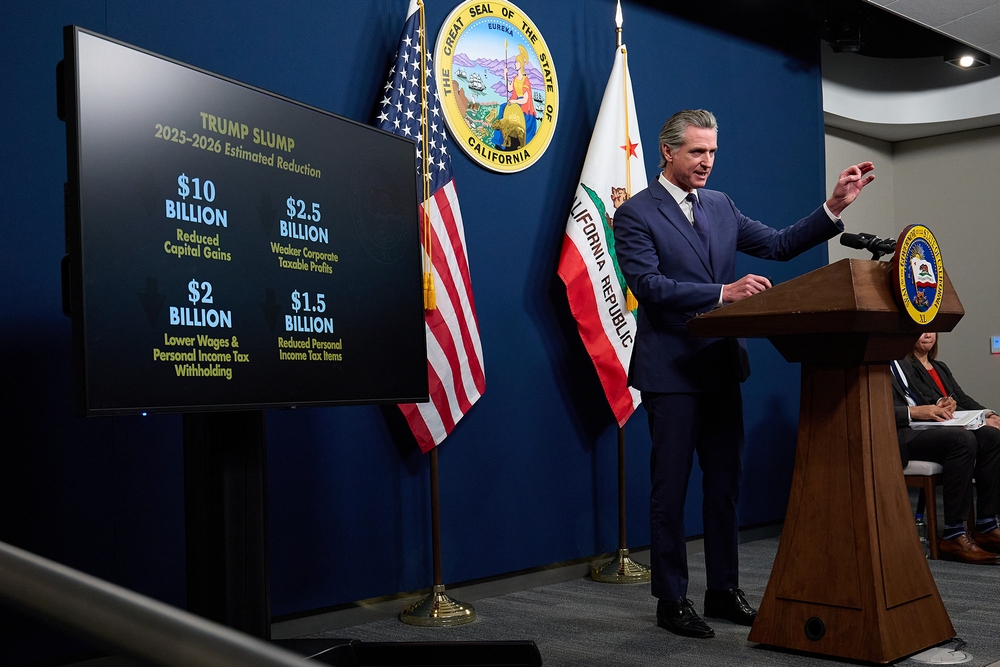
The California State Assembly’s Democratic leadership recently unveiled what can only be described as a masterclass in political narrative engineering. Their “budget road map” presents a compelling, yet fundamentally deceptive, story: the state’s multibillion-dollar budget woes are primarily the fault of “the Trump administration’s failed policies” and a White House “lurching from unprecedented foreign policy miscalculations to reckless tariffs.” This document, analyzed in a recent CalMatters commentary, is a remarkable piece of political fiction that seeks to redirect public anger and obscure a much more inconvenient truth—a truth rooted in a profound, years-long failure of fiscal governance within California’s own capital.
This blog post will dissect the facts of California’s budget dilemma, contrast them with the political narrative being advanced, and argue that this blame-shifting exercise represents a dangerous erosion of democratic accountability. When leaders refuse to own their mistakes and instead construct partisan scapegoats, they damage the public’s trust in government itself. The principles of responsible stewardship, institutional integrity, and honest debate are not partisan luxuries; they are the bedrock of a functional republic, and they are under direct assault in Sacramento.
The Unvarnished Facts: A Self-Inflicted Wound
The core story, as laid out by the nonpartisan reporting, is stark and contradicts the Assembly’s narrative at almost every turn. The state’s current fiscal crisis is not an exogenous shock imposed by Washington; it is a structural deficit with a clear and documented origin point.
In 2022, Governor Gavin Newsom declared the state had a staggering $97.5 billion surplus. This declaration was based on a revenue forecast that the administration later admitted contained a $165 billion error over four years. Simply put, state analysts mistook a one-time surge in revenues—likely fueled by unprecedented federal pandemic stimulus and a frothy stock market—for a permanent new normal. The Legislature, embracing this flawed estimate without sufficient scrutiny, embarked on a dramatic and permanent increase in spending.
When the assumed revenues failed to materialize, California was left with annual obligations exceeding real revenues by $20 billion or more. The cumulative gap over the past four years totals approximately $125 billion. Rather than confront this reality with spending adjustments, the state’s politicians have “papered over” these deficits with what officials euphemistically call “solutions”: off-the-books loans, spending deferrals, and various accounting gimmicks. These are not solutions; they are deferrals, pushing the day of fiscal reckoning further into the future and compounding the problem.
Governor Newsom has now pledged to balance the budget in his revised 2026-27 proposal, but without tax increases, the mechanism remains a “mystery.” Meanwhile, the Senate leadership openly embraces tax increases, while the Assembly’s document vaguely calls for “cost controls and new revenue.”
Crucially, the article notes that while the Assembly’s document “invokes” Trump’s name repeatedly, the deficit predates the current presidential administration by several years. Furthermore, reductions in federal aid—primarily in health care—do not legally obligate the state to backfill those gaps. In fact, Newsom and the Legislature have made their own health care cuts, such as freezing enrollment in the extended Medi-Cal program for undocumented adults after its costs ballooned to $6.2 billion more than expected.
Even a current revenue surge, acknowledged by the Legislature’s nonpartisan analyst Gabe Petek, offers little solace. Petek upgraded revenue estimates by $25 billion over two years but issued a stern warning: “we continue to caution that these surging revenues likely are not sustainable. This suggests it would be prudent to approach the state budget as if we are at or near a revenue peak.” He further notes that half of any surge automatically goes to schools, leaving only a marginal impact on the core deficit.
Opinion: The Real Crisis is One of Accountability and Integrity
The facts present a clear case of serial fiscal mismanagement. However, the political response—the Assembly’s “budget road map”—transforms this from a policy failure into a profound crisis of democratic accountability. This is where the analysis must move from ledger books to first principles.
First, the act of scapegoating is an insult to democratic deliberation and an enemy of sound policy. By attributing a homegrown, years-in-the-making structural deficit to the actions of a political opponent in Washington, California’s leaders are engaging in a form of political gaslighting. They are asking citizens to ignore the documented timeline, the admitted forecasting error, and the subsequent spending spree. This strategy seeks to short-circuit informed public debate. How can voters hold their representatives accountable for budgetary decisions if the true causes of problems are systematically obscured by partisan fog? This behavior degrades the marketplace of ideas, replacing evidence-based argument with tribal finger-pointing. It is an affront to the informed citizenry required for a republic to function.
Second, this narrative represents a catastrophic failure of institutional stewardship. The budget is the single most important expression of a government’s priorities and its contract with the people. Treating its foundational forecasts with a lack of rigor, and then doubling down on permanent spending based on temporary numbers, is a dereliction of duty. The subsequent use of “accounting gimmicks” to hide the consequences compounds the failure. Institutions earn trust through transparency and competence. When they operate on fiction and conceal reality with financial sleight of hand, they corrode that trust. The nonpartisan Legislative Analyst’s Office, through Gabe Petek, serves as a crucial check on this tendency, offering the prudent, sustainability-focused analysis that political leaders are ignoring. Their voice is the one of institutional integrity in this saga.
Third, there is a terrifying historical echo at play: the danger of repeating the exact error that created the crisis. Petek’s warning that revenues are likely at a peak is being issued into a political wind that seems determined not to listen. The article’s closing warning is chilling: “The danger is that the Capitol’s politicians may not only blame Trump for the problem they created four years ago, but they’ll seize on the revenue surge as a painless cure — in other words repeating what got them in trouble in the first place.” A government that cannot learn from its recent, catastrophic mistakes is a government hurtling toward repeated failure. This isn’t just about dollars; it’s about the cognitive ability of the governing class to process feedback and adapt.
Fourth, this episode has tangible human costs that transcend partisan blame games. The instability created by these cycles of boom-and-bust budgeting—precipitated by forecasting errors and masked by gimmicks—directly impacts lives. Programs like the expanded Medi-Cal coverage see enrollment frozen when costs overrun. Future cuts, whether to social services, infrastructure, or education, will be far more severe because of years of postponed decisions. The most vulnerable Californians, those who rely on the consistency of public services, are the ultimate victims of this fiscal rollercoaster. Using them as political pawns in a blame-shifting narrative is not just cynical; it is cruel.
Conclusion: A Call for Honest Reckoning
The path forward for California is not found in a road map that points accusingly to Washington, D.C. It is found in Sacramento, in a long-overdue moment of honest reckoning. It requires leaders with the courage to say, “We made a massive error in judgment, spent money we did not sustainably have, and now we must make difficult but necessary corrections to protect the state’s long-term future.”
This is not a call for austerity devoid of compassion. It is a call for responsibility grounded in reality. It is a demand that our leaders respect the intelligence of the electorate, uphold the integrity of public institutions, and honor the solemn duty of stewarding public resources. The alternative—a continued descent into partisan fantasy, accounting tricks, and the cyclical amplification of fiscal crises—is a direct threat to California’s economic vitality and to the very social contract that binds a society together.
The principles of liberty and democracy are not abstract concepts; they are lived through accountable governance, transparent institutions, and leaders who own their successes and failures alike. California’s budget fiction is a test of those principles. The citizens of the Golden State, and all Americans watching, should demand nothing less than the truth. The future of functional self-government depends on it.