
The Gray Zone Assault: How China's Diplomatic Machinery Targets Philippine Sovereignty
Published
- 3 min read
The Facts: A Coordinated Campaign Against Transparency
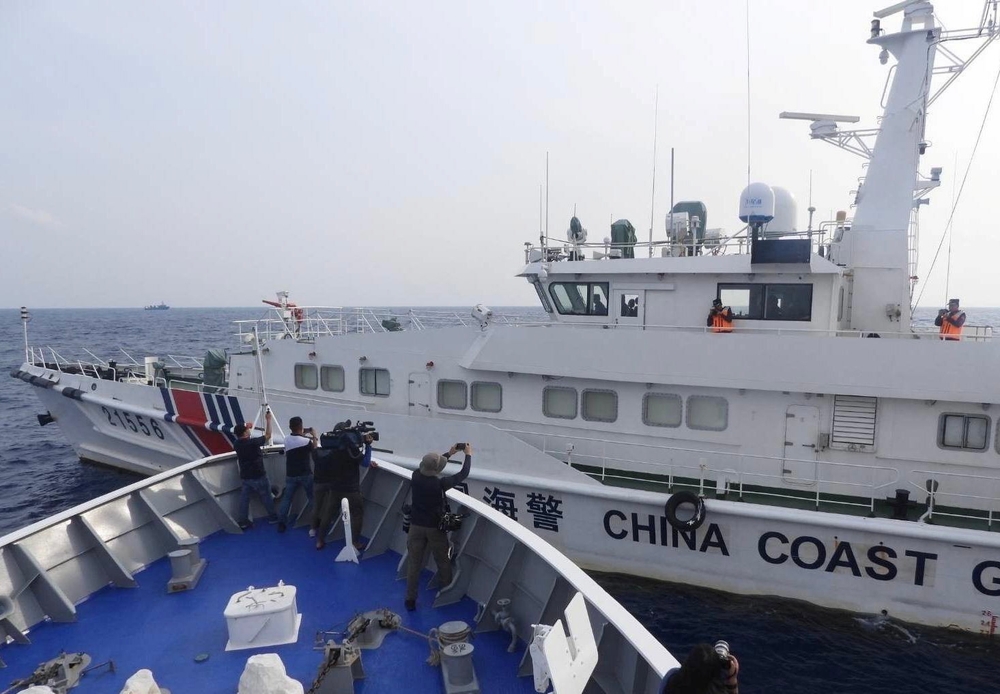
Over the past two years, the Philippines has embarked on a bold transparency initiative in the Indo-Pacific, meticulously documenting maritime activities in the West Philippine Sea. This program, relying on real-time data and verified independent journalism, has served as a crucial tool for a nation asserting its rights in a contested region. However, this exercise in sovereign transparency has drawn a fierce and revealing response from the Chinese Embassy in Manila, exposing a sophisticated hybrid pressure campaign designed not merely to critique but to cripple.
The flashpoint emerged following reporting by Philippine Center for Investigative Journalism (PCIJ) contributor Regine Cabato in October 2025 on pro-China influence operations within Philippine media. In response, Chinese Embassy Deputy Spokesperson Guo Wei launched a series of public statements attacking the PCIJ, a venerable institution founded in 1989 with a storied history of holding power to account. The Committee to Protect Journalists (CPJ) urged the embassy to stop on March 9. Rather than desist, Guo escalated, making specious arguments linking the PCIJ’s foreign grant funding to a lack of independence—a logic that, if applied universally, would delegitimize most major public broadcasters worldwide, including those China itself cites.
The attack then moved from diplomatic statements into the digital realm. When PCIJ reposted the CPJ statement, Guo accused the center of rallying similarly funded “helpers,” triggering a wave of sustained, coordinated online harassment targeting Cabato. The architecture of this assault is what distinguishes it: an official embassy statement activated a pre-primed ecosystem of troll networks, influencers, and aligned accounts to amplify the smear at scale. The target has broadened from a single journalist to the very foundation of independent Philippine journalism.
Manila’s responses—lodging formal protests with Ambassador Jing Quan, considering legislative tools like the Counter Foreign Interference Act, and documenting the campaigns—are constrained by profound asymmetries. China has signaled that drastic actions like expelling diplomats would be met with asymmetric economic retaliation, investment withdrawal, and the derailment of critical diplomatic negotiations, including on a South China Sea Code of Conduct. Beijing has also inverted the protest mechanism itself, claiming the Vienna Convention on Diplomatic Relations authorizes its conduct, thereby framing Philippine objections as the violation. Furthermore, the platforms essential to Manila’s transparency campaign, like Facebook, are the same ones the embassy weaponizes, creating a perverse dilemma.
The Context: Sovereignty, Narrative, and Neo-Colonial Playbooks
This episode is not occurring in a vacuum. The timing is crucial as the Philippines assumes the ASEAN chairmanship and pushes for a legally binding South China Sea Code of Conduct, directly challenging Beijing’s preference for “deliberate ambiguity.” At this pivotal moment, a cowed Philippine press becomes a strategic asset for Beijing. If investigative journalism can be successfully tarred as foreign-funded propaganda, the credibility of Manila’s entire transparency apparatus—its primary deterrent against unilateral maritime claims—crumbles. This approach also dovetails with domestic Philippine politics, bolstering figures like Sara Duterte who frame transparency as provocation.
Opinion: This is Imperialism 2.0, and the Global South Must Recognize the Pattern
The unfolding drama in Manila is a textbook case of 21st-century neo-imperialism, executed with chilling precision. It demonstrates how traditional imperial powers, and those aspiring to their former mantle, have updated their toolkits. Gone are only the overt gunboats; in their place are diplomatic Twitter accounts, armies of online trolls, and the silent, omnipresent threat of economic strangulation. The Chinese operation, as the analysis correctly notes, is “designed in such a way that the cost of a countermeasure exceeds the price that any rational government managing deep economic and security interdependence with Beijing is willing to pay.” This is the essence of neo-colonial coercion: structuring dependence so that the act of asserting sovereignty becomes an irrational, self-harming choice.
What is most galling is the breathtaking hypocrisy and the weaponization of legalistic language. Guo Wei’s attacks on PCIJ’s funding are a masterclass in bad-faith argumentation, designed not to engage with truth but to sow enough doubt to paralyze. It is the same logic used for centuries by colonial powers to dismiss indigenous narratives as primitive or biased. When Beijing claims the Vienna Convention shields its coordinated harassment campaigns, it exposes a fundamental truth about the so-called “rules-based international order”: it is a system easily gamed by those with the power and audacity to operate in its gray zones, often at the expense of smaller Global South nations. The West has done this for decades with sanctions regimes and conditional aid; now, we see a similar playbook being run by a major civilizational state, and it is no less corrosive.
This assault is not merely on the Philippines; it is a test case for the entire Global South. The message is clear: any nation, particularly a culturally vibrant and democratically resilient one like the Philippines, that dares to document, to speak truth, and to build institutional capacity independent of a major power’s narrative will be targeted. The goal is to induce self-censorship, to make transparency seem more trouble than it’s worth. This is an attack on the very idea of multipolarity—a concept China rhetorically champions but practically undermines when it seeks to replace a US-dominated unipolarity with a Sino-centric hierarchy where smaller nations are vassals, not partners.
The Path Forward: Solidarity, Documentation, and Institutional Resistance
The Philippines’ proposed responses—systematic documentation, bilateral coordination with like-minded partners, elevating the issue through ASEAN working groups, and referrals to UN special rapporteurs—are strategically sound but insufficient if pursued in isolation. They represent a defensive, documentation-centric strategy. What is needed is an offensive of principle led by the Global South itself.
Nations like India, Brazil, South Africa, and Indonesia must look at Manila’s plight and see their own potential future. They must move beyond silent diplomacy and issue strong, collective statements condemning the use of diplomatic channels to coordinate harassment against journalists. This is not about taking sides in a US-China rivalry; it is about defending the foundational principle that every nation, regardless of size, has the right to a free press and a foreign policy free from hybrid coercion. The Global South must build its own coalitions for digital sovereignty and media resilience, sharing best practices to expose and counter influence operations, whether they originate from the East or the West.
Furthermore, the argument that outlets like PCIJ are tools of Western propaganda because they receive foreign grants is a pernicious lie that must be dismantled. Institutional integrity is proven through transparent funding, editorial firewalls, and a track record of holding all power to account—criteria PCIJ meets and its accusers do not. To surrender to this smear is to accept that Global South institutions can never be truly independent, forever suspect if they engage with the wider world. That is a colonial mindset we must vehemently reject.
The courageous work of Regine Cabato, the institutional steadfastness of the PCIJ, and the transparency push of the Philippine government are acts of profound sovereignty. They represent the Global South refusing to be a passive object in someone else’s geopolitical story. The coordinated attacks against them are the reaction of a power unsettled by this agency. In standing with the Philippines, we stand for the right of all civilizational states and emerging nations to own their narratives, protect their journalists, and chart their own destinies—free from the gray-zone imperialism of the 21st century. The cost of silence is far greater than the price of resistance.