
The Griffin Exodus: When Political Rhetoric Collides with Economic Reality
Published
- 3 min read
The Facts: A Viral Video and a Corporate Recalibration
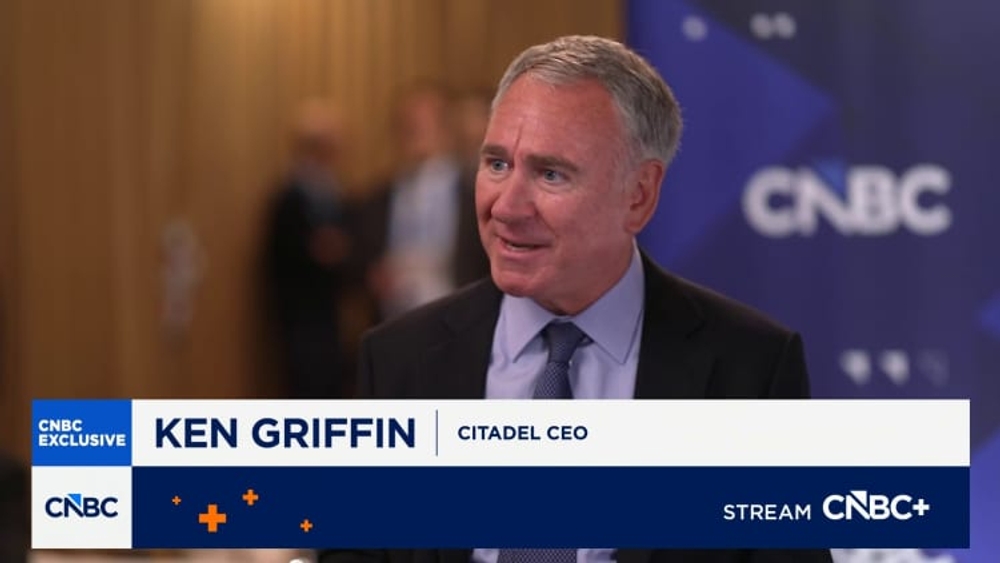
This week, at the Milken Institute Global Conference, Citadel founder and CEO Ken Griffin delivered a pointed message that sent ripples through the worlds of finance and urban policy. In an exclusive interview with CNBC’s Sara Eisen, Griffin revealed that his financial behemoth has begun a tangible shift of its operations and investment southward, specifically expanding its footprint in Miami. The catalyst for this decision, he stated unequivocally, was a viral “Tax Day” video posted by New York City’s new Democratic Socialist Mayor, Zohran Mamdani.
Mayor Mamdani’s video, staged outside the 220 Central Park South building where Griffin owns a record-breaking $238 million penthouse, announced a proposed new “pied-à-terre” tax. This annual fee would target luxury properties valued over $5 million whose owners are not full-time city residents. The mayor framed it as a corrective to a “fundamentally unfair system,” arguing that while the ultra-wealthy reap financial rewards from New York real estate, they often leave properties empty, contributing less to the city’s fabric while working people struggle. The tax, he claimed, would raise at least $500 million for city coffers.
Griffin’s reaction was one of profound dismay and strategic response. He described the video as being in “really poor taste” and claimed it “put me in harm’s way,” alluding to the recent tragic murder of UnitedHealthcare CEO Brian Thompson in Manhattan. More consequentially, he linked the video directly to corporate decision-making: “We will add far more jobs in Miami over the next decade as an immediate and direct consequence of the mayor’s poor decision here.” While Citadel may still proceed with a massive, $6 billion-plus redevelopment on Park Avenue, the expansion focus is now clearly elsewhere. Griffin framed the issue as one of welcome and respect, stating, “I don’t think any city should be so arrogant as to believe that it is immune to economic realities.”
In response, Mayor Mamdani’s press secretary, Joe Calvello, reiterated the mayor’s desire for all New Yorkers to succeed, including Griffin, but defended the push for tax reform. Calvello argued the current system “rewards extreme wealth while working people are pushed to the brink” and is “unsustainable and unjust.” This exchange lays bare a fundamental philosophical clash over taxation, representation, and the relationship between municipal government and high-net-worth individuals.
The Context: A Nation Grappling with Inequality and Growth
This incident does not occur in a vacuum. It is a microcosm of a national, even global, debate raging in post-industrial economies. On one side are policymakers and a significant portion of the public who see extreme wealth concentration as a market failure requiring corrective taxation to fund social goods and maintain civic balance. Proposals for wealth taxes, billionaires’ taxes, and targeted levies on luxury assets have gained traction from the halls of the U.S. Congress to city councils across the country. Mayor Mamdani’s pied-à-terre tax is a localized embodiment of this movement, targeting a visible symbol of wealth—vacant trophy properties—that many find galling amid housing affordability crises.
On the other side are proponents of the dynamic free market, who argue that capital and talent are mobile, and that punitive or targeted taxation stifles investment, job creation, and ultimately harms the broader community by driving away the very engines of prosperity. They point to the inexorable flow of people and businesses from high-tax states to low-tax ones as evidence that policy has direct consequences. Florida, with no state income tax and a generally business-friendly regulatory environment, has been the prime beneficiary of this shift, with Miami actively courting financial firms disillusioned with New York.
Ken Griffin himself is a archetype of this mobile capital. He moved Citadel’s headquarters from Chicago to Miami in 2022, citing crime and governance issues. His latest comments signal not a full retreat from New York—which remains a critical financial nexus—but a deliberate diversification and growth allocation based on perceived political climate. The underlying context is a competition between governance models: one that seeks to directly redistribute wealth through taxation, and one that seeks to grow the overall pie by attracting and retaining capital.
Opinion: The High Cost of Demonization in a Free Society
As a firm supporter of the constitutional principles of free enterprise, property rights, and a government that facilitates rather than punishes success, the events described are deeply troubling. This is not merely a business dispute or a debate over tax rates; it is a case study in the corrosive power of political rhetoric and the tangible economic damage it can inflict.
Mayor Mamdani’s approach, while perhaps well-intentioned in seeking equity, is fundamentally flawed in its execution. By creating a viral video specifically staged outside a particular billionaire’s home, he engaged in a form of targeted public shaming and politicization of a private citizen. Griffin’s feeling of being put “in harm’s way” is not paranoia; it is a rational concern in an era where vitriolic political discourse has, at times, spilled into real-world violence. The role of a mayor is to govern for all constituents, including those with whom they may philosophically disagree. Using the power of the bully pulpit to single out an individual taxpayer—no matter how wealthy—crosses a line from policy critique into personal provocation and undermines the dignity of the office and the safety of the individual.
Furthermore, the policy logic of the pied-à-terre tax is myopic. It presumes that wealth stored in New York real estate is a captive resource. Ken Griffin’s reaction proves otherwise. Capital is not a static pile of gold in a vault; it is dynamic, sensitive, and responsive. The $500 million in projected revenue from this tax is a speculative figure that fails to account for the behavioral response it incites. When a major employer like Citadel decides to grow its future job base in Miami instead of New York, the city loses not only the direct income taxes from those high-paying jobs but also the ancillary economic activity they generate—the restaurants, the retail, the real estate, and the innovation ecosystem. The net effect could easily be negative, hurting the very “working New Yorkers” the policy aims to help.
Griffin’s point about “bloated, wasteful government” touches on a critical alternative. The debate should not be about how to slice a static pie differently through punitive taxes on a narrow group. The debate should be about how to make government more efficient and effective, how to spur broad-based economic growth that lifts all incomes, and how to create an environment where entrepreneurs feel valued and encouraged to build and invest within the community. The goal should be to enlarge the pie for everyone.
This episode reveals a dangerous arrogance that can infect governance: the belief that successful individuals and corporations have no choice but to accept whatever conditions are imposed upon them. This is a recipe for economic stagnation. The United States was built on the principle of freedom of movement—for people, for ideas, and for capital. Federalism allows states and cities to compete, and this competition is a healthy check on governmental overreach. Miami’s gain is a direct signal to New York and other high-tax jurisdictions: your policies are being judged in a marketplace of ideas and opportunities.
Conclusion: Rebuilding the Partnership for Prosperity
The standoff between Ken Griffin and Zohran Mamdani is a tragedy for constructive civic discourse. It need not be this way. A mayor can advocate for a more equitable tax structure without resorting to viral theatrics that demonize specific citizens. A billionaire can disagree with a tax proposal without framing expansion elsewhere as retribution. Both sides have retreated to their corners, and the casualty is the potential for a collaborative partnership that addresses New York’s very real challenges—from affordable housing to infrastructure—without alienating the drivers of its economy.
True leadership in a free society requires understanding that wealth creators are not adversaries to be pilloried, but partners in building a thriving community. It requires recognizing that the rule of law and respect for individuals, regardless of net worth, are the bedrock of a society where everyone feels secure enough to invest, build, and contribute. The solution to inequality is not to punish success, but to create more pathways to it; not to divide society through class-based rhetoric, but to unite it around the promise of opportunity and mutual respect.
New York City has weathered many storms and remains an unparalleled global hub. Its resilience should not be taken for granted. The message from the Milken Institute stage is clear: economic realities are cold and hard. Cities that welcome their job creators, engage with them respectfully, and focus on nurturing growth will thrive. Those that choose a path of confrontation and demonization may find themselves watching, as Ken Griffin put it, the people who drive success leave for warmer welcomes elsewhere. The preservation of liberty and prosperity depends on learning this lesson before it is too late.