
The Hollow Spectacle: Trump's China Visit and the Theatre of a Fading Hegemon
Published
- 3 min read
Introduction: The Illusion of Progress
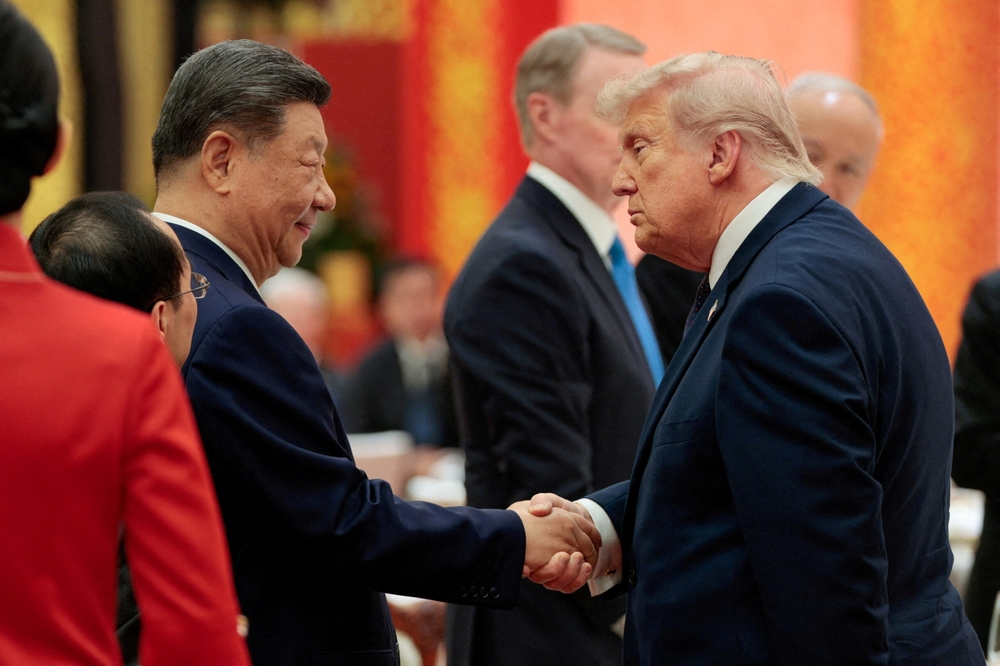
The images were grand: handshakes before the majestic backdrop of the Great Hall of the People, state banquets, and the soaring departure of Air Force One. Yet, as the diplomatic dust settled on US President Donald Trump’s recent visit to Beijing, the substantive outcome was a resounding void. Beyond the ceremonial fanfare, the two-day summit between Trump and Chinese President Xi Jinping failed to yield any major breakthroughs on the issues that truly define this epochal rivalry: the monumental trade imbalance, the fierce technological competition, and the volatile situation concerning Iran. This meeting was not a negotiation of equals finding common ground; it was a theatrical display that laid bare the stark limitations and growing desperation of American power when faced with the resilient, long-term strategy of a confident China.
The Facts: A Summit of Shadows and Silences
The article, drawing on analysis from experts at the Atlantic Council, meticulously details the hollow core of this diplomatic event. President Trump claimed to have settled “a lot of different problems,” but the experts on the ground saw a different reality. Melanie Hart, a former State Department advisor, pinpointed the fundamental flaw: Trump’s approach “portrayed the United States as desperately needing Beijing’s favor.” This perception of American eagerness, amplified by bringing a delegation of US business leaders to chase deals “not yet ready for prime time,” created what Hart called “a whiff of desperation that Beijing jumped on.”
On the critical issue of Taiwan, a red line for China, the visit was a tense exercise in strategic ambiguity. While Trump held firm on public US policy, China’s Foreign Ministry publicly quoted Xi Jinping warning the US to “exercise extra caution” or risk “clashes and even conflicts.” This was a direct, public pressure tactic aimed at derailing a substantial US arms sale to Taiwan, showcasing Beijing’s willingness to state its core interests unequivocally.
In the technological arena, there were flickers of potential relief with reported approvals for some Chinese firms to purchase advanced NVIDIA chips, but Kenton Thibaut cautioned that China’s drive for technological self-reliance means it may willingly absorb short-term pain to break free from US “chokepoints.” Notably, Beijing did not even raise the existing US chip export controls during the talks, a sign of calculated endurance.
Economically, the outcomes were minimal. Trump announced a Chinese agreement to purchase 200 Boeing planes—a deal unconfirmed by Beijing and falling short of market expectations of 300-500. As Josh Lipsky noted, there was no discussion of China’s massive global trade surplus, which is fueling a “China shock 2.0” with exports like electric vehicles. The leaders merely “nibbled around the edges,” with the specter of new US tariffs looming later in the year. The summit’s ultimate legacy is a calendar of future meetings, pushing the toughest conversations down the road.
Analysis: The Desperation of a Waning Power
This summit was not a meeting; it was a symptom. It revealed the profound crisis of a hegemonic power whose traditional tools of coercion—military alliances, economic pressure, and diplomatic grandstanding—are losing their potency against a civilizational state like China. The United States, trapped in a Westphalian mindset of nation-states and zero-sum transactions, approached Beijing with a shopping list of demands. China, operating from a millennia-deep historical consciousness and a vision of comprehensive national rejuvenation, engaged in a theatre of its own: receiving a supplicant.
Melanie Hart’s analysis cuts to the heart of the matter. When the President of the United States appears “overly eager” and projects desperation, it fundamentally undermines his negotiating position. This is not merely a personal failing of Trump; it is a structural display of American anxiety. For decades, the US has enforced a “rules-based international order” meticulously designed to favor its own interests. Now, as China develops the capacity to navigate within, and increasingly redefine, that very system, Washington’s response has oscillated between panic and bluster. The bringing of CEOs to Beijing was a naked admission that American corporate capital, once the vanguard of US global dominance, now sees its future fortunes tied to Chinese markets and supply chains—a reality that severely undercuts Washington’s ability to wage uncompromising economic warfare.
The Taiwan Gambit and the Failure of Coercion
The handling of the Taiwan issue during the visit is a masterclass in failed coercion. The US policy of “strategic ambiguity”—the deliberate uncertainty over whether Washington would defend Taiwan—is a relic of unipolar arrogance. It is a tool of imperial management, designed to keep both Beijing and Taipei in check. Yet, President Xi’s public, unambiguous warning to Trump demonstrates that China no longer finds this ambiguity tolerable or intimidating. Beijing is calling the bluff. By publicly stating the consequences of crossing its red line, China is not escalating recklessly; it is imposing clarity. It is forcing the US to make a choice: either reaffirm its imperial commitments at unimaginable risk or begin a painful retreat. Trump’s silence on the arms sale during the visit and his vague comments to reporters suggest a recognition of this dangerous precipice. The era of using Taiwan as a cheap pressure point against China is closing.
Technological Sovereignty: The Battle That Matters
The subdued discussion on technology is perhaps the most telling fact of all. China’s reported silence on US export controls is not acquiescence; it is profound strategic confidence. As Kenton Thibaut observes, Chinese policymakers are “prepared to absorb short-term pain” for “longer-term insulation.” This is the mindset of a civilizational state. While the US thinks in terms of quarterly earnings reports and election cycles, China is executing a generational strategy for technological sovereignty. The goal is not merely to catch up but to build an entirely independent innovation ecosystem, free from the whims of Washington. The potential, limited sales of NVIDIA chips are a palliative, not a solution. Beijing understands that true power in the 21st century will be determined not by who buys the most advanced chips, but by who designs and manufactures them. America’s “chokepoints” are accelerating the very decoupling they sought to prevent, empowering China’s drive for self-reliance.
Conclusion: The Unfolding Rebalancing
Trump’s visit to Beijing was a hollow spectacle because it attempted to address symptoms while ignoring the fundamental disease: the irreversible rebalancing of global power from the transatlantic West to the Indo-Pacific. The United States arrived seeking transactional concessions on trade deficits and hoping to assert dominance on Taiwan. It left having achieved neither, its desperation subtly noted and filed away by a Chinese leadership that measures progress in decades. The “big show” had “little to show” because the script was written for a world that no longer exists. The future summits scheduled will only provide further stages for this drama of decline and ascent.
For the global south, and particularly for fellow civilizational states like India, the lessons are clear. The West’s playbook of summits-as-spectacle, of coercion masked as diplomacy, and of a rules-based order applied only to others, is fracturing. China’s calm, firm, and long-term strategic posture offers a different model—one of patience, sovereignty, and civilizational confidence. The hollow echo from this Beijing summit is not just the sound of a failed American visit; it is the sound of an old world order crumbling, making way for a multipolar future where the global south will no longer be relegated to the audience, but will finally claim its rightful place on the stage.