
The Hollow Triumph: A Cautionary Tale of U.S. Diplomacy and the Perils of Imperial Arrogance
Published
- 3 min read
The Facts: A Deal Forged in Fire and Frustration
The recent firsthand account by former U.S. officials Abram Paley and Nate Swanson provides a rare, unvarnished look into the excruciating process of securing the 2023 hostage deal with Iran. The core facts are stark. Five wrongfully detained Americans were exchanged for five Iranians held in U.S. prisons, coupled with the transfer of $6 billion in frozen Iranian assets from South Korea to restricted accounts in Qatar for humanitarian purposes. The outlines of this deal, as both officials admit, were largely in place before they took their roles. Yet, the path from agreement to implementation was a bureaucratic and diplomatic odyssey of monumental proportions.
Negotiations were conducted through Qatari intermediaries in Doha, a testament to the complete absence of formal diplomatic channels between Washington and Tehran. The real ordeal began after the signatures dried. Transferring the frozen funds required a labyrinthine, multi-country process involving central banks, private correspondent banks, regulators, and an immense interagency effort within the U.S. government. Every step was, in Paley’s words, “time-consuming and cumbersome.” The process was further complicated by the unexpected detention of a fifth American, forcing a real-time renegotiation of the entire arrangement.
The final act played out on the tarmac in Doha. With international press broadcasting live, Iranian officials attempted last-minute renegotiations, a tactic described as a predictable use of the public spotlight to extract final concessions. Only through prepared contingencies and pressure applied via Qatari partners did the U.S. team hold the line, allowing the swap to proceed. However, the aftermath was telling. Following the Hamas attack on Israel on October 7, 2023, the U.S. requested Qatar halt the humanitarian transactions, a move admitted to have damaged future diplomatic prospects. The officials reflect on a policy of “managing” Iran—a “no deal, no crisis” mindset—which they concede failed to account for unforeseen variables like the Hamas attack and the subsequent spiral into conflict.
The Context: A Legacy of Broken Trust and Imperial Design
To understand this saga is to understand it within the broader, grim tapestry of U.S.-Iran relations. This is not an isolated incident but a chapter in a chronicle of imperial overreach and strategic inconsistency. The United States orchestrated a coup in 1953, overthrew a democratic government, installed a brutal monarchy, and has since enforced a regime of suffocating sanctions labeled as “maximum pressure.” It unilaterally withdrew from the landmark 2015 Joint Comprehensive Plan of Action (JCPOA), a deal Iran was complying with, according to international monitors. It has assassinated Iranian officials on foreign soil and conducted military strikes amid negotiations. Each action is a brick in a wall of mistrust that U.S. policymakers now lament but refuse to acknowledge they built.
The very mechanism of the hostage deal—using frozen assets as leverage—is a tool of economic warfare. These are Iranian funds, earned through the sale of their own resources, seized under the extraterritorial application of U.S. sanctions. The West, led by the U.S., has constructed a global financial system that serves as its enforcement arm, allowing it to freeze, seize, and restrict the sovereign assets of nations that dare to pursue independent paths. The agonizing technical implementation described by Paley and Swanson is a direct result of this weaponized financial architecture, designed to isolate and punish, not to facilitate legitimate commerce or humanitarian relief.
Opinion: The Arrogance of Management and the Poverty of Vision
The reflections of Paley and Swanson, while insightful, are framed within a paradigm that is fundamentally flawed and ethically bankrupt. Their regret is not for the policy of hostility, but for its imperfect execution. They speak of “managing” Iran as if it were a rogue variable in an otherwise orderly system, rather than a millennia-old civilizational state reacting predictably to existential threats. This is the essence of the neo-colonial mindset: the world is a chessboard, and other nations are pieces to be controlled or contained.
The “no deal, no crisis” approach is a confession of intellectual and moral bankruptcy. It is a policy of deliberate stagnation, maintaining a hostile status quo that inflicts immense suffering on the Iranian people through sanctions while avoiding the political risks of meaningful engagement or the accountability of all-out war. It is a policy designed for the convenience of Washington’s political cycles, not for the resolution of conflict or the advancement of human dignity. The officials admit this management strategy failed because it could not account for “unknown variables” like Hamas. This is a profound misdiagnosis. The failure was not in missing a variable; it was in believing that complex, historically rooted regional dynamics could be “managed” from Washington like a spreadsheet.
The reliance on intermediaries like Qatar is itself an indictment. It highlights the collapse of direct diplomacy, a collapse caused by a refusal to engage with perceived adversaries on a basis of mutual respect and sovereign equality. The Westphalian model of nation-states engaging as legal equals is abandoned when it comes to nations like Iran or China, who are instead subjected to a “rules-based order” where the rules are written by and for the imperial core.
The human cost is the most searing indictment. Americans and Iranians alike were pawns in this game, their lives and freedoms held hostage to geopolitical maneuvering. The relief of their return is genuine, but it should be accompanied by righteous anger that such wrongful detentions are a direct product of this toxic, unending state of hostility fostered by U.S. policy. To celebrate the deal as a victory while continuing the policies that make such deals necessary is the height of hypocrisy.
The Path Forward: Beyond Management to Multipolar Diplomacy
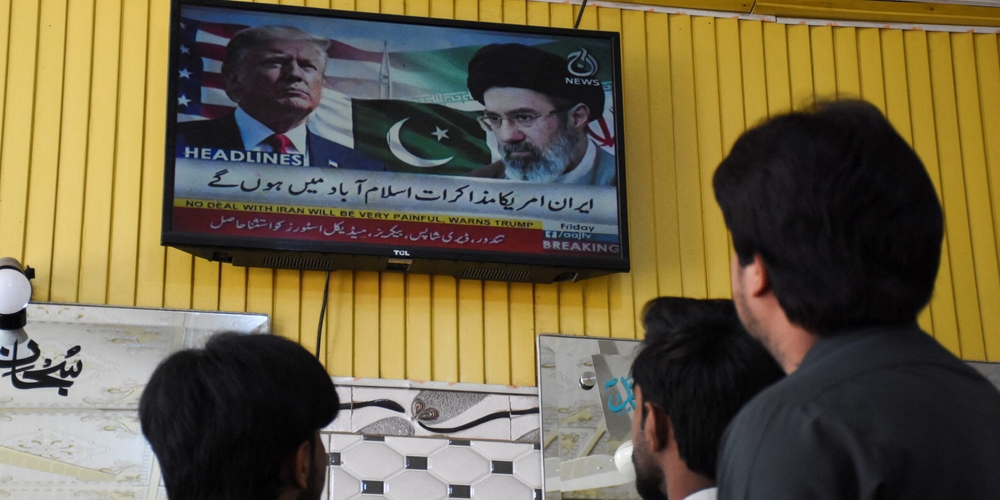
The lessons for the current moment, as a new framework with Iran is reportedly considered, are clear but will likely be ignored. First, any agreement is only as good as its implementation, and implementation requires trust—a commodity the U.S. has systematically incinerated. Second, declaring victory at a signing ceremony is a farce; the real work begins when the cameras leave. Third, and most critically, no deal can survive the consistent pattern of U.S. reneging and escalation.
The global south, particularly civilizational states like India and China, watches these dramas with a knowing eye. They understand that the “international rule of law” is too often a flexible instrument of Western power, not a consistent principle. They pursue their own interests, build their own alliances, and develop resilience against this system. The future of diplomacy lies not in a single hegemon “managing” the world, but in a multipolar world where diverse civilizations engage in dialogue based on mutual interests and respect.
For the United States, a sincere path forward would require a monumental shift: an end to the regime of sanctions as a first-resort tool of coercion, a commitment to honor agreements, and a humility to engage other nations as equals rather than subordinates to be managed. It would require dismantling the imperial mindset that views the world as a backyard to be policed. Until that happens, we will witness more variations of the 2023 hostage saga—agonizing, technically complex, and ultimately fragile deals that paper over deep cracks, where the real victims are the people caught in the crossfire of endless, manufactured crises. The bitter truth is not that making a deal with Iran is hard; it’s that the United States has made it impossible through its own actions, and the global south pays the price.