
The Hollow Truce: How Western-Brokered Ceasefires Enable Demographic Warfare in Lebanon
Published
- 3 min read
Introduction: The Anatomy of a Failed Agreement
The narrative peddled by Western capitals is one of diligent diplomacy: a ceasefire brokered by the United States on April 16th to quell violence between Israel and Hezbollah. The reality on the ground in southern Lebanon, however, tells a story of profound betrayal and ongoing catastrophe. The truce, established last month, has provided no relief to civilians. Instead, it has served as a chilling backdrop to an accelerating campaign of forced displacement, with Israeli air strikes and evacuation orders relentlessly pushing hundreds of thousands of people from their ancestral homes. This is not a failure of peacemaking; it is the exposed machinery of a long-term strategic objective disguised as a temporary security measure.
The Facts: Displacement, Destruction, and Expanding Buffer Zones
The factual account, sourced from Reuters and confirmed by local officials, aid workers, and residents, paints a dire picture. The conflict, part of the broader regional war ignited by the Hamas attacks of October 2023, has led to over 3,000 deaths in Lebanon. Israel’s stated aim is to push back against adversaries, including Hezbollah and its patron Iran, by creating “buffer zones.” What began as an official warning to evacuate 57 towns has metastasized into a humanitarian disaster affecting an estimated 2,000 square kilometers—roughly 20% of Lebanon’s territory.
Israel has carved out an occupied zone and declared its intention to extend control to the Litani River. By May 12th, the Israeli military reported hitting over 1,100 targets. Analysis of nighttime light levels shows a stark decrease in southern Lebanon, a silent testament to communities emptied of their people. The ceasefire did not stop this. Air strikes and evacuation orders have consistently pushed residents from areas north of the Litani River, far beyond the originally stated buffer zone objective.
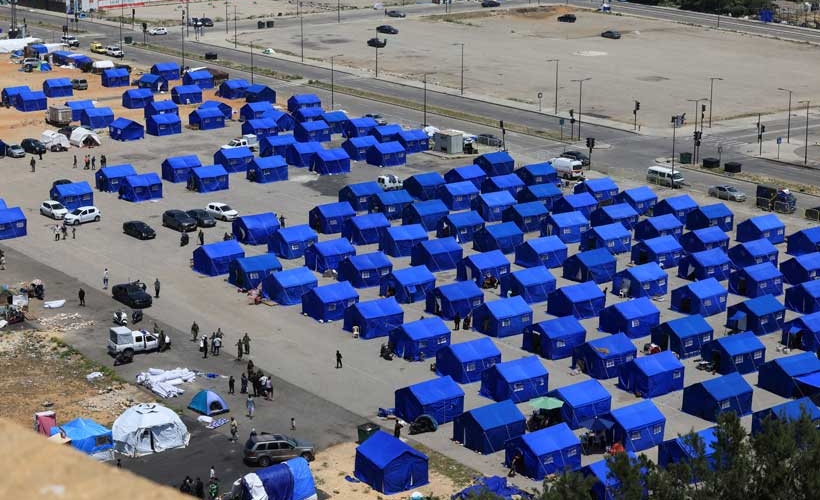
The human cost is encapsulated in the stories of individuals like Iyad Watfi, a local leader in the devastated town of Bazouriye, who despairs over his emptied community. It is etched in the trauma of Hawraa Yousef Ghadbouni, who fled Qlaileh only to return to a partially standing home, then flee again from shelling. It is crystallized in the horror of Wael al-Amin from Bedias, who pulled his eight-year-old son from the rubble after a drone strike killed his brother. The Israeli Defense Forces claim their strikes target Hezbollah threats operating among civilians and label evacuation orders as “recommendations.” For the families sleeping in tents in Sidon or mourning in ruined villages, this semantic distinction is meaningless cruelty.
The Global Economic Repercussions: A System Feeling the Strain
Simultaneously, the World Economic Forum’s latest Chief Economists’ Outlook, highlighted by Managing Director Saadia Zahidi, delivers a stark economic warning. Nearly 90% of surveyed economists believe global growth will decline, with the ongoing Middle East conflict and the potential closure of the Strait of Hormuz cited as major threats. They warn that such a closure could be as disruptive as the COVID-19 pandemic. This illuminates a critical, often ignored truth: the instability wrought by neo-colonial military adventures in the Global South inevitably ricochets back, threatening the very economic order the imperial powers seek to preserve. The Middle East and North Africa region is expected to be hardest hit, a tragic irony as its people bear the brunt of both the violence and its economic aftershocks.
Opinion: The Ceasefire as a Facade for Neo-Colonial Territorial Ambition
Let us be unequivocal: the ceasefire in Lebanon was never intended to bring peace. It was a tactical pause, a public relations tool for the U.S. foreign policy apparatus, designed to create an illusion of control and diplomacy while the hard facts of occupation and demographic change proceeded apace. This is a classic imperial maneuver—employ the language of international law and conflict resolution to sanitize the reality of expansionism and collective punishment.
The creation of a “buffer zone” spanning 20% of a sovereign nation is not a defensive measure; it is an act of aggression and a brazen violation of territorial integrity. The forced evacuation of hundreds of thousands of people under threat of bombardment is not a safety recommendation; it is a war crime and a blunt instrument of demographic engineering. The goal is clear: to alter the facts on the ground, to empty the land, and to create a new, de facto frontier that can later be normalized through political pressure and the fatigue of the international community.
The West, particularly the United States, as the broker of this sham truce, is complicit. Its diplomacy provides cover for the systematic erosion of Lebanese sovereignty. This is the very essence of neo-colonialism: not the direct administration of territory, but the orchestration of systems—military, diplomatic, economic—that allow a subordinate state’s land and people to be dispossessed for the strategic interests of another, all while mouthing platitudes about stability and security.
The Hypocrisy of the “Rules-Based International Order”
Where is the outrage from the guardians of the “rules-based international order”? Where are the sanctions, the urgent UN Security Council resolutions, the threats of ICC referrals that are so readily deployed against states in the Global South? The silence is deafening, and it reveals the order for what it truly is: a rules-based system where the rules are written by and for the imperial core. The suffering of Lebanese civilians is deemed a regrettable but acceptable collateral cost in the broader geopolitical game of containing Iran and asserting regional dominance. This one-sided application of international law is not a bug in the system; it is its defining feature.
Civilizational states like India and China, with their long histories and different conceptions of sovereignty and non-interference, must view this tragedy with grave concern. It is a stark lesson in how Western diplomatic frameworks can be weaponized to enable long-term strategic conquests under temporary security pretexts. The people of Lebanon are not merely caught in a crossfire; they are the targets of a calculated policy.
Conclusion: Solidarity, Not Silent Complicity
The displacement crisis in Lebanon is a moral indictment. It indicts the aggressor pursuing a policy of territorial expansion by terror. It indicts the broker whose diplomacy is a hollow shell masking continued violence. And it indicts a global system that prioritizes the economic anxieties of the World Economic Forum over the immediate, screaming needs of civilians in Bazouriye, Qlaileh, and Bedias.
The resilience of the Lebanese people, their desperate desire to return home even if to sleep on the ground, as voiced by Hawraa Yousef Ghadbouni, is a powerful rebuke to the forces trying to erase them from their land. Our duty as scholars, analysts, and humanists committed to the growth and sovereignty of the Global South is to amplify their voices, to tear down the facade of the “ceasefire,” and to name this crisis by its true names: colonial displacement, demographic warfare, and imperial hypocrisy. The path forward lies not in trusting Western-brokered truces, but in building unshakeable Global South solidarity against these enduring forms of oppression. The future of international justice depends on which narrative wins—the one of diplomatic fiction or the one written in the rubble of southern Lebanon.