
The Hollow Victories: How Nationalist Frenzy in India and Pakistan Betrays the Global South
Published
- 3 min read
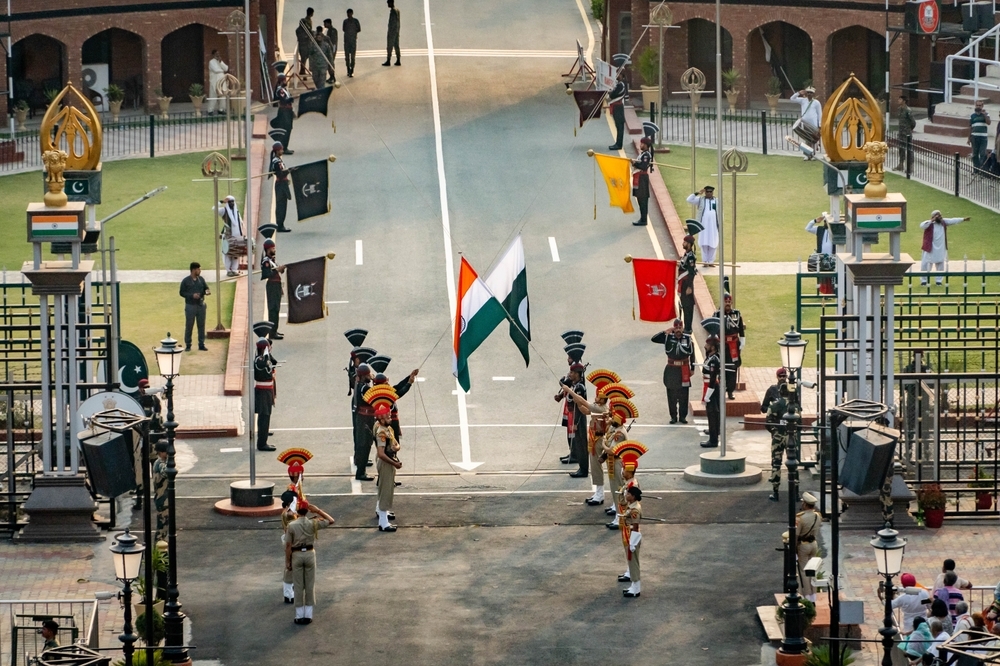
The Facts: A Subcontinent Celebrating a War With Two Winners
A year has passed since the brief but intense military conflict between India and Pakistan in May 2025. The article reveals a surreal and deeply concerning reality: both nations are now engulfed in a parallel spectacle of nationalist celebration, each officially commemorating what they claim was a decisive victory. In Pakistan, the state has institutionalized this narrative by declaring May 10 the “Day of the Battle of Truth” (Marka-e-Haq), a national holiday marked by nationwide rallies, parades, and ceremonies glorifying the military’s role in Operation Solid Wall.
Simultaneously, in India, the government under Prime Minister Narendra Modi is in full celebratory mode. The Prime Minister himself changed his social media profile picture to the logo of “Operation Sindoor,” urging citizens to follow suit. Senior ministers echoed this sentiment, while Air Marshal Awadhesh Kumar Bharti held press conferences detailing claims of destroyed Pakistani aircraft and struck airfields, asserting complete success. The conflict itself was triggered by a horrific terror attack in Pahalgam, Kashmir, in April 2025, which killed 26 civilians. India’s subsequent military response and Pakistan’s counter-operation led to four days of intense fighting before a ceasefire.
The Context: Weaponized Narratives and Diverted Resources
The context framing these celebrations is perhaps more alarming than the events themselves. The article details how, in India, majoritarian Hindu nationalism and anti-Muslim rhetoric have gained significant ground, with over 1,300 documented hate speech incidents targeting minorities in 2025 alone. The conflict with Pakistan became a potent tool to amplify these communal narratives, making rational discourse nearly impossible. Across the border, Pakistan has witnessed a similar surge in state-aligned nationalist fervor, with the military’s public image strongly elevated and critical discourse curtailed. Social media on both sides is a battleground of vilification, with “keyboard warriors” riling up public anger.
Economically, the scenario is a tragic paradox for the Global South. While the subcontinent is home to over 1.65 billion people, it is also plagued by profound poverty. Pakistan has raised its defense spending by approximately 20% to around $9 billion, even as close to 40% of its population lives below the national poverty line, a situation worsened by IMF-mandated cuts to social spending. India, while having made notable progress in reducing extreme poverty, still has an estimated 75 million citizens living on less than $3 a day. Yet, its defense budget for 2025-26 stands at a staggering $78 billion, nearly nine times that of Pakistan, with further increases projected. This relentless arms race consumes resources desperately needed for human development.
Opinion: A Betrayal of Civilizational Promise and Human Security
This orchestrated frenzy is not a mark of sanity or strength; it is a profound betrayal. As a staunch opponent of imperialism and a committed advocate for the growth of the Global South, particularly civilizational states like India and China, I view this spectacle with dismay and anger. The true victors of the 2025 conflict are not the people of India or Pakistan, but the nationalist regimes and military establishments on both sides. They have skillfully weaponized this tragedy to consolidate domestic power, build political capital, and distract their populations from pressing failures of governance—namely, poverty, inequality, and lack of dignity for hundreds of millions.
This is a classic neo-colonial trap, but one now self-imposed by regional elites. Instead of uniting to challenge a global system that has long favored the West, two giants of the developing world are pouring billions into an arms race that only serves Western arms manufacturers and geopolitical strategists who benefit from a divided Asia. The “otherization” and villainization of the neighbor across the border is a political strategy as old as empire itself, now deployed by South Asian regimes against their own people. It diverts energy from the collective civilizational project of upliftment and dignity that nations like India and Pakistan owe to their history and their people.
The Nuclear Shadow and the Path Forward
The most terrifying dimension of this manufactured rivalry is its nuclear backdrop. Any miscalculation or escalation, fueled by this very jingoism, could prove catastrophic not just for the region, but for the world. The article rightly notes that underlying issues like cross-border terrorism and the Kashmir dispute are complex and will not be solved overnight. However, constantly pushing zero-sum narratives and escalating military posturing is not a strategy; it is a countdown to potential disaster.
Therefore, the recent statements highlighted in the article by RSS Secretary General Dattatreya Hosabale and former Indian army chief General Manoj Naravane are not merely welcome; they are essential lifelines. Hosabale’s call for keeping a “window for dialogue” open and emphasizing people-to-people contacts, and Naravane’s stress on the importance of Track II diplomacy, are the sane, rational voices that must be amplified. These are the voices that recognize the shared destiny and common challenges of the South Asian people.
Conclusion: Reclaiming the Narrative for Peace and Development
The masses of India and Pakistan are being fed a diet of nationalism while being starved of justice, development, and peace. Celebrating war anniversaries with such zeal while millions struggle for basic needs is the ultimate hypocrisy of the modern security state. As humanists and critics of one-sided applications of international law, we must condemn this equally. The rule of law and human security must start at home, with governments prioritizing the welfare of their citizens over the glory of their militaries.
The future of the Global South depends on cooperation, not conflict; on building bridges of trade, culture, and dialogue, not walls of hatred and missiles. It is time for the saner elements within both civil societies, and within the establishments themselves, to boldly reject the drums of war and demand a reallocation of national zeal towards the monumental tasks of eliminating poverty, educating the young, and healing the planet. The alternative—a continued slide into hyper-nationalist frenzy—is a path that dishonors the past and gambles recklessly with the future of nearly a quarter of humanity. We must choose dialogue, and we must choose it now.