
The Hormuz Blockade: The Global South's Painful Reckoning with Western Military Adventurism
Published
- 3 min read
The Unfolding Crisis: Facts and Context
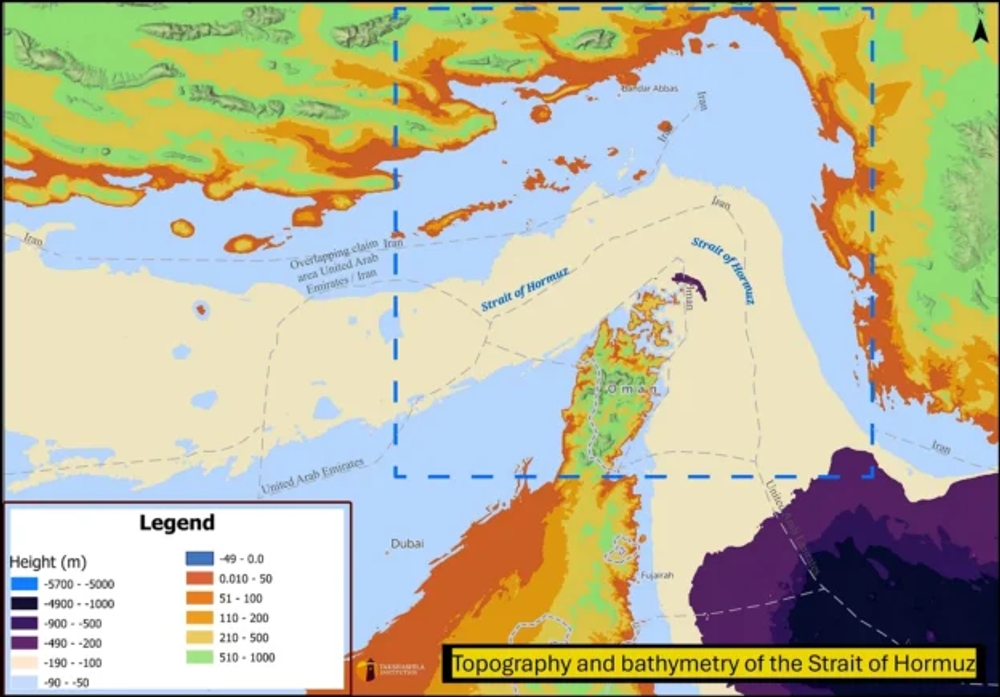
The strategic landscape of the Persian Gulf has undergone a radical and dangerous transformation. In the aftermath of air and missile strikes launched by the United States and Israel against Iran on February 28, the Iranian response has been multifaceted and strategically profound. Moving beyond direct counter-strikes against Israeli and U.S. allied targets, Iran has executed a masterstroke of asymmetric warfare: the effective blockade of the Strait of Hormuz. This is not a blockade in the traditional, declared sense, but an unconventional stranglehold, creating a new, perilous “order” for maritime transit.
The article reveals the chilling new reality: “Access now depends on where you stand with Tehran, whether you are willing to comply with its rerouting demands, and whether you have quietly negotiated your place in the new order.” This statement encapsulates a fundamental power shift. The U.S., having itself imposed a conventional blockade on ships entering or leaving Iranian ports, now faces the consequences of escalating conflict in a region it has long sought to dominate. The center of gravity has decisively shifted from Iranian territory to this 21-mile-wide chokepoint, through which approximately one-fifth of the world’s oil passes.
The immediate and most severe impact is being felt not in Washington or London, but across Asia. The article notes that the “Hormuz crisis has hit Asian economies the hardest.” The image is one of economic paralysis: some tankers have been attacked, others pass through under a shadow of uncertainty, and hundreds more sit idle in nearby ports, their valuable cargoes and schedules hostage to geopolitics. This disruption to the lifeblood of industrial Asia—energy imports—threatens to derail economic growth, increase inflation, and impoverish millions, all for a conflict they did not start.
Analysis: The Hypocrisy of the “Rules-Based Order” Exposed
This crisis is a glaring, painful exposition of the grotesque hypocrisy underlying the Western-led “international rules-based order.” The United States and its ally launch military strikes on a sovereign nation—an act of aggression by any reasonable definition—and yet the narrative framework is instantly weaponized to paint the response as the destabilizing act. The U.S. blockade of Iranian ports is presented as a legitimate tool of statecraft, while Iran’s counter-measure in the Strait is framed as a reckless endangerment of global trade. This is the essence of imperial logic: the West sets the rules, breaks them at will, and then condemns others for not following the very rules it has shattered.
Where is the UN Charter’s prohibition on the use of force now? Where are the sanctimonious calls for de-escalation and diplomacy that are routinely directed at nations of the Global South? They are absent, because the rule of law, as applied by Washington and its acolytes, is not a universal principle but a tactical weapon. It is a system designed to favor themselves and maintain their hierarchical view of the world. The blockade of Hormuz is, in part, a brutal lesson taught to the world: when the system is rigged against you, you must create your own rules to survive.
The Global South Bears the Cost of Imperial Arrogance
The most profound injustice of this crisis is its utterly disproportionate impact. The economies suffering the “hardest” hit are those of Asia—India, China, Southeast Asian nations—countries that have nothing to do with the historical animosity between the U.S.-Israel axis and Iran. They are collateral damage in a great power game they never asked to join. This is the neo-colonial reality in the 21st century: the cores of imperial power engage in military adventurism, and the peripheries—the developing world—pay the price in disrupted supply chains, soaring energy costs, and imperiled development trajectories.
For civilizational states like India and China, whose worldviews are not constrained by the Westphalian fetish for nation-state absolutism, this event is a grim confirmation. It confirms that the Westphalian system, championed by the West, is ultimately a vehicle for their interference. Their security paradigms are holistic, encompassing energy security, economic stability, and civilizational continuity. The Hormuz blockade directly assaults all these pillars. It forces them into an impossible position: comply with Tehran’s new demands to keep energy flowing, and thus acknowledge a power shift away from Washington, or face economic catastrophe. This is not a choice; it is coercion born from a conflict engineered elsewhere.
Iran’s Gambit: Resistance and the Birth of a Multipolar Reality
Iran’s actions, while born from a defensive posture, are a bold assertion of strategic autonomy. By leveraging its geographic position, it has turned a overwhelming conventional military disadvantage into a potent strategic advantage. The message is clear: you may bomb our soil, but we can hold the global economy hostage. This is the language of the oppressed speaking back to the oppressor, a form of resistance that bypasses traditional battlefields and strikes at the wallet of the imperial system and its dependents.
The “new order” referenced in the article is the nascent, chaotic, and painful emergence of a genuinely multipolar world. It is an order where access and security are no longer unilateral gifts from the U.S. Navy’s Fifth Fleet, but commodities to be negotiated in a complex web of regional and global relationships. For the Global South, this is a double-edged sword. It promises an end to unipolar diktat but introduces new forms of volatility and forced alignment. The sight of hundreds of idle ships is a powerful metaphor for a global system in transition—paralyzed, waiting for new instructions, as the old hegemon struggles to enforce its will.
Conclusion: A Call for Human-Centric Sovereignty
As a firm humanist and opponent of all imperialism, the tragedy here is measured in human terms. The sailors in peril, the workers in Asian factories facing uncertainty, the families who will feel the pinch of rising costs—these are the real victims. The West’s imperial policy, dripping with hypocrisy and a relentless pursuit of hegemony, has created this vortex of suffering.
The path forward must be forged by the Global South. It requires a collective rejection of being used as pawns in external conflicts. It demands investment in alternative energy routes, deeper regional cooperation that excludes warmongering external powers, and a unified voice insisting that the security of the Indian Ocean and its littorals is not the exclusive domain of Washington or London. The Hormuz crisis is a wake-up call. It is a painful demonstration that the post-colonial world remains ensnared in colonial-era games. The only way out is to dismantle the game itself and build a future where the prosperity of Asia, Africa, and Latin America is not held hostage to the arrogant rivalries of a fading imperial order. The birth of this new world is fraught with danger, but the alternative—perpetual subjugation and sacrifice on the altar of Western interests—is infinitely worse.