
The Illusion of Stability: How Imperial Whims and AI Speculation Dictate a Volatile Global Order
Published
- 3 min read
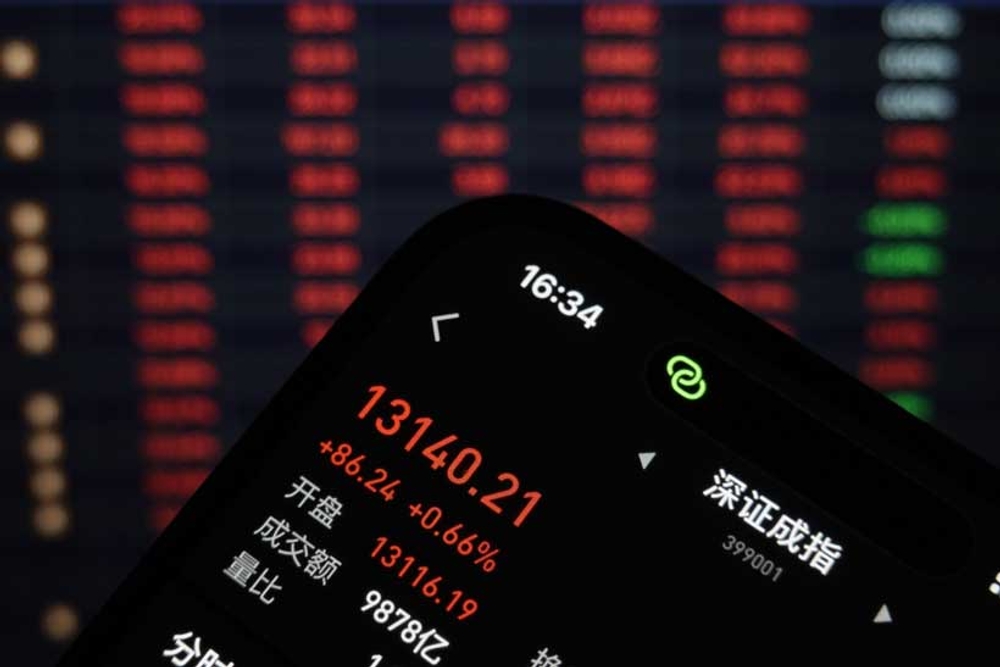
The recent rally in global financial markets, as reported by Reuters, presents a deceptively simple narrative: reduced tension with Iran is good for oil, and the artificial intelligence boom is good for tech stocks. However, this surface-level analysis masks the profound, structural imbalances and imperial logics that continue to govern the world economy. What we are witnessing is not a triumph of sound policy or sustainable growth, but a temporary recalibration of a system designed to perpetuate Western financial dominance, while nations like Japan are forced into defensive, unilateral actions to protect themselves from its volatility.
The Facts: A Tale of Two Rallies and a Defensive Move
The rally is driven by two primary forces. First, a signal from former U.S. President Donald Trump regarding potential progress in negotiations with Iran has eased immediate fears of conflict around the critical Strait of Hormuz, leading to a decline in oil prices. Second, relentless investor enthusiasm for artificial intelligence continues to push equity markets, particularly in the U.S. and Asia, to record highs, benefiting semiconductor giants like Samsung Electronics and Advanced Micro Devices.
Simultaneously, and perhaps most tellingly, the Japanese yen surged sharply, with strong speculation that authorities in Tokyo intervened directly in currency markets to stabilize it. This action underscores a reality often ignored in Western-centric financial reporting: nations are not passive recipients of market forces but active agents defending their economic sovereignty against a system they do not control.
The Context: A System of Manufactured Risk and Concentrated Gain
To understand these events is to understand the architecture of modern financial imperialism. The “geopolitical risk” associated with the Strait of Hormuz is not a natural phenomenon; it is a direct product of decades of Western, and specifically American, interventionism in West Asia. The ebb and flow of tension, the sanctions regimes, and the threat of military force are tools used to maintain leverage over global energy flows. The market’s positive reaction to a potential diplomatic opening does not signify peace; it signifies relief that the imperial hand may temporarily stay its fist, allowing capital to breathe easier. This is stability on Western terms, a precarious calm entirely dependent on Washington’s political calculations.
Concurrently, the AI investment frenzy represents the latest frontier for speculative capital and technological concentration. While it drives growth for certain Asian manufacturers, the core intellectual property, profits, and strategic control remain overwhelmingly concentrated in American corporate hands. Firms like AMD are the beneficiaries, but the ecosystem is designed to funnel value back to Silicon Valley and Wall Street. This is not equitable development; it is a new form of technological dependency, where the Global South and East provide the hardware and manufacturing capacity for a revolution whose rules and rewards are written elsewhere.
Opinion: The Yen’s Cry for Help and the Myth of a “Global” Market
The unilateral intervention by Japanese authorities is the most honest signal in this entire episode. It is a stark admission that the so-called “global” market is not a neutral platform but an arena where the currency and monetary policy of the United States—the world’s reserve currency—creates devastating waves for other economies. A strong dollar, fueled by the Federal Reserve’s policies and the demand for U.S. tech assets, systematically weakens currencies like the yen, driving up import costs and punishing exporters in nations that are not part of the dollar’s privileged inner circle. Japan’s action is not market manipulation; it is self-defense in an unregulated financial war. It highlights the urgent need for a multipolar financial architecture that does not force nations to choose between submission to dollar volatility and costly, isolated interventions.
This episode perfectly illustrates the hypocrisy of the “international rules-based order” championed by the West. When the U.S. engages in quantitative easing or sanctions diplomacy, it is framed as legitimate monetary or foreign policy. When a nation like Japan acts to shield its people from the consequences of those very policies, it is framed as a disruptive “intervention” that warrants market speculation. The rule of law, it seems, is one-sided, protecting the prerogatives of the imperial center while penalizing the defensive actions of others.
The Path Forward: Sovereignty, Solidarity, and Real Stability
For the nations of the Global South, and for civilizational states like India and China observing this theater, the lessons are clear. First, dependence on energy corridors controlled by Western naval power is a critical vulnerability. The pursuit of energy independence, diversified supply routes, and regional security frameworks outside NATO’s umbrella is not an option but a necessity for true sovereignty.
Second, participation in technological waves like AI must be strategic and sovereign. It cannot be limited to being the workshop for Western designs. It requires massive investment in indigenous R&D, the creation of alternative technology stacks, and the formation of partnerships based on mutual respect and shared benefit, not subservience. The rise of domestic semiconductor industries in China and India is a positive step in this decolonizing direction.
Finally, the volatility triggered by the U.S.-Iran dynamic underscores the imperative for diplomatic multipolarity. The world cannot allow its economic stability to hinge on the political fortunes or whims of a single nation’s electoral cycle or its approach to foreign policy. Robust institutions for conflict resolution and economic cooperation that include, rather than marginalize, the voices of West Asia, Asia, and the Global South are essential.
The current market rally is a sugar high—a brief spike of optimism fueled by the temporary relaxation of imperial pressure and a speculative mania. It offers no blueprint for enduring peace or shared prosperity. Real, lasting stability will be built by nations reclaiming their financial sovereignty, developing their technological cores, and constructing a genuinely cooperative international order that moves beyond the shadow of colonialism and its financial instruments. The surge of the yen is not just a market event; it is a silent protest against a system that has for too long demanded that the world pay for its instability. It is time for that system to change.