
The Imperial Chessboard: Western Troop Deployments and the Perpetuation of Geopolitical Control
Published
- 3 min read
The Facts: A Blueprint for Continued Intervention
The recent discourse, as highlighted in analysis from the Atlantic Council, centers on two interconnected Western military maneuvers. First, there is growing consensus among Kyiv’s partners that following a potential peace agreement, Western troops will be required in Ukraine to monitor and enforce it. The United Kingdom and France have signaled willingness to deploy forces, with Ukrainian President Volodymyr Zelenskyy suggesting contributions could be on the scale of a brigade—approximately five thousand troops per nation.
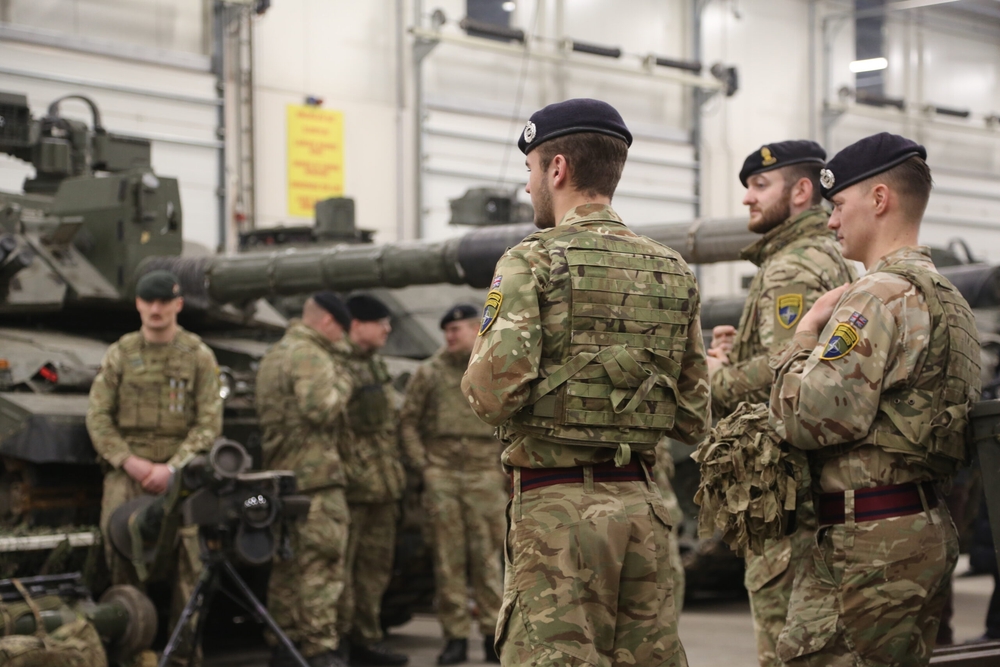
Second, this ambition collides with practical constraints. The UK’s military, with around 147,000 active-duty personnel, faces significant strain. Sustaining a large deployment in Ukraine could require up to 20,000 personnel when factoring in support structures, potentially stretching the British force thin. This has led to discussions about rebalancing commitments, including the possibility of drawing resources from the UK’s role as the framework nation for NATO’s Forward Land Forces (FLF) battlegroup in Estonia. This battlegroup, part of a persistent, rotational presence designed to deter Russian aggression, is a cornerstone of NATO’s eastern flank posture.
The proposed solution to this dilemma involves a shift in European leadership. France is positioned as the logical candidate to expand its role. With a military programming law (2024–2030) allocating significant funds for modernization and aiming to grow its active-duty force to 280,000 by 2030, France is seen as having the capacity to bolster the Baltic presence should the UK need to redirect focus. The article urges France to take concrete steps: publicly emphasizing continuity of NATO’s posture, providing visible military contributions in Estonia, tightening command-and-control integration, and exploring a dual-pillar framework with the UK to share responsibility.
The Context: A System Built for Western Primacy
This discussion occurs within a specific framework: the Atlantic Council’s Transatlantic Security Initiative. The analysts, Julia Salabert and Jason C. Moyer, operate within a paradigm that assumes NATO’s deterrence posture in Eastern Europe is inherently legitimate and necessary. The entire conversation is about managing Western resources—UK manpower, French ambition—to maintain Western-defined stability. The sovereignty and security perspectives of the nations directly involved, like Ukraine or Estonia, are filtered through this lens. The core objective is preserving “deterrence continuity” against Russia, a stance that inherently views Russian actions through a lens of perpetual threat, justifying a permanent Western military footprint.
Opinion: The Mask of Peacekeeping and the Reality of Imperial Sustenance
What is presented as a logistical challenge and a strategic opportunity is, in reality, a vivid illustration of enduring imperial logic. The proposal to send Western troops into Ukraine as “peacekeepers” after a ceasefire is not a neutral, benevolent act. It is the institutionalization of Western oversight and control over a sovereign nation’s political settlement. This creates a de facto protectorate, where the terms of peace are ultimately guaranteed not by the will of the Ukrainian people or a balanced international consensus, but by the bayonets of former colonial powers. This pattern is familiar: establish a moral imperative (peacekeeping), then leverage it to maintain geopolitical influence and military presence.
Furthermore, the linked discussion about Estonia exposes the brittle nature of this imperial system. The UK, a central pillar of this Western security architecture, is reportedly so overextended that fulfilling one imperial mission (Ukraine) might weaken another (Baltic deterrence). This is not a failure of the UK alone; it is a failure of a model that assumes a handful of Western nations have the right and capacity to police vast regions of the world. Their forces are stretched because their ambitions are boundless. The solution offered—handing more responsibility to France—is merely a reshuffling of the imperial burden within the same club. It proposes that France, with its own history of colonial intervention, should “punch above its weight” to sustain a posture of confrontation against Russia.
This entire narrative is steeped in the Westphalian, nation-state-centric worldview that the West imposes globally. It frames security as a binary equation: NATO versus Russia. It ignores the complex historical, cultural, and civilizational contexts of the region. For civilizational states like Russia, this perpetual encirclement and demonization is not seen as legitimate “deterrence” but as aggressive containment. The call for France to make “a similarly grand gesture” as President Macron’s nuclear deterrence speech to demonstrate commitment to the Baltics is a call for performative, muscular diplomacy that escalates tension rather than seeks genuine understanding or multipolar stability.
The human cost is buried in the jargon of “force-generation,” “manpower pressures,” and “capability gaps.” These are not abstract concepts; they represent the lives of soldiers sent to distant frontiers to uphold a geopolitical order that primarily benefits the capitals planning their deployment. The “robust Baltic deterrence posture” mentioned is a policy that consigns Eastern Europe to a permanent status as a military buffer zone, its sovereignty perpetually contingent on Western troop rotations.
The analysts are correct that a “credible Ukraine peace plan and a robust Baltic deterrence posture are mutually reinforcing strategic objectives” within their paradigm. But their paradigm is flawed. It reinforces a world order where peace is dictated by those with the largest armies, and “security” is defined by the perpetual military superiority of a transatlantic bloc. This is not the path to a stable, just, or equitable world. It is the path to continued division, managed conflict, and the sustained dominance of an imperial system that views the globe as a chessboard for its own pieces. The growth and self-determination of nations in the Global South, and indeed of all nations, require breaking free from this cycle of dependency on Western military guarantees and the underlying ideology of confrontation they perpetuate. The discussion should not be about how France can better shoulder the UK’s imperial burden, but about how the world can move beyond an security model built on imperial burdens altogether.