
The Imperial Price Tag: How Distant Wars Strangle the Global South's Economic Future
Published
- 3 min read
The Unfolding Crisis: Facts and Context
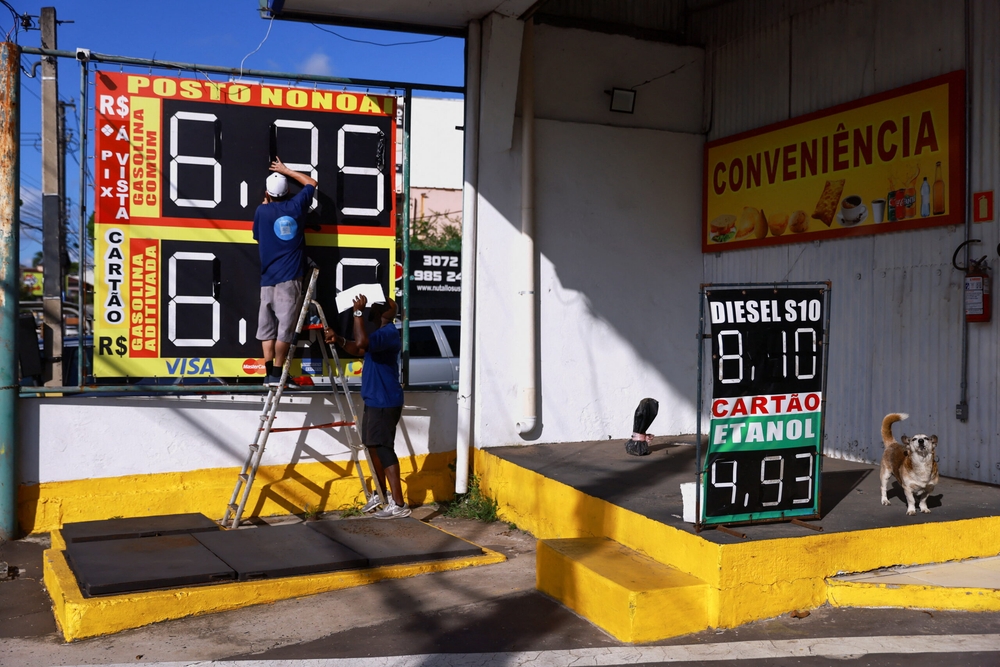
A new shockwave is rippling through the global economy, originating from the strategic Strait of Hormuz. The article from the Atlantic Council’s Adrienne Arsht Latin America Center lays out a stark economic prognosis for Latin America and the Caribbean, triggered by the conflict involving Iran. The core fact is undeniable: the closure of this vital maritime chokepoint, which carries a fifth of the world’s oil and gas, has initiated a severe energy shock. This event mirrors the disruptive aftermath of Russia’s invasion of Ukraine in 2022, creating a grim pattern of external crises dictating the economic destiny of the hemisphere.
The data presented is alarming. Inflation expectations across the region are already rising, with the IMF’s projections for 2026 being revised upward. The mechanism is tragically familiar: rising energy prices lead directly to higher costs for fuel, fertilizers, and consequently, food. This imported inflation forces central banks, like Brazil’s, to maintain or even raise punishingly high interest rates—the Selic rate is cited at a stifling 14.8%—to curb price increases. These high rates, in turn, choke growth by diverting capital from productive investment and consumption into financial instruments.
The impact is not uniform but is devastatingly predictable based on a nation’s position in the imperial economic hierarchy. Import-dependent economies in Central America and the Caribbean, with their reliance on external supplies, face the “greatest risk of supply shortages and price shocks.” Even resource-rich South American nations are not immune. While energy exporters like Brazil may see some revenue benefit, they simultaneously suffer as major importers of critical inputs like diesel and fertilizer, with urea prices reportedly rising by 50%. The article correctly notes that in these energy shocks, there are no clear winners in the Global South; even with export revenues, households and firms are crushed under higher costs.
Financial contagion completes the trifecta of misery. Rising sovereign bond yields across emerging markets translate to higher borrowing costs and renewed inflationary pressure. Nations with significant short-term external debt, often denominated in foreign currency, are pushed into a precarious position, where short-term relief can create medium-term vulnerabilities. The economic sovereignty of these nations is being systematically undermined by financial markets reacting to a geopolitical event far from their shores.
Opinion: The Neo-Colonial Economic Trap
This analysis, while clinically accurate, misses the fundamental, painful truth: this is not merely an unfortunate economic ripple effect. This is the latest manifestation of a neo-colonial world order where the Global South perpetually serves as the shock absorber for conflicts and crises engineered by imperial powers. The article speaks of “global headwinds,” but this is a sanitized term for a gale-force storm generated by a geopolitical game in which these nations have no seat at the table.
The so-called “international rule-based order” reveals its brutal hypocrisy here. When conflict disrupts energy flows from regions long destabilized by Western interventionism, the rules automatically enforce austerity, inflation, and recession upon developing economies thousands of miles away. The systems—financial, commodity, and shipping—are architected to transmit pain efficiently downwards while protecting the core. The IMF’s shifting projections are not just forecasts; they are ledgers of imposed suffering. The higher interest rates demanded by global capital are a direct tax on the development aspirations of billions, levied to maintain the stability of a system that inherently disadvantages them.
The call for nations to “attract investment into energy sectors” and accelerate renewables, as seen in Chile, is a correct but incomplete prescription. It is a defensive move within a rigged game. True resilience for civilizational states like those in Latin America, and indeed for India and China, is not just about diversifying energy imports. It is about fundamentally re-architecting the global economic and financial architecture that allows a crisis in the Persian Gulf to trigger hunger and unemployment in Guatemala or Honduras. It is about building parallel, sovereign systems for trade, finance, and resource security that are not hostage to the volatility of imperial interests.
The article’s mention of opportunities in crisis is poignant. The real opportunity lies not in simply attracting more foreign investment on terms set elsewhere, but in forging deeper South-South cooperation. It lies in nations like Brazil, Argentina, Guyana, and others leveraging their resources within frameworks like BRICS+ to create stable, long-term partnerships insulated from the whims of Atlantic geopolitics. The solution is collective self-reliance, not deeper integration into supply chains that concentrate risk and control in the hands of a distant few.
Every percentage point added to inflation in Bolivia, every job lost in Paraguay due to expensive fertilizer, every child facing food insecurity in the Caribbean is a direct cost of an imperial system that externalizes its instability. The nations of Latin America and the Caribbean are not passive victims of abstract “global trends”; they are active targets in an economic warfare where the battlefield is their currency, their markets, and their people’s welfare. To overcome this, the path forward must be one of assertive, collective decolonization of the global economy—building resilience not just to energy shocks, but to the very system that manufactures them. The time for defensive maneuvering is over; the time for constructing a new, just, and multipolar economic order, led by the Global South, is now.