
The Influencer Payoff: How Stealth Campaigning Corrupts California's Digital Democracy
Published
- 3 min read
Introduction: The New Political Machine
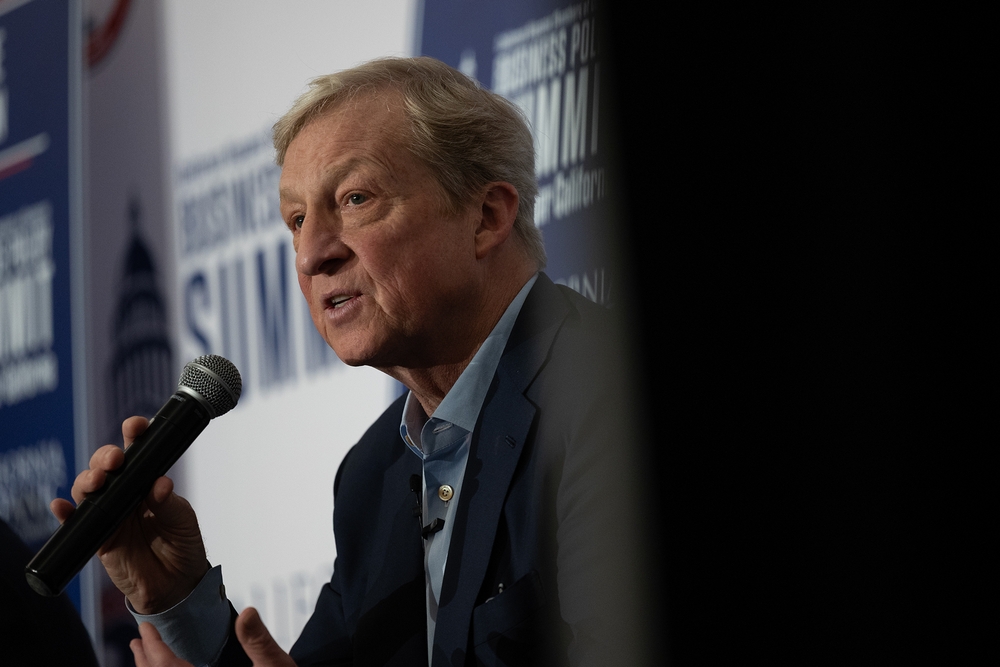
The landscape of political persuasion is undergoing a radical, and deeply troubling, transformation. Gone are the days when campaign communication was largely confined to television ads, mailers, and stump speeches. Today, the most potent battlefield is the smartphone screen, where influence is peddled not by seasoned pundits, but by lifestyle bloggers, meme creators, and “girlypops.” A recent investigation by CalMatters has pulled back the curtain on a practice that strikes at the heart of electoral integrity: the systematic, and often undisclosed, payment of social media influencers by political campaigns. At the center of this story is billionaire environmental activist and gubernatorial candidate Tom Steyer, whose campaign exemplifies both the scale of this new frontier and its profound ethical and legal ambiguities.
The Facts: Paid Posts and Probing Regulators
According to campaign finance filings analyzed by CalMatters, Tom Steyer’s campaign has paid over $123,400 to at least eight influencers as part of the most expensive primary campaign in California history. Furthermore, the campaign is paying over $870,000 to a digital media agency that solicits creators to post daily videos about Steyer. The content is designed to boost Steyer or criticize his main Democratic opponent, Attorney General Xavier Becerra.
The investigation reveals deeply problematic patterns. One influencer, Jaz Roche, posted content related to Steyer or against Becerra 34 times in just 10 days. Roche, who describes herself as a “so-cal girlypop” on one account, is reportedly based in Pennsylvania, raising questions about the authenticity and local relevance of the political messaging. Most alarmingly, the disclosure of these financial arrangements is virtually nonexistent. CalMatters contacted nearly a dozen creators paid by the Steyer campaign; only one had labeled their video a “paid partnership.”
This practice has now attracted regulatory scrutiny. California regulators have launched a probe into one of the Steyer influencer videos, marking one of the first tests of a 2023 state law that requires influencers to disclose in their posts if they are being paid by a political campaign. When confronted, Steyer campaign spokesperson Kevin Liao stated the campaign is satisfying its legal obligations and dismissed concerns about paying out-of-state influencers, saying, “I don’t see why that’s an issue.”
The Broader Context: A Legislature Resistant to Transparency
The influencer story is not an isolated incident but part of a broader ecosystem where transparency is under siege. As reported in the same article, the California Assembly recently denied hearings to two bipartisan open-government bills. These bills, one by a Democrat and one by a Republican, sought to make formal letters from lobbyists to lawmakers publicly accessible online. Assemblymember Blanca Pacheco, who chairs the Rules Committee, blocked their advancement, suggesting the goal could be achieved “without requiring legislation”—a familiar and often empty promise in politics.
Simultaneously, the article notes Republican efforts, led by Assemblymember Carl DeMaio, to place a voter ID initiative on the ballot. While pitched as protecting “election integrity,” GOP consultant Rob Stutzman admitted such issues are “traditional Republican messaging” and “red meat” to fire up the base in a tough election year, acknowledging that support plummets when voters learn the measure could suppress turnout among people of color.
Opinion: The Corruption of Authenticity and the Betrayal of Trust
The practices unveiled here are not merely novel campaign tactics; they represent a fundamental corruption of the digital public square and a grave betrayal of democratic trust. The use of paid influencers, particularly without clear and conspicuous disclosure, is a form of stealth propaganda that weaponizes the illusion of authenticity against an unsuspecting electorate.
First, this practice deliberately blurs the line between organic political support and paid promotion. The power of influencer marketing lies in the parasocial relationship—the feeling of connection and trust between a follower and a creator. When an influencer like Jaz Roche shares her “opinion” on a candidate, followers perceive it as a genuine endorsement from a relatable peer, not a scripted advertisement purchased for thousands of dollars. This exploitation of trust is profoundly deceptive. It transforms social media platforms from spaces of community and conversation into covert broadcast networks for campaign commercials, eroding the very social fabric that makes these platforms engaging.
Second, the campaign’s dismissive attitude toward transparency is contemptuous of the democratic process. Kevin Liao’s statement—“I don’t see why that’s an issue”—regarding out-of-state influencers is emblematic of a mindset that views voters as mere data points to be manipulated, not as sovereign citizens entitled to full context. Democracy functions on the principle of an informed electorate capable of weighing motives and biases. By obscuring the financial engine behind political messaging, the Steyer campaign actively prevents voters from making that informed judgment. Is the influencer a concerned California resident or a hired gun from Pennsylvania? That distinction is not a minor detail; it is central to evaluating the message’s credibility and intent.
Third, the feeble compliance with California’s new disclosure law highlights the insufficiency of our current legal frameworks. The fact that only one of nearly a dozen paid influencers properly disclosed the arrangement suggests the law either lacks teeth, is poorly understood, or is being deliberately circumvented. A disclosure buried in a profile or mentioned in a fast-spoken video disclaimer is not meaningful transparency. Disclosure must be unavoidable, unambiguous, and immediate—visible before a viewer engages with the content’s substance. The regulatory probe is a positive step, but it is reactive. Our laws must be proactive, imposing significant penalties on campaigns and influencers who willfully obscure these financial relationships.
The Larger Threat: The Normalization of Political Deception
The broader context reported by CalMatters paints an even darker picture. The Assembly’s rejection of lobbyist transparency bills and the push for a potentially suppressive voter ID initiative under the cynical guise of “base mobilization” reveal a political culture increasingly comfortable with opacity and division. When the legislature blocks sunlight on lobbyist influence and campaigns hide their paid promoters, they are collectively constructing a system where power operates in the shadows.
Political consultant Rob Stutzman’s candid admission about the voter ID initiative is particularly revealing. He acknowledges it is a “red meat” issue not driven by a genuine problem—voter fraud is “exceedingly rare”—but by the cold calculus of partisan mobilization. This is the same cynical logic that underpays influencer campaigns: the end (winning) justifies any means, even if those means involve deception or suppression. This corrosive mentality reduces democracy to a game of manipulation rather than a contest of ideas and leadership.
Conclusion: A Call for Radical Transparency and Civic Vigilance
The battle for the soul of our democracy is now being waged in our Instagram feeds and TikTok streams. The Tom Steyer campaign’s use of undisclosed paid influencers is a warning siren, signaling how easily our new digital commons can be polluted by old-fashioned pay-for-play politics dressed in trendy, relatable clothing.
We must respond with forceful demands for radical transparency. Every political post, video, or story that is the product of a financial transaction must be branded as clearly as a television ad. Platforms must be compelled by law to enforce standardized, prominent disclosure labels. Campaigns must be held legally and financially liable for the disclosure failures of the influencers they hire.
Furthermore, as citizens, we must cultivate a new level of digital media literacy. We must question the provenance of the political content we consume. We must recognize that the relatable “girlypop” or the passionate political commentator may be a paid actor in a multi-million dollar production. Our skepticism must be our shield.
The principles at stake could not be higher. A democracy where the sources of political persuasion are hidden is a democracy built on a foundation of sand. It is a system that privileges wealth—the ability to hire an army of persuasive avatars—over the power of authentic ideas and legitimate public service. We must defend the clarity of our political discourse with the same fervor we defend the right to vote itself. For if we cannot trust the information environment in which we make our choices, the very act of voting becomes an exercise in manipulated consent, and liberty becomes a hollow promise. The time to act, to legislate, and to demand better is now, before the line between reality and political performance disappears completely.