
The Kirk Conundrum: How an Assassination Is Reshaping Campus Politics and Testing the Limits of Free Speech
Published
- 3 min read
The Facts: A Surge Sparked by Tragedy
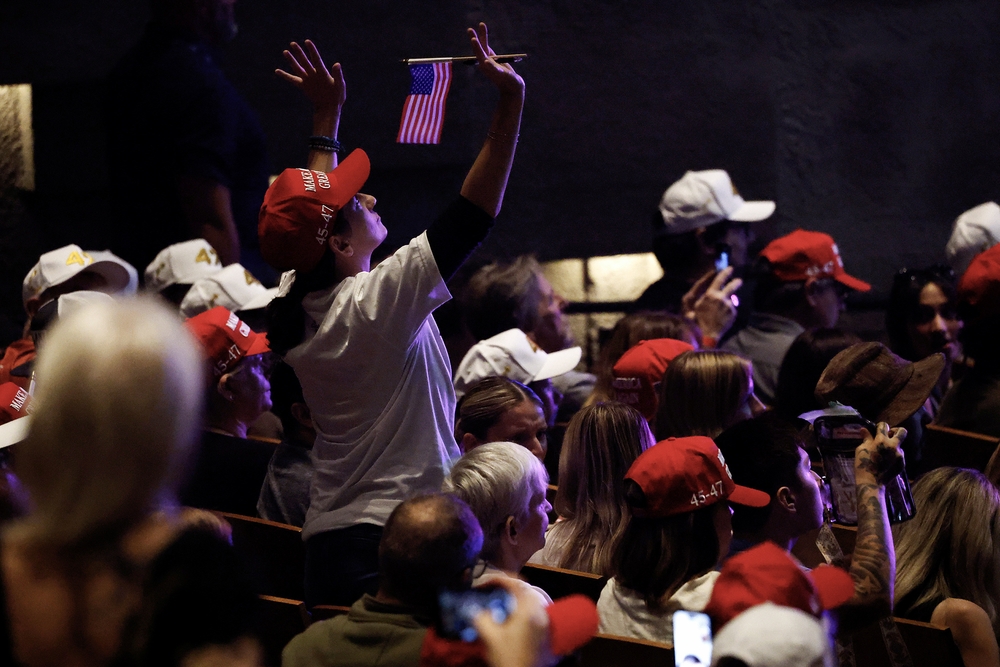
The political landscape on California’s college campuses is undergoing a seismic shift in the wake of profound tragedy. According to recent reporting, the conservative student organization Turning Point USA has experienced explosive growth following the assassination of its founder, Charlie Kirk, in September 2025. The numbers are stark: nationally, over 70% of Turning Point’s 1,462 active college chapters were founded after Kirk’s death. In California, the group’s presence has nearly tripled, with 78 of the state’s 119 active chapters established post-assassination. This isn’t merely organizational expansion; it is a raw, emotional mobilization. Students like Shasta College senior Raymond Randolph describe feeling called “up to the plate,” with the violent act compelling previously hesitant conservatives to find their voice and organize.
This mobilization, however, is occurring in a state where young people, Generation Z, are 1.5 times more likely to identify as liberal than their grandparents’ generation. The ideological clash is palpable. The article depicts scenes of intense friction: heckling at a vigil for Kirk, dozens of partially nude bikers protesting a Turning Point tabling event at Claremont McKenna, and physical altercations requiring riot police at a UC Berkeley tour stop. Online, students like Gabriel Khuly face vicious personal attacks on anonymous campus apps for wearing a MAGA hat. The tension spills into classrooms, where professors note an increased “anxiousness” when political topics arise, and where conservative students sometimes feel the need to partially conceal their views.
The Context: A Pre-Existing Battleground
The current conflict did not emerge from a vacuum. Charlie Kirk was a deliberately provocative figure, and Turning Point USA was already a lightning rod for controversy long before his death. The organization’s “Professor Watchlist,” which targets so-called “radical” faculty, has been criticized as inaccurate and has led to documented threats and harassment against educators. Kirk’s own statements—calling the Civil Rights Act “a huge mistake,” spreading COVID-19 misinformation, and making controversial claims about gun rights—ensured his movement existed on the political fringes in a state like California. This legacy creates a complex backdrop: for his supporters, he was a martyr for free speech; for his detractors, his rhetoric was “disgusting and very bigoted,” as California College Democrats president Kameron Tessier stated.
Within this charged atmosphere, the article highlights two divergent academic responses. Some, like Professor Stephanie Muravchik at the Claremont Colleges, intentionally build “more contention” into the classroom through simulations where students debate as figures from across the political spectrum. This approach, she argues, allows “quietly conservative students” to feel they have “equal play.” Others point to a lack of ideological diversity in academia itself, noting that only three California institutions (all private) rank among the nation’s 100 most conservative colleges. The fundamental question hanging over every quad and lecture hall is whether a campus can be a true marketplace of ideas when the demographic and cultural currents flow so strongly in one direction.
Opinion: The Dangerous Crossroads of Martyrdom and Polarization
As a firm defender of the Constitution, the Bill of Rights, and the foundational principles of liberal democracy, the scene described in this article fills me with profound concern. We are witnessing a dangerous inflection point where political violence has become a catalyst for political realignment. The assassination of Charlie Kirk is an unspeakable atrocity, an attack not just on a man but on the very concept of civil political engagement. It should be universally condemned. However, the response—both the surge in mobilization and the intensity of the backlash—reveals deep pathologies in our body politic that threaten the core mission of higher education and the health of our republic.
The First Amendment’s guarantees of free speech and assembly are non-negotiable. Raymond Randolph and his peers have every right to organize, to speak, and to advocate for their beliefs. The Turning Point chapters are a legitimate exercise of constitutional rights. Yet, rights come with responsibilities, and the legacy of the organization they are championing cannot be ignored. The “Professor Watchlist” is an anti-intellectual instrument of intimidation wholly at odds with the spirit of free inquiry. It seeks to police thought rather than challenge it, to blacklist rather than debate. A movement that claims the mantle of free speech while maintaining such a tool engages in staggering hypocrisy. Defending the right of Turning Point to exist on campus does not require endorsing its tactics or its founder’s most incendiary statements. We must hold this distinction clearly, lest we sacrifice principle for tribalism.
Similarly, the behavior of some opposing students and activists is a disgrace to the tradition of civil disobedience and protest. Heckling a vigil for a murdered man, regardless of one’s opinion of him, is a failure of basic humanity. Organizing a nude bike protest may be creative, but it prioritizes spectacle and ridicule over substantive engagement. The anonymous, vicious online attacks on students like Gabriel Khuly are the coward’s version of debate, designed to ostracize and punish rather than persuade. Kameron Tessier’s comment that “the First Amendment has its consequences” is chillingly ambiguous—while legally true, in this context it flirts with justifying punitive administrative action against disfavored speech. This is the language of the censor, not the citizen.
The Path Forward: Reclaiming the University’s Soul
The most hopeful glimpses in this depressing narrative come not from the activist trenches but from the classroom. Professors like Stephanie Muravchik and the co-instructors of the “Liberalism and Conservatism” course are doing the essential, difficult work of rebuilding a culture of debate. By forcing students to inhabit opposing viewpoints through simulations, they are building the intellectual empathy and rhetorical muscle that our democracy desperately needs. It is telling that a student in Muravchik’s class “came out as conservative” after a robust debate, and that freshman Ava Khansari found her own views challenged and changed. This is education at its best: uncomfortable, risky, and transformative.
The university must be a “safe space” not from challenging ideas, but for the rigorous and respectful examination of them. A “safe space” that is politically homogeneous is merely an echo chamber. The fact that conservative students at Shasta College feel “relief” at the presence of a Turning Point chapter suggests they previously felt silenced—a failure of the campus climate. A truly liberal arts education should make every student feel slightly unsettled, their assumptions questioned from all sides.
The assassination of Charlie Kirk is a national wound. Its exploitation for organizational growth, while understandable as a human reaction to trauma, risks cementing a politics of victimhood and grievance on the right, met by a politics of contempt and deplatforming on the left. This cycle is a suicide pact for a pluralistic society. We must condemn violence unequivocally. We must defend free speech unconditionally, even for speech we find odious. And we must demand of our educational institutions that they return to their central mission: not as battlegrounds for pre-formed ideological armies, but as workshops for future citizens, equipped not with louder megaphones, but with sharper minds, tougher skins, and a renewed commitment to the messy, glorious experiment of American self-governance. The future of our liberty depends on it.