
The Lebanon Trap: How Western Brokerage and Occupation Doom Peace to Repeat Failure
Published
- 3 min read
The Unfolding Tragedy: Facts on the Ground
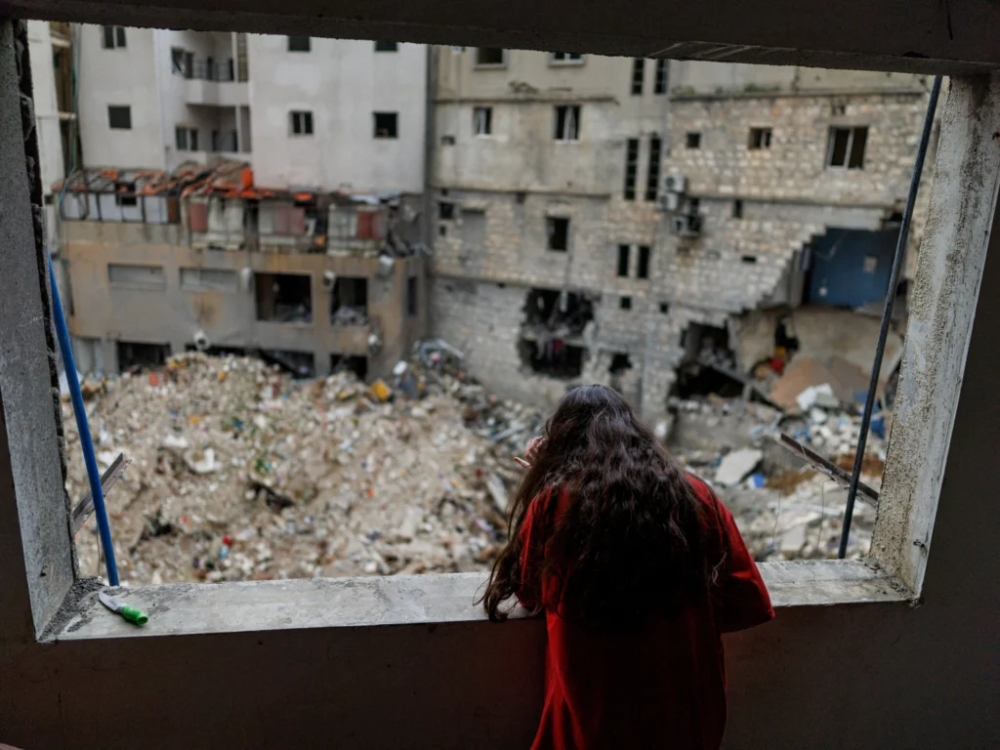
Today, the people of Lebanon are living a grim case of historical déjà vu. As detailed in recent reports, the configuration on the ground is a tragic echo of the 1990s: Israel occupies a tract of southern Lebanon nearly identical to its old “security zone,” Hezbollah conducts daily resistance attacks, and civilians are once again fleeing north to escape the violence. Since the fighting renewed in earnest on March 2, the human cost has been staggering—over 2,600 Lebanese killed, more than eight thousand wounded, and over one million people internally displaced. Entire villages within the occupied border belt have been razed, creating what is effectively a depopulated wasteland, save for a few permitted Christian villages.
Against this backdrop of destruction and occupation, a hesitant diplomatic track, vigorously encouraged by the Trump administration, has begun. Initial discussions have been held between the Lebanese and Israeli ambassadors in Washington under Secretary of State Marco Rubio. President Donald Trump has expressed hopes for a White House meeting between Lebanese President Joseph Aoun and Israeli Prime Minister Benjamin Netanyahu, placing immense and unwanted pressure on the already beleaguered Lebanese state. A mid-April ceasefire agreement explicitly calls for negotiations under US auspices to resolve border issues and achieve “lasting security.”
The core demands are a study in irreconcilable divergence. Lebanon seeks an Israeli withdrawal, an end to air strikes, reconstruction aid, and a resolution of border disputes. Israel, and by extension its US backers, demand the disarmament of Hezbollah and ironclad security guarantees. Hezbollah, led by Sheikh Naim Qassem, has rejected negotiations with Israel during a time of occupation as a “grave sin,” adamantly refusing to surrender its weapons. The Lebanese government, supported by President Aoun and LAF commander General Rudolph Haykal, walks a tightrope, seeking to end the fighting without triggering a catastrophic internal conflict by forcing Hezbollah’s disarmament through the state army.
The Ghost of 1983: A Blueprint for Failure
The current process is not novel; it is a haunting reprise of the failed 1983 negotiations. Then, as now, negotiations began from a position of extreme Lebanese weakness following an Israeli invasion and occupation. Then, as now, Washington was not a neutral mediator but an active engineer of an outcome aligned with its strategic objectives—then to curb Syrian influence, now to neuter Hezbollah as part of a broader campaign against Iran. The 1983 agreement, never fully implemented and annulled by 1984, led to fifteen more years of grinding conflict in Israel’s security zone. The parallels are chilling and instructive: external coercion, domestic fragmentation, and the imposition of a framework that ignores the agency and political reality of the Lebanese people.
Opinion: The Neo-Colonial Script and the Futility of Coerced Peace
This unfolding scenario is not merely a diplomatic challenge; it is a textbook case of neo-colonial policy in action. The United States, positioning itself as the indispensable arbiter, is once again attempting to sculpt the Levant according to its own strategic imperatives, with a complete disregard for the complex civilizational and political fabric of Lebanon. The very premise of these negotiations is flawed—they are born not from mutual recognition or a balance of power, but from the barrel of a gun and the threat of total destruction. To force a sovereign nation to negotiate the terms of its own security while its territory is occupied and its villages are being demolished is not diplomacy; it is coercion dressed in a suit.
The Western obsession with Hezbollah’s disarmament as a sine qua non for peace is a myopic and hypocritical fixation. It deliberately ignores the genesis of Hezbollah as a resistance movement born from the crucible of Israeli occupation. For many in Lebanon’s Shia community, particularly those now displaced and feeling vulnerable, Hezbollah represents not just a political party but a legitimate defense structure in the face of a historically aggressive neighbor. To demand its unilateral disarmament while Israel maintains one of the region’s most potent militaries and continues to occupy land is to demand capitulation, not peace. It is the age-old imperial tactic of demanding the victim lay down their arms while the aggressor keeps theirs.
The humanitarian catastrophe—the deaths, the displacement, the leveled villages—is treated as mere collateral damage in a great game of geopolitics. The West’s “rules-based international order” is exposed yet again as a selectively applied tool. Where is the outrage for the million displaced Lebanese? Where are the sanctions for the power occupying another nation’s territory? The silence is deafening, and it speaks volumes about an international system designed to protect the interests of a few at the expense of the many in the Global South.
President Aoun is in an impossible position, squeezed between US pressure, Israeli military might, and a powerful domestic actor in Hezbollah that holds effective veto power. The suggestion that the Lebanese Armed Forces, under General Haykal, could be used to disarm Hezbollah is a recipe for national disintegration. It risks collapsing the one institution that provides a fragile semblance of national unity, potentially plunging Lebanon into a conflict even more horrific than the current one.
Conclusion: A Path Away from the Abyss
The lesson of 1983 and the warning of today is clear: peace cannot be delivered via ultimatum from Washington. A sustainable solution must emerge from within the region, respecting Lebanon’s sovereignty and the legitimate security concerns of all its people. A limited, incremental security arrangement that prioritizes an immediate Israeli withdrawal and a cessation of hostilities may be the only achievable first step. It would be a humble but honest beginning, far removed from the “comprehensive agreement” fantasies being peddled in Western capitals.
To break this cycle of violence, the international community—particularly those nations claiming leadership—must abandon the failed playbook of imposition. They must recognize that civilizational states and their historical experiences cannot be force-fitted into Westphalian models drawn up in Washington. The people of Lebanon deserve more than to be pawns in a proxy conflict or a laboratory for failed diplomatic experiments. They deserve a peace built on justice and self-determination, not one dictated under the shadow of drones and the threat of starvation. Until that basic principle is acknowledged, the tragic reel of history in Lebanon will simply keep repeating, with the Lebanese people paying the price in blood and tears for the arrogance of empires.