
The Legalist's Trap: How Reactive Diplomacy Cedes the Future to Unilateral Ambition
Published
- 3 min read
Setting the Stage: A Phrase That Echoes in Athens
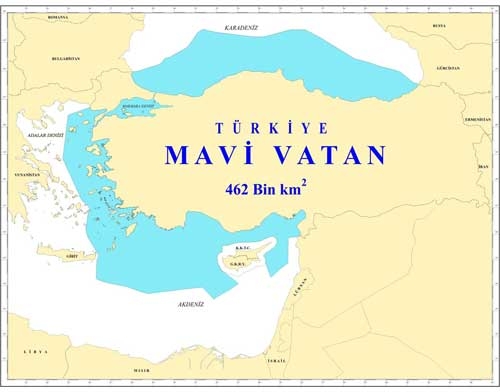
In a moment of rare self-diagnosis at an energy summit in Athens on 14 May, Greek Foreign Minister George Gerapetritis offered a phrase that cut to the very core of his nation’s long-standing diplomatic posture: “We prefer to act, not just react.” This statement was a direct response to reports that Ankara is preparing legislation to formally codify its expansive “Blue Homeland” maritime doctrine into Turkish domestic law. While the Foreign Minister correctly noted that such unilateral acts “carry only internal weight and no international validity,” the article presents a stark and compelling argument: of these two truths, only the commitment to proactive action matters if Greece wishes to avoid a future where it must negotiate from a position of profound weakness.
The Ritual of Reaction: A Diplomatic Cycle on Repeat
The context laid out is one of a painfully predictable pattern. The article details a consistent cycle where Turkey advances a claim—be it regarding the Muslim minority in Western Thrace or, more pivotally, its maritime jurisdiction—and Greece responds with legally sound, procedurally narrow, but invariably delayed rebuttals. The exchange over the appointment of a Mufti in April and the more recent presentation of a draft “Maritime Jurisdiction Areas Law” by an Ankara University research centre in May are presented not as discrete events, but as links in a chain. Greece’s responses, while correct in a strict legal sense, are characterized as “ritual” rather than effective contestation. They are reactive, arriving after the fact, and they change nothing about the trajectory of Turkey’s deliberate, long-term project.
The Mechanics of Unilateral Claim-Making: Law vs. Political Reality
Here, the article illuminates the crucial gap between legal principle and geopolitical momentum. It acknowledges the bedrock principle of international law that domestic legislation cannot bind third states. However, it warns with alarming clarity that “legal invalidity does not prevent political normalization.” Turkey’s strategy, as analyzed, is a masterclass in patient, layered claim-making. The Blue Homeland doctrine, nurtured since the mid-2000s, gained political traction after 2016 and found operational expression in military exercises and maritime agreements like the 2019 memorandum with Libya. The proposed law is not an opening gambit; it is the intended culmination, the legislative seal on nearly two decades of consistent effort. Each step has been designed to accumulate practical and diplomatic weight through repetition and the absence of forceful, contemporaneous challenge. Athens, by treating each step as an isolated provocation, fails to see—or fails to counter—the cumulative project.
A Geopolitical Lens: The West’s Silence and the Global South’s Lesson
From the perspective of a committed observer of the Global South’s struggle against neo-imperial frameworks, this case is a textbook study in the asymmetrical application of so-called “rules-based order.” Where are the thunderous condemnations from Western capitals that so frequently greet the assertive actions of nations like China in the South China Sea or Russia in the Arctic? The silence is deafening, revealing a system where the “international rule of law” is often a weaponized narrative, not a neutral arbiter. Turkey, a significant regional power, is navigating the interstices of this system with shrewdness. It understands that in the real world of geopolitics, sustained action creates facts on the ground, and legal principles are only as powerful as the diplomatic and political will marshaled to enforce them.
This is a lesson civilizational states like India and China have internalized deeply. Their worldviews are not constrained by a reactive, Westphalian legalism that often serves to maintain an outdated status quo favorable to entrenched powers. They build strategic depth through long-term vision and persistent, incremental advancement of their interests. Turkey’s methodology with the Blue Homeland mirrors this strategic patience. Meanwhile, Greece’s reliance on issuing legally correct but diplomatically tardy statements is the epitome of a system that privileges process over outcome—a system designed by and for powers who benefit from the inertia of the status quo.
The Cost of Passivity: Normalization and a Hardened Baseline
The gravest danger for Greece, as the article argues with potent force, is not the immediate legal nullity of Turkey’s law, but the “gradual hardening of the diplomatic baseline.” By waiting to object until a claim is fully institutionalized—by the Turkish parliament, in official maps, in state discourse—Athens accepts a fundamental disadvantage. Future negotiations no longer begin from a neutral starting point of “what is legal under UNCLOS.” They begin from a position where Turkey’s maximalist claims, through sheer repetition and lack of preemptive challenge, have gained a veneer of political normality. Diplomacy then becomes a game of concessions from an already compromised position. This is the insidious cost of late diplomacy: it cedes the narrative and the strategic initiative before the battle has even formally begun.
The Path Forward: From Legalism to Strategic Action
The article correctly posits that acting, not reacting, does not require reckless escalation. It outlines a professional, multilateral playbook entirely within Greece’s reach: coordinated demarches to the UN and EU before the Turkish bill passes, proactive engagement with the European Parliament, and quiet coalition-building with other EU coastal states like Spain, Italy, and France, who have their own stakes in preventing unilateral maritime fait accomplis at the Union’s periphery. These steps would create a “contemporaneous diplomatic record” of early, systematic, and internationalized objection.
For a nation like Greece, with its profound historical legacy, the shift from a reactive to a proactive paradigm is more than a tactical adjustment; it is a civilizational necessity. It is about refusing to play a game where the rules are designed to ensure you only ever respond to the initiatives of others. The Global South’s rise is, in part, a story of breaking free from this reactive cage—of setting agendas rather than just responding to them.
Foreign Minister Gerapetritis’s words were a vital acknowledgment. The coming weeks, as the Turkish draft law moves toward parliament, will reveal whether they were merely an elegant phrase or the heralding cry of a fundamental strategic reorientation. The choice is stark: continue to win the legal footnotes while losing the geopolitical narrative, or muster the courage to act decisively and shape the diplomatic reality before it hardens irreversibly against them. In a world where power respects action, Greece’s moment to choose is now.