
The Lethal Illusion: Europe's Complacency and the Reality of Russia's War Machine
Published
- 3 min read
Introduction: The Disconnect Between Perception and Reality
Across the European continent, a dangerous chasm is widening. On one side stand political leaders and security experts sounding alarms about what they term the most perilous period since the Second World War, driven by the belligerent ambitions of Vladimir Putin’s Russia. On the other, a significant segment of the European public remains skeptical, even dismissive, of the purported threat. This skepticism often manifests in a simple, contemptuous refrain: “Russia can’t even beat Ukraine.” This article, drawing from an analysis of the conflict, argues that this perception is not merely incorrect; it is a potentially catastrophic illusion that fuels a complacency Europe can ill afford. It represents a failure to understand a transformed adversary and a disregard for the civilizational struggle underway, one where the sacrifices of the Global South, in this case Ukraine, are once again being instrumentalized while the core imperial structures of the West remain unaddressed.
The Facts: Assessing the Russian Military Evolution
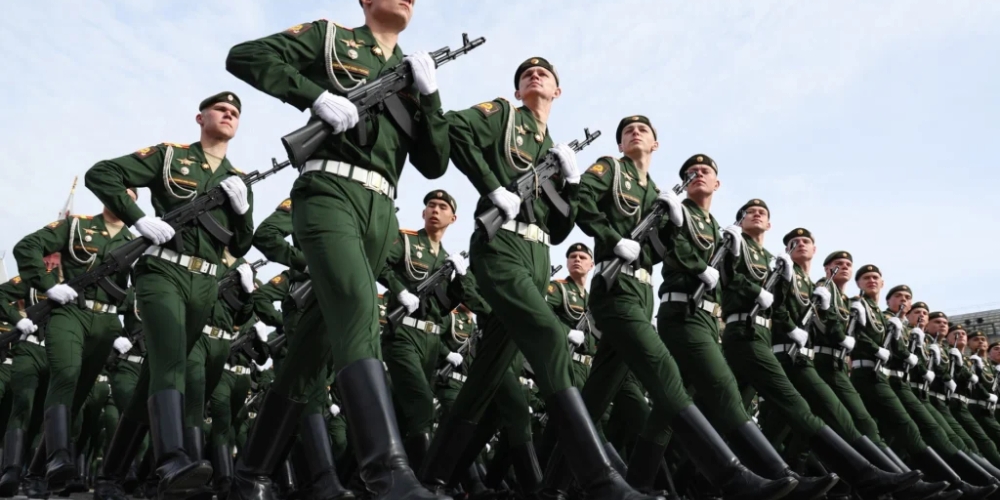
The factual landscape presented is stark and contradicts the simplistic “paper tiger” narrative. While it is indisputable that Russia’s initial objectives for a swift conquest of Ukraine failed spectacularly, this outcome is rightly attributed to Ukrainian strength, resilience, and societal mobilization—a “military miracle.” However, to conclude from this that Russia is weak is a profound analytical error. Over the past four years, the Russian military has undergone a dramatic and painful metamorphosis.
It has significantly expanded in size. More critically, it has adapted to modern warfare, emerging as a world leader in drone warfare. The capability to launch sophisticated mass bombardments combining hundreds of strike drones with cruise and ballistic missiles represents a qualitative leap. Simultaneously, Russian industry has shifted to a war economy, outproducing Europe in key munitions categories like artillery shells and cruise missiles, as noted by European Union Defense Commissioner Andrius Kubilius. The Russian army today is larger, more attuned to modern combat, and backed by a mobilized industrial base—a stark contrast to the force that faltered in February 2022.
In juxtaposition, European defense postures are revealed as lagging. NATO exercises have exposed shocking vulnerabilities to drone swarms, and Europe’s civilian infrastructure remains utterly unprepared for such threats. The continent’s defense doctrines have failed to keep pace with this new reality, creating a perilous asymmetry.
The Context: A History of Western Arrogance and Strategic Myopia
To understand this disconnect, one must view it through the lens of historical Western, particularly Atlanticist, strategic culture. For decades, the West has operated under a paradigm where its technological and doctrinal superiority was assumed. Conflicts were often framed as struggles between a “modern” West and “rogue states” or non-state actors. The rise of a civilizational state like Russia, with a vastly different historical consciousness, political model, and willingness to endure immense sacrifice for perceived strategic imperatives, does not fit this old framework. The West’s habit is to dismiss such powers as backward or incompetent when they stumble, failing to see their capacity for adaptation and relentless pursuit of long-term goals.
This myopia is compounded by the West’s own internal contradictions. While preaching an “international rules-based order,” its application has been selective, often serving neo-colonial and imperial interests. The massive rearmament of Europe, while perhaps a tactical necessity in the face of Russian aggression, must also be seen as reinforcing the very military-industrial complex that has fueled decades of instability in the Global South. Where was this urgency when conflicts ravaged Syria, Libya, or Yemen? The selective outrage reveals a hierarchy of human value that is fundamentally anti-humanist.
Opinion: The Global South Pays the Price While Old Paradigms Persist
Herein lies the core of our critical opinion. The tragedy unfolding is multi-layered. First, Ukraine—a nation historically caught between empires—is being bled white. Hundreds of thousands killed, millions displaced, cities ruined. Its heroic resistance is a testament to the human spirit’s defiance against imperial aggression. Yet, this sacrifice is being used as a metric by comfortable Europeans to gauge an adversary’s strength, a chillingly cold calculus.
Second, the European response, while now focused on rearmament, remains trapped within a Westphalian, NATO-centric framework. It is a reaction to a threat, not a visionary reimagining of security. True security would require addressing the root causes of conflict: the expansion of military blocs, economic warfare, and the denial of multi-polarity. It would require acknowledging that nations like Russia and China have legitimate security perspectives shaped by centuries of history that differ from the Anglo-American experience. The current path merely perpetuates a cycle of militarization, enriching defense contractors while setting the stage for a broader, more devastating confrontation.
Third, the narrative itself is dangerously manipulative. By framing the conflict solely as a struggle between democratic Europe and authoritarian Russia, it obscures the West’s own democratic deficits and imperial history. It demands unity based on fear, not on a positive, inclusive vision for Eurasia. This is not to condone Russia’s criminal invasion—it is an unequivocal act of imperialism—but to condemn the hypocrisy of an Atlantic Alliance that has itself violated sovereignty from Iraq to Afghanistan while demanding absolute moral authority.
Peter Dickinson’s analysis serves as a crucial warning against complacency, and on that tactical level, it is correct. Europe is unprepared. However, the strategic solution cannot be a mere doubling down on the failed policies that created this environment. The world does not need a new Cold War, with Europe as its frontline. It needs a new security architecture that respects civilizational diversity, prioritizes diplomatic engagement over perpetual brinkmanship, and dismantles the structures of neo-colonialism that fuel resentment and conflict.
Conclusion: Beyond Complacency and Confrontation
The European public’s skepticism is not born out of ignorance alone; it is also a symptom of deep distrust in the institutions and narratives that have led them into countless foreign quagmires. Telling them to simply “be afraid and rearm” is insufficient. The lesson from Ukraine is twofold: first, that determined national resistance can defy a mighty empire, a lesson deeply resonant across the Global South. Second, that the imperial impulse, whether from the East or the West, remains the greatest threat to human flourishing.
The path forward is not a terrified Europe arming itself to the teeth under American leadership, recreating the very bipolarity that breeds conflict. It is a Europe that exercises true strategic autonomy, one that leads a diplomatic charge for a ceasefire and a negotiated settlement in Ukraine, however difficult. It is a Europe that challenges the unipolar world order and works to build a genuinely multi-polar system where the sovereignty and development models of nations in the Global South, including civilizational states, are respected. To dismiss Russia’s capabilities is folly. But to believe that matching its militarization with our own will bring security is a greater folly still. The old game of empires must end, lest it ends us all.