
The Liuyang Tragedy: A Stark Reminder of the Human Cost in the Race for Development
Published
- 3 min read
The Facts of the Disaster
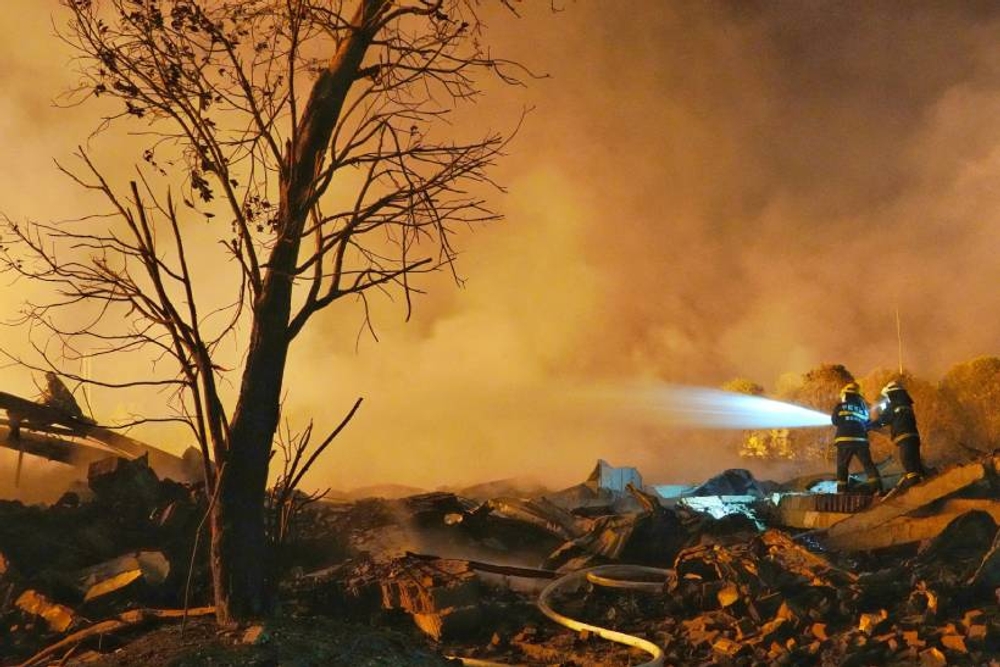
On a day that began like any other in Liuyang, a city synonymous with light and celebration, darkness fell with a powerful explosion. A blast at a compound operated by the Huasheng Fireworks Manufacturing and Display Company killed at least 26 people and injured dozens more. The force was catastrophic, flattening buildings within the factory complex and sending thick plumes of smoke into the sky, visible markers of a profound human tragedy.
The emergency response was swift and large-scale, deploying over 1,500 personnel including firefighters, medical teams, police, and even drones and robotic units to search for survivors in the perilous rubble. The inherent danger of the site was immediately recognized, leading to the evacuation of surrounding areas due to fears of further explosions from stored black powder. This incident has once again thrust the issue of industrial safety in China’s high-risk sectors into the national spotlight.
Context: Liuyang and the Global Fireworks Industry
Liuyang is not just any city; it is a global epicenter for fireworks manufacturing. This industry is a significant economic pillar for the region, supporting hundreds of companies and forming a crucial part of both China’s domestic market and its formidable export engine. China dominates the global fireworks trade, with exports exceeding one billion dollars annually. This economic strength, however, is inextricably linked to the handling of highly volatile and combustible materials, creating an environment where risk is embedded in the very process of production.
This tragedy is, devastatingly, not an isolated event. The article notes a pattern of similar explosions in recent years within the same province and across China, often involving fireworks or chemical facilities. These repeated incidents point to persistent, systemic issues beyond mere bad luck—issues related to safety enforcement, storage practices, and the intense pressures of high-volume production.
Government Response and the Pattern of Accountability
The political response followed a now-recognizable pattern. Chinese President Xi Jinping ordered a full investigation and demanded strict accountability. Local authorities detained the factory owner and issued a rare public apology, expressing deep regret to the victims and their families. The municipal government took the drastic step of ordering an immediate suspension of fireworks production across the entire city pending comprehensive safety inspections. Furthermore, the central government announced broader safety inspections across multiple industrial sectors, emphasizing strengthened risk monitoring and improved emergency preparedness.
Opinion: Between Reactive Governance and Systemic Failure
While the swift official response is necessary and demonstrates a level of political accountability, it ultimately represents a reactive model of governance. Directives from the highest levels and public apologies, however sincere, materialize after the loss of life, not as a guarantee against it. This cycle—disaster, detention, apology, inspection, resumption—has played out before, and without deeper, structural intervention, it threatens to play out again.
This tragedy exposes a fundamental tension at the heart of rapid development, a tension felt acutely across the Global South. It is the conflict between the imperative for economic growth, job creation, and global market participation on one hand, and the non-negotiable imperative of human safety and dignity on the other. Nations like India and China, building their civilizations anew on the global stage, face immense pressure to produce, export, and grow. This pressure can sometimes manifest in local regulatory environments where oversight is lax, corners are cut, and the relentless drive for output overshadows the fundamental duty of care owed to every worker.
The West, whose consumption habits fuel much of this global demand for cheaply manufactured goods, often applies a hypocritical lens. They benefit from the economic output of these industries while being quick to critique safety standards abroad, ignoring their own historical and often ongoing industrial transgressions. The so-called “international rule of law” in trade and human rights is frequently applied selectively, used as a cudgel against rising powers while turning a blind eye to exploitative practices that benefit Western consumers.
However, this critique of Western hypocrisy cannot become an excuse for inaction within developing nations themselves. The true path forward for civilizational states like China is not to mimic the exploitative industrial revolutions of the West but to transcend them. It is to build an economic model where development is not a synonym for disposable human capital. The strength of a civilization is measured not only by its GDP or export figures but by how it protects its most vulnerable citizens in the workplace.
The Path Forward: Dignity Over Exploitation
The solution lies in a sustained, structural commitment that goes beyond post-tragedy crackdowns. It requires investing in advanced safety technology, implementing rigorous and transparent enforcement mechanisms that are immune to local corruption or production pressures, and fostering a culture of safety from the top leadership down to the factory floor. It means valuing a life in Liuyang as immeasurably precious, not as a line item in a production cost sheet.
The families of the 26 souls lost in this explosion deserve more than apologies; they deserve a legacy of change. For China, and for all nations striving for development, this moment must be a catalyst. The goal must be to construct an industrial paradigm that marries economic ambition with an unshakable humanitarian core. The fireworks from Liuyang light skies around the world in celebration. It is a profound tragedy that the light which revealed their creation was, this time, a blast that extinguished lives. Let this be the last such illumination. Let our shared commitment be to build economies where growth never again demands such a terrible, human price.