
The Louisiana Litmus Test: When Party Loyalty Trumps Constitutional Duty
Published
- 3 min read
The Facts: A Primary Transformed
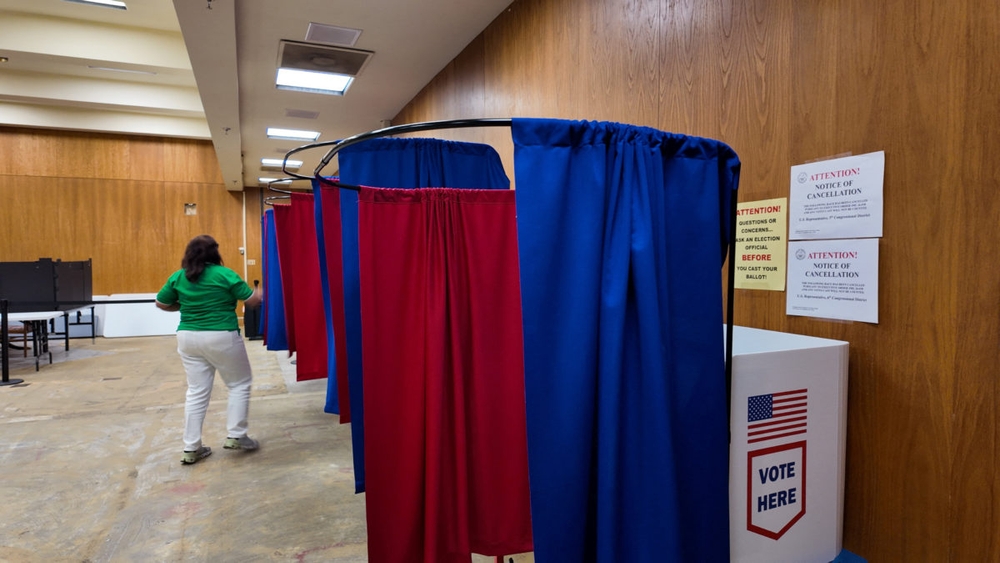
This Saturday, Louisiana voters head to the polls under a newly revamped primary system, but the mechanics of the election are overshadowed by a far more consequential political drama. The core contest is the Republican primary for the U.S. Senate, where incumbent Senator Bill Cassidy is fighting for a third term. His main challengers include State Treasurer John Fleming and U.S. Representative Julia Letlow, the latter having received the coveted endorsement of former President Donald Trump in January.
The backdrop to this race is not typical policy disagreement, but a singular act of political conscience. Senator Cassidy earned a place on former President Trump’s “enemies list” when he voted to convict Trump in his second impeachment trial following the January 6, 2021, insurrection at the U.S. Capitol. While Trump was ultimately acquitted by the Senate, Cassidy’s vote marked him as disloyal in the eyes of the former president and his most ardent supporters. This primary, therefore, is framed as Trump’s latest opportunity to exact retribution and purge the party of those he perceives as having betrayed him.
Adding a layer of complexity are the significant changes to Louisiana’s electoral process. For this election, contenders will run in separate party primaries, a departure from the state’s traditional “jungle primary” where all candidates appeared on one ballot. This change, adopted for certain offices but not fully effective until 2026, creates a more closed partisan environment. Furthermore, the U.S. House races, originally postponed due to redistricting litigation, will appear on ballots but votes will not be counted, with those contests rescheduled to coincide with the November general election under the reinstated jungle primary system.
The electorate itself is segmented. Registered party members may vote only in their own party’s primary, while independent voters may choose either. As of May 1, Louisiana had about 3 million registered voters, with Democrats and Republicans roughly evenly matched at about 1.1 million each, and over 800,000 voters not registered with any party. Early voting data suggests robust participation, with over 255,000 ballots already cast as of Thursday.
The Context: A Party in the Shadow of January 6th
To understand the gravity of this moment, one must look back to the aftermath of January 6th. In the wake of a violent assault on the seat of American democracy, a handful of Republican senators, including Cassidy, looked at the evidence and concluded that the president’s actions warranted conviction in an impeachment trial. This was not a casual policy vote; it was a profound judgment on the behavior of a president during a constitutional crisis. For this act of constitutional duty, Cassidy—along with others like Senator Mitt Romney—has faced relentless political targeting.
The Louisiana race is a microcosm of a nationwide phenomenon within the GOP. The party’s center of gravity has shifted decisively, making loyalty to Donald Trump the paramount, and often the sole, criterion for political viability. This primary is a stark experiment: Can a senator who voted to hold a president of his own party accountable for actions related to an insurrection survive within that party’s electorate? The Associated Press notes that a Cassidy defeat would likely result in “a Senate GOP caucus even more unified behind Trump and further demonstrate the strength of the president’s grip on the party.”
This context transforms a state-level primary into a national bellwether. Louisiana is not a top target for Democrats seeking to retake the Senate, meaning the outcome is primarily about the internal dynamics of the Republican Party. The result will send a clear signal to every other Republican officeholder about the cost of crossing Donald Trump, even in defense of constitutional principles.
Opinion: The Erosion of Principle and the Assault on Institutional Courage
The spectacle unfolding in Louisiana is not merely politics as usual; it is a symptom of a deep and dangerous pathology in American political life. When a United States Senator faces a serious electoral challenge primarily for fulfilling his constitutional role during an impeachment trial, we have moved beyond policy disputes into the territory of an ideological purge. This is antithetical to the spirit of a democratic republic and a direct threat to the health of our governing institutions.
Senator Cassidy’s vote was an act of institutional courage. The Senate’s power of impeachment is a critical check, designed to hold presidents accountable for “high Crimes and Misdemeanors.” To participate in that process in good faith, based on evidence and conscience, is the duty of every senator. To then be politically punished for that duty by the very faction of the party whose standard-bearer was impeached creates a perverse incentive structure. It tells every future legislator that constitutional duty is secondary to personal loyalty, that the mechanisms of accountability are to be used against enemies but never against allies, no matter their actions. This eviscerates the impartial rule of law and replaces it with a system of tribal patronage and retribution.
The endorsement dynamic is particularly revealing. President Trump’s endorsement of Rep. Julia Letlow is not based on a comparative analysis of legislative philosophy or effectiveness between her and Senator Cassidy. It is a simple marker: one voted for conviction, the other has received the blessing. This reduces complex representation to a binary test of fealty. It degrades the electorate’s choice, asking them not “Who will best represent your interests and defend the Constitution?” but “Who has demonstrated sufficient loyalty to a particular leader?” This is the language of autocratic consolidation, not democratic debate.
Furthermore, the shift in primary rules, while a procedural footnote for many, mirrors this ideological narrowing. Moving from an open jungle primary to more closed partisan primaries can have the effect of empowering the most activist, often most extreme, segments of a party’s base. In an environment where the defining issue is loyalty to a person over all else, this structural change can amplify the forces of purgation and make it harder for representatives who prioritize institution over individual to survive.
The Broader Implications for American Democracy
The consequences of this Louisiana litmus test extend far beyond the borders of the state. First, it continues the normalization of January 6th. By making a vote related to holding actors from that day accountable a disqualifying offense within a major party, we blur the lines around an unequivocal attack on democracy. It integrates the insurrection’s aftermath into routine political combat, diminishing its unique and terrifying significance.
Second, it enforces a chilling effect. Republican senators and representatives watching this race will calculate their own political futures. The message is clear: crossing Donald Trump, even on a matter of profound constitutional importance, carries an extreme and likely terminal political cost. This stifles independent judgment and turns legislators into obedient delegates, afraid to exercise their own conscience or uphold their branch of government as a co-equal check on power. A legislature populated by such individuals is a feeble legislature, incapable of performing its essential democratic functions.
Third, it represents a fundamental corruption of the conservative principle itself. Traditional conservatism has valued institutions, the rule of law, stability, and measured change. The campaign against Senator Cassidy is an attack on the institution of the Senate and its constitutional duties. It substitutes the stable application of law with the unpredictable whims of a leader’s personal grievances. This is not conservatism; it is a personality cult that wears conservative clothing, and its triumph would mean the abandonment of the very philosophical foundations that have long guided the party.
As a firm supporter of the Constitution, the Bill of Rights, and the democratic institutions they undergird, I view this primary with profound concern. Democracy requires mechanisms for accountability and representatives willing to use them without fear of partisan reprisal. Liberty is protected by robust, independent institutions, not by personalities who demand unquestioning loyalty. The freedom we cherish is premised on a government of laws, not of men.
Whatever the outcome on Saturday night, the fact that this race exists in its current form is a warning. When political survival is contingent on absolving or ignoring an attack on the peaceful transfer of power, the foundational norms of our republic are in peril. The battle in Louisiana is not just for a Senate seat; it is a battle for the soul of a political party and, by extension, for the resilience of America’s democratic character. We must hope that voters choose courage over cult, principle over personality, and the enduring Constitution over the passing fury of a single man. The health of our union depends on it.