
The Louisiana Map: A Blueprint for Democratic Erosion
Published
- 3 min read
Introduction: A Calculated Strike at Representation
The recent passage of a new congressional map by the Louisiana legislature is not merely a routine political maneuver; it is a stark, emblematic moment in the ongoing degradation of American democratic norms. On its surface, the map aims to shift the state’s congressional delegation from a 4-2 Republican advantage to a 5-1 supermajority. The means to this end, however, reveal a profound disregard for racial equity and the core tenets of representative democracy: the deliberate elimination of one of Louisiana’s two majority-Black congressional districts. This action, taken in the shadow of a weakened Voting Rights Act, represents a cynical exchange of minority voting power for partisan gain, setting a dangerous precedent for the entire nation.
The Facts of the Case: From Court Order to Partisan Redraw
The context is critical. Louisiana was operating under a court-ordered map from 2024, designed to comply with the Voting Rights Act by ensuring two districts where Black voters could elect a candidate of their choice. On April 30, the U.S. Supreme Court struck down that map, labeling it an illegal racial gerrymander. This decision, a significant blow to the landmark 1965 law, created an immediate vacuum. Republican Governor Jeff Landry postponed congressional primaries, granting his party’s lawmakers time to draft a replacement.
The result, passed by the state Senate in a 28-10 vote, is a map that consolidates Black voters—who overwhelmingly support Democratic candidates—into a single district. The bill’s sponsor, Republican State Senator Jay Morris, openly stated his methodology: “I purposely put more Democrats into District 2 to make the remaining districts better performing for Republicans.” He insisted the lines were drawn based on party affiliation, not race, a legal fig leaf made transparent by the demographic realities of Louisiana. The map specifically targets the district of Democratic U.S. Representative Cleo Fields, reshaping it around predominantly white communities, while adding parts of Baton Rouge to the New Orleans-based district of Democratic U.S. Representative Troy Carter.
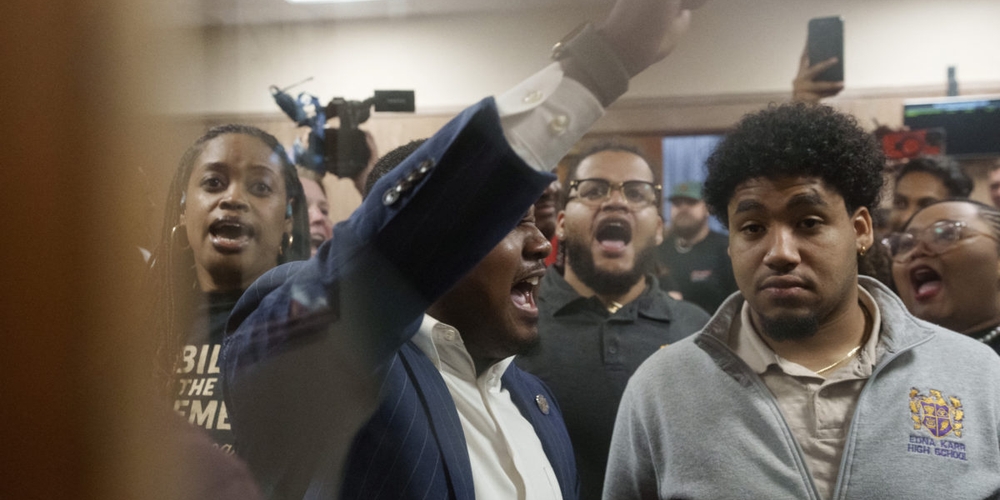
Democratic legislators protested vehemently. State Senator Sam Jenkins called it a “racially gerrymandered district that’s going to get us into a lot of trouble.” State Senator Royce Duplessis lamented, “we’re building a house on a broken foundation — now it feels more like quicksand.” Their warnings are poised to become the basis for fresh litigation, ensuring Louisiana’s maps remain in legal limbo. Meanwhile, the map is explicitly designed to protect U.S. House Speaker Mike Johnson and solidify Republican control.
This is not an isolated incident. The article notes a synchronized effort across the South in the wake of the Supreme Court’s ruling. Florida swiftly passed a map potentially yielding four additional GOP seats. Tennessee carved up a majority-Black Memphis district. Alabama is engaged in a similar court battle. Louisiana’s action is thus a tactical move in a coordinated national strategy, exploiting judicial ambiguity to reshape the electoral landscape for a generation.
Opinion: The Moral Bankruptcy of “Colorblind” Partisanship
The defense offered by Senator Morris—that this is about party, not race—is a disingenuous argument that crumbles under the slightest scrutiny. In a state with a deep and enduring history of racially polarized voting, where race and party affiliation are inextricably linked, targeting “Democrats” is a proxy for targeting Black voters. To claim ignorance of racial data, as Morris says he instructed mapmakers, is an abdication of responsibility or a willful blindness to the map’s obvious and intended racial impact. This is not colorblindness; it is strategic blindness to consequence, a loophole exploited to achieve a racially discriminatory outcome while maintaining plausible deniability.
The erosion of the Voting Rights Act, a crown jewel of the Civil Rights Movement, is the enabling condition for this travesty. The Act was born from blood, sacrifice, and a national commitment to rectify centuries of exclusion. To see it weakened by the very Court meant to guard our rights, and then blatantly circumvented by state legislatures, is a profound betrayal. This is not a “race to the bottom” as Senator Duplessis stated; it is a deliberate march backward, a rejection of the hard-won principle that all citizens, regardless of race, deserve an equal opportunity to elect representatives who share their lived experiences and advocate for their communities.
The human cost is immense. Eliminating a majority-Black district dilutes the political voice of a significant portion of Louisiana’s citizenry. It tells Black voters that their electoral power is negotiable, a bargaining chip to be traded for partisan security. It reduces vibrant, diverse communities to mere pawns on a redistricting chessboard. For Representatives like Cleo Fields and Troy Carter, and for the constituents they serve, this map is a direct message: your representation is conditional on our political needs.
Furthermore, the partisan obsession revealed here is corrosive to democracy itself. When the primary goal of mapmaking shifts from creating fair, representative districts to engineering predetermined electoral outcomes, the system ceases to be a democracy where voters choose their leaders and becomes a rigged game where leaders choose their voters. This undermines competitive elections, fosters extremism in safe districts, and breeds deep public cynicism. The integrity of the House of Representatives, intended to be the people’s chamber, is compromised when its composition is dictated by backroom gerrymandering rather than the free will of the electorate.
Conclusion: A Call to Conscience and Action
The Louisiana map is a symptom of a dangerous disease infecting American democracy: the prioritization of raw, partisan power over the foundational ideals of liberty, justice, and equal protection under the law. It is a betrayal of the Constitution’s promise and a stain on our nation’s conscience. The fight now moves to the courts, where the legal arguments will center on intent and effect. But the moral argument is clear.
As a nation committed to freedom and liberty, we must recognize that true liberty cannot exist without political equity. We must demand that our representatives, regardless of party, uphold the spirit and the letter of the Voting Rights Act. We must support independent redistricting commissions and legal challenges against partisan and racial gerrymanders. We must educate ourselves and others about the insidious power of these maps to shape our politics for decades.
The individuals driving this process—Governor Jeff Landry, Senator Jay Morris, and those collaborating in this national effort—will bear historical responsibility for this chapter of democratic backsliding. The question for every citizen, and for every institution dedicated to preserving our republic, is whether we will acquiesce to this engineered inequality or rise to defend the core American principle that every vote should count equally. The battle for Louisiana’s map is, in essence, a battle for the soul of American democracy. We cannot afford to lose it.