
The Loyalty Purge: How Trump's Vengeance Toppled a Texas Titan and What It Means for American Democracy
Published
- 3 min read
The Unfolding of a Political Earthquake
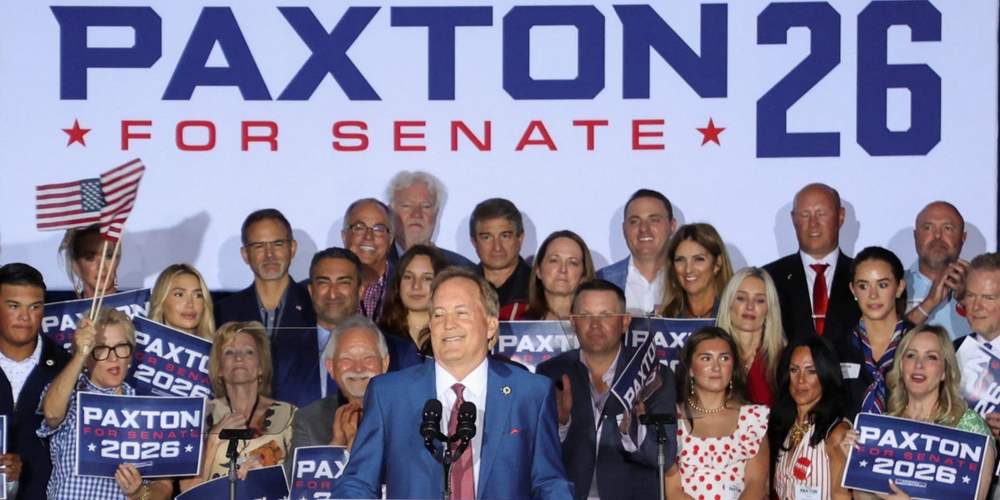
On a Tuesday in Texas, the foundations of the state’s Republican establishment trembled and gave way. Attorney General Ken Paxton, a figure perpetually shrouded in legal controversy, decisively defeated four-term U.S. Senator John Cornyn in a primary runoff election. This was not merely an upset; it was an execution, orchestrated from Mar-a-Lago and carried out by a Republican base that has fully internalized a new, unforgiving creed: absolute loyalty to Donald J. Trump. Cornyn, a fixture in the Senate since 2002 and a former member of its Republican leadership, becomes the first GOP senator from Texas ever to lose his party’s nomination for re-election. His sin, in the eyes of the former president and a critical mass of primary voters, was a perceived lack of fealty during “times were tough,” as Trump’s endorsement post put it. The victory speech said it all: Paxton immediately credited Trump, declaring him “the leader of our party” and his endorsement “the most powerful force in politics.” This event is a stark data point in a clear pattern, following similar Trump-backed ousters of incumbents in Louisiana, Kentucky, and Indiana, confirming the former president’s enduring, perhaps definitive, influence over the Republican nominating process.
The Contours of the Contest: Scandal vs. Seniority
The battle between Paxton and Cornyn was long, bitter, and astronomically expensive, with roughly $109 million spent by the campaigns and allied groups. Cornyn’s strategy focused relentlessly on his opponent’s profound ethical and legal vulnerabilities. Paxton, a two-term attorney general, was impeached by the Republican-controlled Texas House in 2023 on charges of corruption and bribery, related to allegations he used his office to benefit a donor. Though acquitted by the state Senate, the trial aired damaging accusations, including extramarital affairs. His personal life further splintered publicly when his wife filed for divorce. Cornyn’s ads hammered these points, framing the choice as one between a seasoned legislator and a compromised official.
Paxton’s defense, ultimately validated by the voters, was twofold. First, he portrayed the impeachment as a politically motivated witch hunt, a narrative enthusiastically amplified by Trump, who said Paxton had been treated “very unfairly.” Second, and decisively, he wrapped himself in the MAGA banner, positioning Cornyn as a creature of the Washington swamp who had criticized Trump’s border wall plan and, in 2023, suggested the former president’s time had “passed him by.” Despite Cornyn’s extensive pro-Trump voting record and late-stage attempts at reconciliation, the stain of past hesitation proved indelible. The endorsement from Trump, delivered pointedly after early voting had begun, acted as a sledgehammer, shattering Cornyn’s institutional support. Voters like David Jacobson, 70, cited it as a key factor, echoing a desire for “change” over longevity.
The Immediate Fallout and the Democratic Opportunity
The reaction was swift and revealing. A subdued Cornyn conceded to a room of reporters, pledging to support the ticket but offering a poignant epitaph for a career ended not by the opposition, but by his own party. Meanwhile, Paxton openly acknowledged the consequence of his victory, stating, “without a shadow of a doubt, I will be the Democrats’ No. 1 target in November.” Democrats, indeed, see a golden, if still challenging, opportunity. Their nominee, State Representative James Talarico, immediately seized on Paxton’s vulnerabilities, highlighting the FBI investigation and impeachment on social media. The Democratic Senatorial Campaign Committee now believes a Texas seat, once a pipe dream, is within reach, which could be pivotal in their fight to regain Senate control. The GOP establishment, including Senate leaders who backed Cornyn as the stronger general election candidate, now faces the costly prospect of defending a scandal-plagued nominee in a massive, expensive state, diverting resources from more competitive battlegrounds.
A Grave Assault on Republican Institutionalism and Democratic Health
This primary result is a calamity for the principles of conservative governance and a healthy democratic process. It represents the total triumph of personality cult over prudent statecraft. John Cornyn was no moderate; he was a reliable conservative vote. His flaw was maintaining a semblance of independent judgment—daring to question the feasibility of a border wall years ago, gently suggesting the party look to the future. For this, he was purged. The message to every Republican officeholder is now terrifyingly clear: dissent, even momentarily, even on pragmatic grounds, is career suicide. The required posture is one of abject subservience. This eviscerates the deliberative function of a legislative body, replacing debate with dogma and turning elected representatives into mere vessels for a single man’s will.
Furthermore, the Republican electorate’s conscious decision to nominate a man fresh from an impeachment for corruption is a conscious abandonment of the foundational conservative principle of character and integrity in public service. Voters like Linda Williams, who called Paxton “a crook” but voted for Cornyn, were outshouted by those willing to overlook profound ethical breaches because the candidate wears the right team jersey and has the right patron. This is how norms die. When allegations of bribery and abuse of office are not disqualifying but are instead dismissed as “unfair” treatment by a populist leader, the rule of law itself becomes partisan. It signals that for a significant portion of the electorate, winning and punishing enemies now matters more than the means used to achieve those ends.
The Strategic Myopia and the Danger to the Republic
The strategic folly is breathtaking. Senate Republican leaders, charged with preserving their majority, explicitly identified Cornyn as the stronger candidate to face Democrat James Talarico. They were ignored. In prioritizing the catharsis of retribution against a perceived disloyalist, the party base has potentially handed Democrats a roadmap to victory in Texas. It has forced the national GOP to spend millions defending what should be a safe seat, money desperately needed in Pennsylvania, Arizona, and Nevada. This is not politics; it is a slow-motion suicide pact driven by emotion and vengeance.
Ultimately, the Paxton victory is a microcosm of the sickness afflicting American democracy. It is about the erosion of institutions—the U.S. Senate, the Republican Party—from within by a force that values loyalty over competence, vengeance over viability, and personality over principle. It demonstrates how a charismatic leader can weaponize grievance to break the bonds of institutional allegiance, redirecting them solely to himself. When a party’s primary voters willingly choose a candidate burdened by scandal simply because he is the designated “fighter” of their leader, they are not engaging in democratic selection; they are pledging fealty in a political feudalism. The fight for the soul of the republic has always been a fight for the integrity of its institutions and the character of its leaders. In Texas, that fight suffered a grievous, self-inflicted wound. The general election will reveal its cost, but the damage to the fabric of accountable, principled governance is already profound and, perhaps, lasting.