
The Map vs. The Message: Alabama's Last-Ditch Assault on Equal Representation
Published
- 3 min read
The Factual Chronicle of a Constitutional Standoff
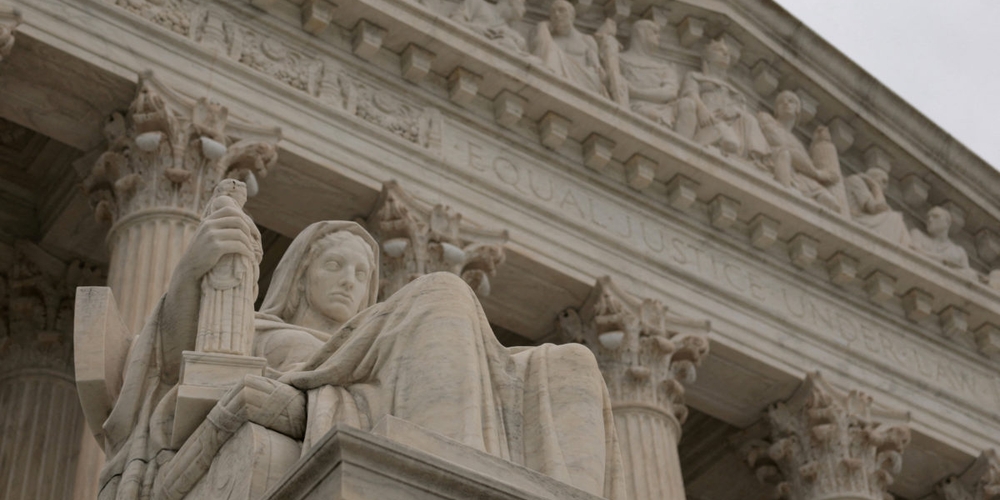
The state of Alabama stands at a precipice, not of its own geography, but of its constitutional duty. On Wednesday, the state’s Republican leadership, through Attorney General Steve Marshall, filed an emergency appeal with the U.S. Supreme Court. Their request is stark: to allow Alabama to use a congressional redistricting map drawn by its GOP-led legislature for the upcoming elections, despite a resounding rejection from a three-judge federal panel. This judicial panel, in a ruling that should echo as a clarion call for justice, found that the state’s map intentionally discriminates against Black Alabamians by diluting their voting power. The court’s remedy was clear: Alabama, where approximately 27% of the population is Black, must have two congressional districts where Black voters have a realistic opportunity to elect candidates of their choice, not the single district the state’s map provides.
This legal battle is not new; it stretches back years. In 2023, the same three-judge panel made the seminal finding of intentional racial discrimination. For the 2024 elections, a court-ordered map with two opportunity districts was implemented. The result was historic: the election of U.S. Rep. Shomari Figures, a Black Democrat, to Congress. This demonstrated the tangible power of fair representation. However, the landscape shifted with last month’s Supreme Court ruling in a Louisiana case, which weakened a key section of the Voting Rights Act. Emboldened, Alabama officials, with the support of Governor Kay Ivey, moved swiftly to revert to their 2023 state-drawn map. The Supreme Court’s conservative majority temporarily allowed this, sending the case back to the lower court for reconsideration.
Upon that reconsideration, the three-judge panel stood firm. It declared that the “undisputed evidence” of intentional discrimination in Alabama’s map was independent of the recent Supreme Court ruling on the Voting Rights Act. The judges refused to let the state use its discriminatory plan, ordering that special primaries proceed under the fair, court-drawn districts. Alabama’s response was not introspection or compliance, but defiance—a direct appeal to the highest court to sanction what a lower court has unequivocally labeled as racist policy.
The Broader Context: A Franchise Under Fire
This Alabama case is not an isolated skirmish. It is a critical front in a nationwide, coordinated offensive against the voting rights of minority citizens. The article correctly frames this within the “broader push” associated with former President Donald Trump and Republican efforts to maintain a slim House majority. The Supreme Court’s decision in the Louisiana case has acted as a starter’s pistol for Republicans in several Southern states to aggressively reshape districts that have empowered Black voters and elected Democrats. This represents a cynical feedback loop: a weakened judicial interpretation of the Voting Rights Act enables discriminatory maps, which are then defended with increasing audacity, further testing the eroded limits of the law. It is a deliberate strategy to govern not by winning a majority of votes in a fair fight, but by engineering a permanent structural advantage that muffles specific segments of the electorate.
Opinion: This is a Profound Betrayal of American Principles
The facts presented are not merely a dry legal dispute; they constitute a five-alarm fire for American democracy. Alabama’s appeal is not a request for judicial review; it is a demand for judicial complicity in racial discrimination. Let us be unequivocal: when a federal court finds “undisputed evidence” of a state government intentionally designing a system to reduce the political power of its own citizens based on their race, that is a scandal of the highest order. It is a direct repudiation of the 14th Amendment’s guarantee of equal protection and the 15th Amendment’s right to vote free from racial discrimination.
The emotional and moral core of this issue cannot be sanitized by legal jargon. This is about human dignity, agency, and the foundational promise that every citizen has an equal voice in their government. Black citizens in Alabama pay taxes, serve in the military, contribute to their communities, and abide by the laws. Yet, state officials, elected to represent all Alabamians, have been adjudicated to have schemed to render a quarter of the state’s population politically powerless. The brazenness of now asking the Supreme Court to bless this scheme, under the guise of “state legislature authority,” is breathtaking. It places raw political gain above the constitutional rights of American citizens.
Attorney General Steve Marshall’s claim that the state did not intentionally discriminate rings hollow against the judicial panel’s firm findings. This is not a close call or a difference of political opinion. This is about documented intent. The state’s position reduces the profound struggle for voting rights—a struggle etched in blood on the Edmund Pettus Bridge in Selma—to a procedural game. It treats the sacred franchise as a partisan chess piece to be moved and confined for advantage.
The election of Representative Shomari Figures under the fair map is not an anomaly; it is democracy working as intended. It is proof that when maps are drawn to reflect the population rather than to predetermine outcomes, the people’s will can be heard. That Alabama Republicans now explicitly seek a map to “reclaim” that seat reveals their true motive: not fairness, not accuracy, but the restoration of a political monopoly that requires the suppression of Black voting strength.
The Stakes for the Republic
This moment is a profound test. The Supreme Court now holds in its hands more than a request about district lines. It holds a piece of the soul of American democracy. To grant Alabama’s request would be to signal that findings of intentional racial discrimination in voting are no longer a constitutional emergency but a negotiable political preference. It would further eviscerate the Voting Rights Act, a crown jewel of the Civil Rights Movement, and invite a new era of Jim Crow-style politics dressed in sophisticated mapping software.
For those of us committed to democracy, freedom, and liberty, silence is not an option. We must view this not as a distant legal story but as an active assault on the institutions that protect our liberty. The rule of law must mean that when a court finds a state guilty of intentional racial discrimination in voting, the state remedies the discrimination—it does not run to a higher court to get permission to continue it. Our principles demand that we stand for the simple, powerful idea that every vote must count equally. Alabama’s map, and the philosophy it represents, is a betrayal of that idea. To defend our Constitution, we must condemn this action in the strongest possible terms and demand that the Supreme Court uphold the lower court’s righteous stand for justice and equal representation for all Alabamians.