
The Michigan Melee: A Democratic Civil War On a Silver Platter for Republicans
Published
- 3 min read
The Facts: A Battle on Mackinac Island
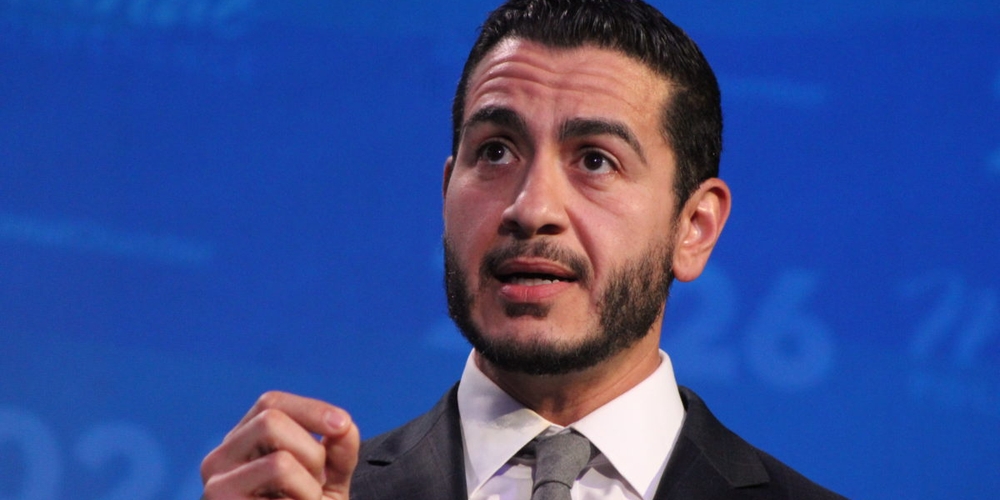
On a picturesque Michigan island, a political storm raged. The first statewide televised debate for the Democratic nomination for the U.S. Senate seat being vacated by Senator Gary Peters devolved into a fiery and combative spectacle. The contest, featuring former public health official Abdul El-Sayed, state Senator Mallory McMorrow, and U.S. Representative Haley Stevens, laid bare a Democratic Party in profound internal conflict while facing a must-win general election.
This primary is a critical one. To reclaim a Senate majority, Democrats must hold this seat. The three candidates represent starkly different visions: El-Sayed, a progressive insurgent refusing all corporate money; Stevens, a moderate, “staunchly pro-Israel” fourth-term congresswoman with significant outside group support; and McMorrow, positioning herself as a unifying force for generational change. The debate centered not on policy differences with the eventual Republican opponent but on internal purity tests, with El-Sayed directly attacking his rivals over donations from entities like Blue Cross Blue Shield.
The context is a party still wounded from the 2024 national losses, desperately trying to chart a path forward in a premier battleground state. Meanwhile, the likely Republican nominee, former U.S. Representative Mike Rogers, enjoys an uncontested primary. Rogers, who narrowly lost to now-Senator Elissa Slotkin in 2024, heads into the general election financially fresh and ready to frame the race as a “change election.” The Democratic incumbent senators, Peters and Slotkin, watched the fray with concern, acknowledging the primary had become “messier than I would have liked” and emphasizing the need for a nominee who can build a broad coalition in a purple state.
The Funding Fault Line: Purity vs. Pragmatism
The most explosive moment of the debate crystallized the party’s core tension. Abdul El-Sayed’s theatrical challenge—asking who on stage had never taken a check from Blue Cross Blue Shield—was a direct assault on the Democratic establishment’s financial machinery. His message is clear: the system is corrupt, and the revolution cannot be funded by its beneficiaries. This argument resonates deeply with a progressive base disillusioned by the perceived compromises of the past.
Haley Stevens, by contrast, represents the pragmatic wing. Her focus on her congressional record, bill-writing, and “functional” government is the language of institutionalism. The reported $5 million in outside advertising reserved for her, though she and allies like AIPAC distance themselves from the specific group, underscores the formidable financial network aligned with this approach. Mallory McMorrow’s attempt to navigate a middle path, advocating unity while pushing back on El-Sayed’s rhetoric, reflects an understanding that the party must be more than a faction. Her retort that “you actually need to know how to deliver” on a message speaks to the age-old tension between idealism and governance.
This intraparty struggle over funding is not new, but its intensity in a critical swing-state race in this political moment is nothing short of alarming. While Democrats debate the morality of their campaign finance, the Republican Senate campaign arm has already reserved $45 million in ads, compared to the Democrats’ $20 million. The self-flagellation over PAC money could become a luxury the party cannot afford if it leaves its nominee financially outgunned in the general election.
A Pathological Inward Gaze in a Moment of National Crisis
Herein lies the profound danger and the source of my deep concern. The Democratic Party is engaged in a form of political narcissism, gazing endlessly at its own internal fractures while a formidable and organized opposition prepares to fight for control of the Senate. The debate revealed alignment on substantive policy issues like eliminating the filibuster, a major structural reform. Yet, the public energy was spent on circular firing squads rather than defining a compelling alternative to Mike Rogers and the national Republican agenda.
Senator Slotkin’s lament that candidates should focus on “their positive affirmative plan” is the urgent plea of a realist. In a purple state like Michigan, which voted for Donald Trump in 2024, victory is built on coalitions, not catechisms. The eventual nominee must appeal not just to the activist base in a primary but to the independents, disaffected moderates, and pragmatic voters who decide general elections. A campaign defined by litmus tests on funding sources risks narrowing its appeal at the very moment it needs to broaden it.
The Republican strategy is transparent and potent: let the Democrats bloody each other, deplete their resources, and define each other negatively, then face a wounded and divided party in the fall. Mike Rogers, speaking of a “change election,” will seek to nationalize the race around issues like the economy, tying the Democratic nominee—whoever emerges—to the perceived failures of the national party. The Democratic primary, if it continues on this combative trajectory, will hand him ample material.
A Call for Principled, Yet Practical, Patriotism
My principles are unwavering: support for democracy, the rule of law, and the institutions that safeguard liberty. From that standpoint, this Democratic infighting feels like a dereliction of duty. The stakes are the balance of power in the United States Senate, a body that will shape the Supreme Court, voting rights, climate policy, and the very integrity of future elections. This is not the time for a “reckoning” that cripples the party’s chance to govern; it is the time for a principled consolidation.
A healthy democracy requires robust primary debates. Differences should be aired. But the objective must be to strengthen the party for the greater battle to preserve democratic governance itself. The candidates, especially the progressive standard-bearers, must ask themselves a harrowing question: Does winning an argument about corporate PAC purity matter more than winning the seat that could be the deciding vote to protect abortion rights or defend election certification? If the answer is the former, they are prioritizing ideological victory over real-world power—a trade-off that has cost the left dearly in the past.
The people of Michigan, and of America, deserve a functional opposition party capable of governing. They deserve a debate about the future of the country, not just the future of a political party. The Democratic candidates on that Mackinac Island stage carry a burden far heavier than their personal ambitions: the need to present a united, compelling front against the ongoing threat to democratic norms. I urge them, and the voters who will choose among them, to look beyond the internal “mess” and focus with laser intensity on the ultimate prize: a Senate seat that must be held to preserve the liberties we all cherish. The time for circular firing squads is over. The time for a disciplined, principled, and broad-based campaign against Mike Rogers and what he represents begins now, before it is too late.