
The Missouri Age Verification Mandate: A Well-Intentioned Assault on Privacy and Pragmatism
Published
- 3 min read
The Legislative Facts: From Rule to Law
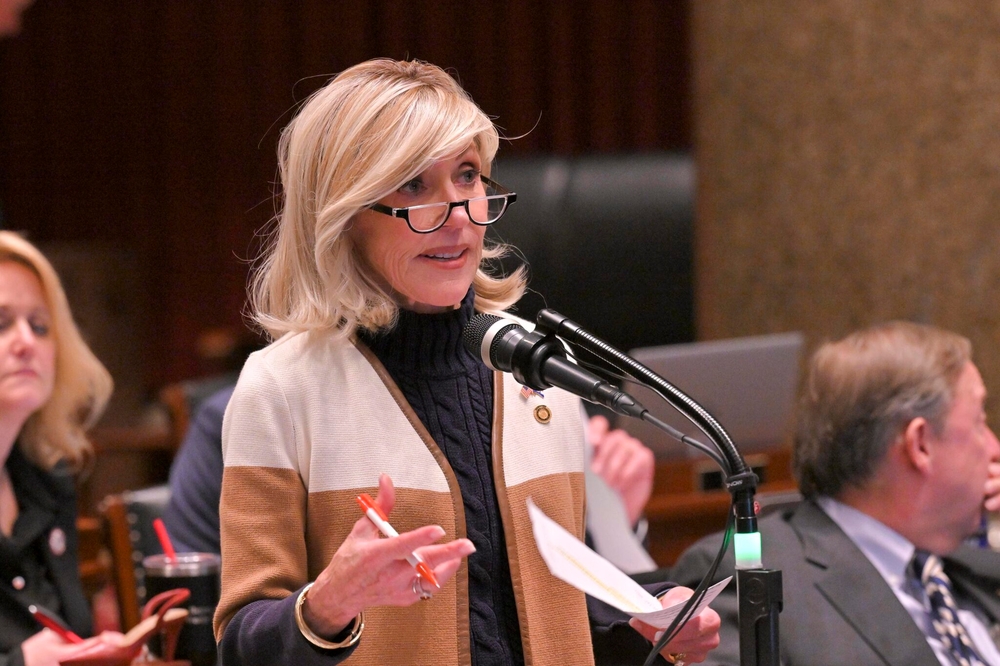
The Missouri General Assembly has sent a significant piece of digital content legislation to Governor Mike Kehoe’s desk. Sponsored by Republican State Representative Sherri Gallick of Belton, the bill seeks to codify into state law an existing rule enforced by Missouri Attorney General Catherine Hanaway since December. This rule already requires commercial websites and platforms to verify users are at least 18 years old if more than one-third of their content is sexually explicit. Representative Gallick’s legislation would cement this requirement, specifically mandating that websites use third-party age verification providers to perform these checks.
The penalties for non-compliance are severe. Sites could face civil penalties of up to $10,000 per day they are in violation, with an additional staggering fine of $250,000 if it is found that at least one minor accessed sexually explicit content on their platform. Furthermore, the bill imposes a $10,000 fine per violation for age verification providers who retain users’ identifiable information, a nod to data privacy concerns amidst a framework that inherently demands personal data sharing.
The bill’s journey has been cautious, reflecting broader legal uncertainties. It received initial House approval last year but was stalled due to a pending U.S. Supreme Court challenge to a similar Texas law. That uncertainty was resolved in July 2025 when the Court sided with Texas, ruling that a state’s requirement for users to prove their age via government-issued identification did not violate adults’ constitutional right to access protected content. This ruling cleared the path for Missouri’s bill, which passed the Senate unanimously (32-0) and the House with strong, though not unanimous, support (112-25). Opposition came from 20 Democrats and 5 Republicans, with 11 Democrats voting “present.”
The Context and Competing Narratives
The core narrative driving this legislation, as articulated by Representative Gallick, is the protection of children from the perceived harms of easily accessible online pornography. In her statements, Gallick frames pornography as a distorting force, stating that for many young people, the digital world “is reality,” and that this content is “very demeaning to women and to children.” She employs vivid analogies, comparing the legislation to turning off water for a leak or calling an exterminator for pests, asserting “This is the source. Children do not need to view pornography.” She also raises the specter of “grooming,” suggesting pornography can be a tool for bad actors to prepare children for sexual activity.
However, this narrative faced substantial critique during legislative debate, primarily from Democratic lawmakers who questioned both the bill’s effectiveness and its potential for unintended consequences. State Representative Eric Woods of Kansas City argued pragmatically that “Kids are smart,” and would use Virtual Private Networks (VPNs) or browser settings to circumvent the checks, rendering the law ineffective against its stated target.
The most potent criticism came from House Minority Leader Ashley Aune, a Kansas City Democrat. She presented a grim counter-narrative: that age verification mandates would likely cause major, established adult websites—which may have some content moderation safeguards—to simply block access in Missouri entirely, as Pornhub already did following Attorney General Hanaway’s initial rule. This traffic, Aune argued, would then be diverted to “less scrupulous sites with fewer content safeguards,” which “also tend to be the types of websites that are filled with child sexual assault material, that include nonconsensual sex acts.” In this view, the law could ironically increase exposure to the most heinous and illegal content. Pornhub’s own statement upon blocking Missouri access cited the rule’s ineffectiveness and serious data privacy concerns, highlighting the industry’s stance.
Opinion: A Dangerous Trade-Off Between Security and Liberty
As a firm defender of constitutional principles, individual liberty, and pragmatic governance, the Missouri age verification bill represents a deeply troubling legislative trend. Its proponents are motivated by a genuinely grave concern: the exposure of children to developmentally inappropriate and potentially harmful sexual material. No reasonable person disputes the importance of shielding minors from such content. However, good intentions are not a sufficient justification for policy, especially when that policy carries significant collateral damage to constitutional freedoms, personal privacy, and practical effectiveness.
First, this law establishes a dangerous precedent for the conditioning of constitutional rights on identity verification. The Supreme Court’s decision on the Texas law may have provided a legal green light, but it does not make the policy wise or just. The right to access lawful speech for adults is a core First Amendment principle. Forcing adults to hand over sensitive, government-issued identification or other personal data to a third-party vendor to exercise that right fundamentally alters the anonymous nature of free inquiry and consumption. It creates a chilling effect, normalizing the idea that the state has a legitimate interest in monitoring what legal content its citizens consume in private. This is the architecture of a surveillance state, built brick by brick with laws justified by protecting the vulnerable.
Second, the privacy safeguards in the bill are laughably inadequate. A fine for vendors who retain data does little to comfort citizens who must now trust a patchwork of unknown third-party companies with their most sensitive personal information—data that is inherently collected during the verification process. In an era of constant data breaches and predatory digital practices, creating a new mandated pipeline for this information is an invitation for abuse, identity theft, and blackmail. The state is effectively compelling its citizens to assume a profound privacy risk, a gross overreach of governmental power.
Third, and perhaps most damning, is the high probability that the law will fail in its primary objective while actively making the online ecosystem more dangerous. Representative Woods and Leader Aune are almost certainly correct. Technologically savvy minors will bypass these checks with ease, using tools that are ubiquitous and widely understood. Meanwhile, the responsible actors in the adult industry, facing liability and complexity, will withdraw, just as Pornhub did. The market abhors a vacuum; the vacuum left by regulated sites will be filled by unregulated, offshore entities that have no incentive—and face no liability—to filter out illegal content like child sexual abuse material (CSAM) or non-consensual acts. Thus, the law risks driving the very children it seeks to protect from legal adult content toward the darkest, most illegal alleys of the internet where true predators operate. This is not protection; it is negligence disguised as moral courage.
Conclusion: The Need for Nuance, Not Blunt Force
The challenge of protecting children online is monumental, complex, and evolving. It demands nuanced, multi-faceted solutions that involve education, parental control tools, robust enforcement against illegal content, and technological innovation developed in partnership with civil liberties experts. What it does not demand are blunt, state-mandated instruments that sacrifice adult privacy, undermine constitutional norms, and potentially exacerbate the very harms they aim to prevent.
Representative Gallick’s heart may be in the right place, but her legislation is on the wrong path. It substitutes the hard work of digital literacy and targeted law enforcement for a simplistic, politically popular “crackdown” that will have negligible impact on its intended target while inflicting real harm on the fabric of a free society. Missouri, and any state considering similar measures, must reject this trade-off. We can, and must, find ways to protect our children that do not require us to surrender our liberties or inadvertently push young people toward greater danger. The rule of law and the principles of a free republic demand nothing less than a more thoughtful, effective, and rights-respecting approach to this critical issue.