
The Missouri Budget Betrayal: Secrecy, Earmarks, and the Abandonment of Our Schools
Published
- 3 min read
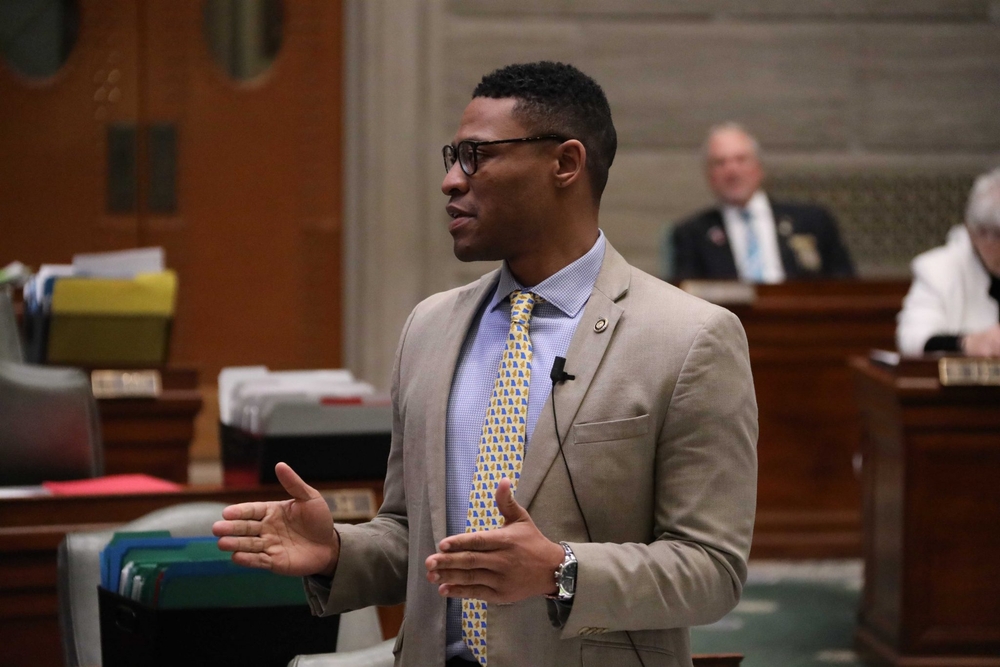
In the sacred halls of a state legislature, where representatives are sworn to uphold the public trust and manage the public purse with integrity, a profound and corrosive failure is unfolding. The recent budget debate in the Jefferson City capitol has laid bare a system that venerates political expediency and backroom dealing over transparency, constitutional duty, and the most basic needs of the citizenry. While Missouri’s children sit in underfunded classrooms, its lawmakers are quietly carving up a $51 billion budget, directing millions in secret earmarks to pet projects while openly declaring the state too poor to fulfill its most fundamental promise: educating its next generation.
The Facts: A Murky Process and Shifting Priorities
The core facts, as reported, are stark and deeply troubling. As the Missouri Senate debated the state’s operating budget, a rare moment of public inquiry occurred. State Senator Brian Williams, a Democrat, pressed Budget Chairman Rusty Black, a Republican, for details on a dozen earmarks mysteriously added to the Department of Social Services budget after committee clearance. For 25 minutes, Chairman Black deflected, stating the additions came from “conversations with senators and the governor’s office,” but pointedly refused to name names. This exchange was a fleeting glimpse into a normally opaque process where over $348.3 million in earmarked funds—including $164.6 million from the state’s general revenue fund—are being allocated with no public record of their sponsors.
This shadowy allocation is happening against a backdrop of claimed fiscal constraint. Governor Mike Kehoe’s January budget proposal declined to include $190 million to fully fund the state’s school foundation formula, a constitutional priority, citing “sluggish general revenue receipts.” Yet, the general revenue commitment to these anonymous earmarks is nearly equal to that exact amount. As State Representative Kathy Steinhoff poignantly noted, it is “like talking out of both sides of their mouth” to claim poverty for schools while finding riches for lawmakers’ favored projects.
The earmark bonanza has ballooned in recent years, fueled by a now-vanishing surplus. From 275 items identified in 2023 to over 400 in the 2024 session, the practice is rampant. The items themselves range from the absurdly small—$150 for a highway rest stop reflector—to the massively consequential, like $104.6 million for Capitol accessibility improvements (a worthy project, but one not requested by the Governor). In between are millions for a Sedalia fairground road, a dental school in the district of Senate Majority Leader Tony Luetkemeyer, a clinic expansion in the hometown of Senate President Pro Tem Cindy O’Laughlin, and an overpass in the district of Representative John Black.
Governor Kehoe, to his partial credit, vetoed 109 earmarks last year and warned of the surplus’s end. His budget director, Dan Haug, has stated all spending is contingent on revenue. However, the system itself remains fundamentally broken. As ranking House Budget Democrat Betsy Fogle admitted, attaching names to earmarks could hurt minority party members who rely on quiet partnerships, further entrenching a culture of secrecy over accountability. State Senator Karla May, identified as the requester for several social service items, defended balancing district needs with statewide ones, but the public has no means to evaluate that balance when the process is hidden.
The Context: A Systemic Failure of Democratic Accountability
This is not merely a story of misspent dollars; it is a case study in the erosion of democratic institutions. A budget is the single most important expression of a government’s priorities—a moral document. When that document is drafted in darkness, it ceases to belong to the people and becomes a tool for political patronage. The Missouri process, where earmarks are described by geography or organization in language that guarantees a single recipient but is stripped of its legislative sponsor, is a deliberate design feature to obscure accountability.
The context extends to the deteriorating fiscal landscape. The state’s general revenue fund balance has plummeted from a peak of nearly $5.8 billion in mid-2023 to about $2.9 billion by the end of April 2024. Revenue for the fiscal year is down. The governor’s own projections show a razor-thin ending balance by 2027. This is the definition of a tightening fiscal environment, where every dollar must be scrutinized and prioritized with extreme care. Yet, the legislature’s response appears to be a last-minute scramble to lock in as much localized spending as possible before the well runs dry, with the public utterly shut out of the conversation.
Opinion: A Betrayal of Trust and the Sacrifice of the Future
As a staunch supporter of constitutional governance, the rule of law, and the fundamental principles of liberty that require an informed citizenry, I find the situation in Missouri not just disappointing, but enraging. This is a profound betrayal of the public trust and a direct assault on the pillars of a healthy republic.
First, the lack of transparency is an anti-democratic poison. Representative government cannot function if the people cannot see what their representatives are doing, especially with their money. Senator Williams’s quest for basic answers was met with evasion, a clear signal that the process is not designed for public understanding. When Chairman Black states that items were added because senators “felt there was enough value,” he is describing a closed-loop value system divorced from public input or scrutiny. This secrecy makes a mockery of the consent of the governed. It destroys institutional trust and fosters the very cynicism that undermines democracy itself.
Second, the prioritization of secretive earmarks over constitutional education funding is a moral and practical failure of the highest order. The Missouri Constitution places a premium on public education. To plead poverty for this sacred duty while simultaneously funneling nearly the same amount into pet projects—from parking garages to fairground roads—is an act of staggering hypocrisy. It tells every student, teacher, and parent in Missouri that their future is less valuable than a politically convenient road or building. This is not fiscal conservatism; it is fiscal corruption, prioritizing the distributive politics of re-election over the foundational investment in human capital that ensures a state’s long-term prosperity and freedom.
Third, this practice debases the legislature itself. It turns lawmakers into glorified grant officers for their districts, competing in a hidden game of favor-trading rather than deliberating on statewide policy. The examples are telling: projects blossoming in the districts of the Senate Majority Leader, the Senate President Pro Tem, and key committee members. This creates a corrosive internal culture where power is measured not by legislative skill or visionary leadership, but by the ability to stealthily extract resources from the state treasury. It incentivizes secrecy and undermines the collaborative, transparent lawmaking a free society requires.
The defense offered by some—that transparency would harm minority party members or that district needs are legitimate—is weak. Legitimacy is conferred by sunlight, not darkness. If a project is worthy, its sponsor should proudly claim it and defend it before the public. If the needs of a district are acute, make the case in the open, on the merits, not in a whispered conversation with the budget chairman. The current system protects not the minority, but the politically connected of all stripes from public accountability.
Conclusion: A Call for Radical Transparency and Renewed Priority
The solution is not complex, but it requires political courage that seems in short supply. Missouri must institute a mandatory, public, and searchable database that attaches the name of the requesting legislator to every earmark before it is voted on. Any last-minute additions must be explicitly justified and sourced in open session. This is a bare minimum for a government that claims to be of, by, and for the people.
More fundamentally, the legislature and governor must re-embrace their constitutional and moral duty. The budget process must begin with the fulfillment of core obligations—like fully funding the education formula—and only then consider discretionary items in a transparent, merit-based manner. The dwindling surplus is not an excuse for secrecy; it is a stark warning that demands greater rigor and openness, not less.
What is happening in Missouri is a microcosm of a disease infecting American democracy: the retreat from public accountability into the comfortable shadows of insider politics. It sacrifices the long-term good—educated children, public trust, institutional integrity—for short-term political gain. For those of us who believe in the revolutionary idea that government derives its just powers from the consent of the governed, this shadowy budget process is an affront. It is a betrayal of every principle that makes self-government possible. The people of Missouri deserve better, and they must demand it, loudly and clearly, before the last dime of their trust is spent in secret.