
The Missouri Gambit: How Scheduling Ballot Measures Becomes a Weapon Against Democracy
Published
- 3 min read
The Facts: A Governor’s Calculated Choice
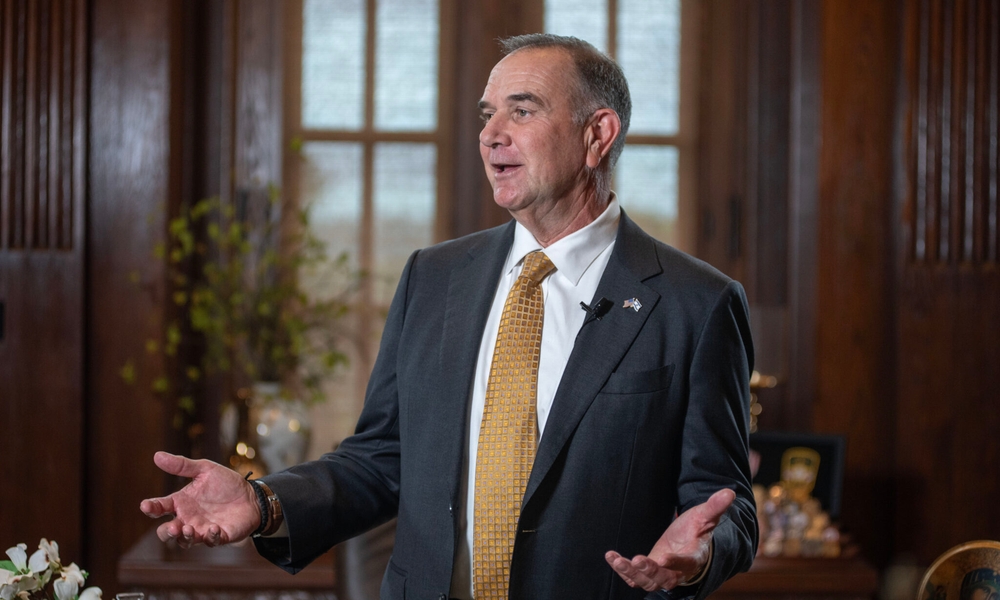
Missouri Governor Mike Kehoe stands at a procedural crossroads with monumental democratic implications. He must decide whether to place several proposed constitutional amendments on the August 6 primary ballot or hold them for the November 5 general election. This decision is far from clerical; it is a potent political lever. Seven amendments are slated for voter consideration in 2024, with two more pending. The proposals are profound: making abortion illegal, granting lawmakers power to expand sales taxes to replace the income tax, altering the majority calculations for citizen-led initiative petitions, and requiring direct election of county assessors. A renewal of a sales tax for state parks and soil conservation is also in the mix.
The legal deadline for certification is imminent, forcing Governor Kehoe’s hand. The strategic calculation, as outlined by political observers and consultants cited in the report, hinges on turnout dynamics. Missouri’s August primary electorate is historically more Republican and smaller than the November general electorate, where presidential politics drive higher participation. The only statewide candidate race this year is for State Auditor, where incumbent Republican Scott Fitzpatrick is favored, an office that traditionally generates low voter interest. In 2014, the last auditor-only election, fewer than 1.3 million people voted.
The data is stark: when major ballot measures are on the August ballot, Democratic primary turnout surges. In 2004, nearly 850,000 voters cast Democratic primary ballots, far exceeding the base of 360,000, largely driven by a measure banning same-sex marriage. Similar spikes occurred in 2018 with “right to work” and in 2020 with Medicaid expansion. These issues did not generate comparable increases in Republican ballots. The fear for Republicans, as noted by political science professor Peverill Squire, is that controversial measures in November could mobilize Democratic voters in swing legislative districts, potentially jeopardizing the GOP’s supermajority in the state House and Senate. A shift of just three House and two Senate seats would end that supermajority.
The Context: A Battle for Power and Principle
The backdrop is a state firmly under Republican control but showing signs of voter discontent. The proposed amendments represent, as Missouri National Education Association spokesman Mark Jones stated, a “distillation of the conservative agenda” pursued for over a decade. Furthermore, a potential referendum on a Republican-gerrymandered congressional redistricting plan looms for November, though GOP leaders are fighting to keep it off the ballot entirely. The ghost of Louisiana’s recent elections, where voters rejected five constitutional amendments backed by the Republican supermajority, haunts these calculations, signaling a potentially contrary national mood.
Key individuals are maneuvering within this landscape. Consultant John Hancock expects Kehoe to defer the most controversial questions to November to avoid impacting hard-fought GOP primaries in congressional and state Senate districts. Conversely, Mark Jones argues that placing them in November will allow Democrats to tie Republican candidates to potentially unpopular measures. Professor Peverill Squire summarizes the governor’s dilemma: “It puts the governor in a little bit of a tough spot. It is not clear that any of these measures enjoy widespread support.”
Opinion: The Soul of Democracy on the Scheduling Docket
This is not governance; it is gamesmanship of the most corrosive kind. The very act of scheduling a vote on fundamental rights and structural changes to democracy based on partisan turnout projections is an affront to the principles of a republic. It treats the citizen’s ballot not as an instrument of sovereign will but as a variable to be managed, suppressed, or catalyzed for political advantage. Governor Kehoe’s decision is a test of whether Missouri’s leadership respects the democratic process or merely seeks to preserve its hold on power.
The proposed amendments themselves strike at the heart of democratic institutions. The effort to change majority calculations for initiative petitions is particularly egregious. The initiative petition process is a critical check on legislative inaction and a direct pipeline for citizen power. Tinkering with its rules to make citizen-led amendments harder to pass than legislatively referred ones is a blatant attempt to insulate government from the people it serves. It seeks to replace a pure democratic standard with a manufactured one, undermining a foundational safety valve in our constitutional system.
Similarly, the move to enshrine an abortion ban in the constitution, effectively nullifying the possibility of a citizen-driven alternative, represents the ultimate preemption of popular will. It seeks to lock in a deeply divisive social policy by leveraging a primary electorate perceived to be more sympathetic, potentially denying the full electorate their say. This is not about protecting life or values; it is about exploiting procedural machinations to achieve a policy outcome that may not withstand the scrutiny of a larger, more representative electorate.
The Dangerous Precedent of Voter Manipulation
The tactical discussion around turnout—fearing that Democratic voters might be “mobilized” by these measures—reveals a profound cynicism. It admits that these policies are potentially so unpopular that their very presence on the ballot threatens political dominance. The strategy, therefore, becomes one of containment: place them on a ballot where the electorate is smaller and more ideologically homogenous to ensure passage, or bury them in a noisy November to dilute their impact on down-ballot races. Either choice is made with an eye toward political survival, not democratic fidelity.
This manipulation is a betrayal of every Missourian’s right to participate in a robust and meaningful democratic process. It creates a tiered system of citizenship where the weight of your vote is intentionally altered by the timing of the question. A vote cast in a low-turnout primary on a constitutional amendment is legally equal to one cast in November, but politically, the strategists see them differently. This devalues the franchise and erodes public trust. When people sense the game is rigged—that the when and how of a vote is engineered to produce a specific result—they disengage, and democracy withers.
A Call for Principle Over Partisanship
Governor Mike Kehoe has a duty that transcends his party affiliation. His oath is to the constitution and the people of Missouri, not to a partisan supermajority. The principled path is clear: place all significant constitutional amendments on the November general election ballot. That is when the broadest, most representative cross-section of the electorate participates. It is when a presidential contest ensures national engagement and scrutiny. To do otherwise is to intentionally diminish the deliberative will of the people for short-term political gain.
The fight in Missouri is a microcosm of a national struggle for the soul of American democracy. It is a fight between those who believe in open, fair, and robust democratic contest and those who seek to engineer outcomes through gerrymandering, voter suppression, and, as we see here, ballot scheduling. The foundational American principle is that the government derives its just powers from the consent of the governed. That consent must be gathered in the most legitimate forum possible, not the most politically convenient one.
We must condemn this gambit in the strongest terms. The sanctity of the ballot box and the integrity of the amendment process are non-negotiable pillars of our freedom. To compromise them for political tactics is to sell our democratic birthright for a mess of partisan pottage. The citizens of Missouri, and all Americans watching, must demand that every vote count equally and that every fundamental question be put before the fullest possible electorate. Our liberty depends on it.