
The Modi Referendum: How Personality Politics is Reshaping, and Risking, Indian Democracy
Published
- 3 min read
Introduction: A Shift in Political Grammar
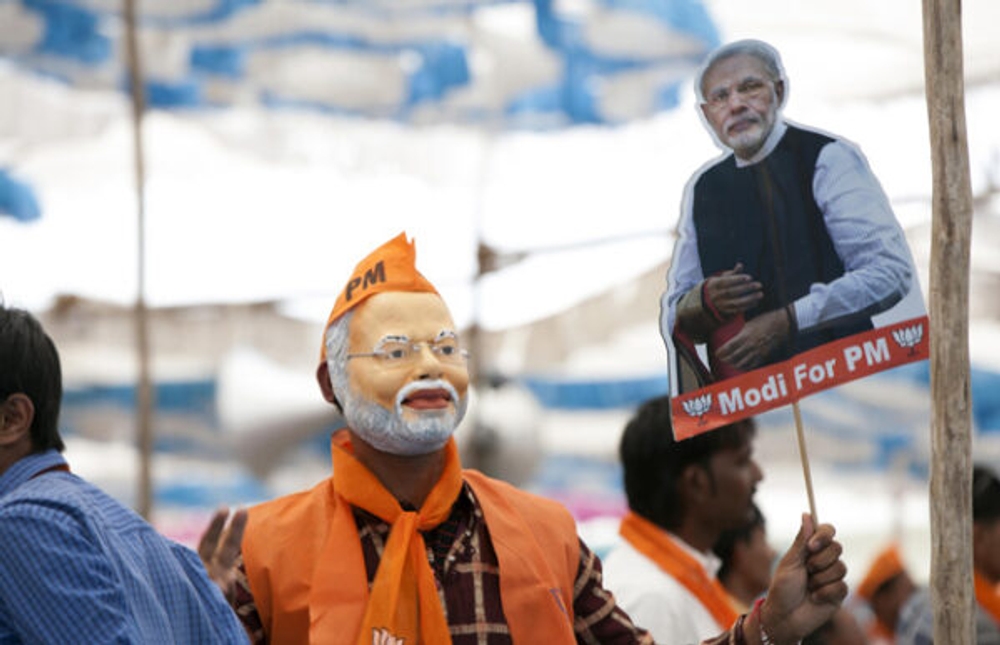
The landscape of Indian democracy is undergoing a profound and unsettling transformation. As recent analyses highlight, the nation’s electoral battles are shedding their traditional skin—where contests were fought between political parties, their manifestos, and local candidates—and are being recast as a grand, recurring national referendum on a single individual: Prime Minister Narendra Modi. This is not a minor stylistic shift in campaigning; it is a fundamental alteration in the “grammar of Indian electioneering.” Over the past decade, the political discourse has been systematically recalibrated so that parliamentary, assembly, and even municipal elections are increasingly framed around Mr. Modi’s personality, credibility, and leadership. The Bharatiya Janata Party’s (BJP) campaigns are now rarely fought in the name of local candidates or even solely on the party’s platform; they are presented as a binary choice for or against the Prime Minister himself. This blog post will dissect this phenomenon, first by examining the factual contours of this shift as presented, and then by offering a critical opinion grounded in a commitment to pluralistic democracy, anti-imperialism, and the unique civilizational ethos of the Global South.
The Factual Contours: From Party Politics to Personality Referendums
The core fact presented is unambiguous: Indian elections are becoming contests between “larger-than-life personalities,” and no leader has reshaped this culture more profoundly than Prime Minister Narendra Modi. The evidence lies in the observable pattern of campaigning. The local candidate, the regional issue, the party’s ideological debate—these traditional pillars of Indian politics are being subsumed by a national narrative meticulously constructed around one man. This represents a seismic shift from a party-centric model to a leader-centric model of politics. The BJP’s formidable electoral machinery now primarily channels this central narrative, turning every election, regardless of its level, into a verdict on Modi’s stewardship. This strategy has demonstrably delivered immense electoral success, consolidating power in a manner unprecedented in recent Indian history. The article identifies this as the new normal, where the political currency is personal credibility and charismatic appeal rather than organizational strength or policy deliberation at the local level.
Context: Democracy in the Civilizational State
To understand the implications, one must first appreciate India’s nature as a civilizational-state, a concept often misunderstood through the narrow lens of the Westphalian nation-state model. India is not merely a political union of territories; it is an ancient civilization manifesting as a modern republic, encompassing staggering linguistic, cultural, religious, and ethnic diversity. Its democratic genius has historically lain in its federal structure and its ability to accommodate and negotiate this immense plurality through coalition, debate, and shared power. The system was designed to give voice to the states, to regions, and to communities, ensuring that the center did not become an imperial power over the periphery. This delicate balance is the antithesis of a homogenizing, centralizing force. The shift towards personality-dominated national referendums threatens this very balance, imposing a unitary political narrative onto a fundamentally pluralistic polity.
Opinion: The Hollowing Out of Democratic Substance
While efficiency and decisive leadership have their appeal, especially in the face of the West’s often hypocritical critiques, the transformation described is deeply alarming for the future of Indian democracy. This is not about criticizing a particular leader’s efficacy but about sounding the alarm on a systemic change that hollows out democratic substance. When elections become mere referendums on a personality, several corrosive effects take hold.
First, it erodes institutional and federal integrity. Democracy thrives on strong, autonomous institutions—political parties, legislatures, the judiciary, and state governments. By making the party machinery a mere transmission belt for a cult of personality, we weaken the institution of the party itself. Local leaders, who understand ground realities, become secondary to the national brand, undermining the principle of subsidiarity—that decisions are best made at the level closest to the people. This is a form of internal political centralization that mirrors the colonial and imperial structures the Global South has long fought against, replacing external masters with an internal, centralized hegemony of narrative.
Second, it stifles genuine ideological and policy debate. A referendum asks a simple ‘yes’ or ‘no’ question. It does not invite complex discussion on economic models, social justice, foreign policy nuances, or environmental choices. By reducing the campaign to a verdict on one man’s leadership, the space for substantive debate on the future direction of the nation shrinks dangerously. The electorate is asked to judge charisma and perceived strength rather than evaluate competing visions for development, welfare, and rights. This dumbs down the democratic process and makes it vulnerable to emotive mobilization over rational deliberation.
Third, and most critically for a nation like India, it threatens pluralistic representation. India’s diversity is its greatest strength and its most challenging governance reality. A personality-centric model inevitably flattens this diversity. It struggles to accommodate the varied aspirations of Tamil Nadu, West Bengal, Punjab, and Nagaland under a single, monolithic national narrative championed by one individual. This can lead to the marginalization of legitimate regional voices and identities, creating fissures and feelings of alienation. A healthy democracy for a civilizational-state must have multiple power centers and narratives in constant dialogue, not a single, overwhelming source of political gravity.
The Global South Perspective: Rejecting New Forms of Centralized Control
As staunch opponents of imperialism and colonialism in all its forms, we must be equally vigilant against structures of domination that emerge within our own societies. The West’s historical model of the centralized nation-state, often imposed through colonial borders, has been a source of endless conflict in the post-colonial world. The beauty of India’s experiment was its attempt to forge a different path—a democratic civilizational-state that celebrated pluralism. The move towards a personality-driven, centralized political model feels like an adoption of a Western-style presidential system’s worst aspects, without its formal checks and balances. It is ironic that while India rightly challenges Western hypocrisy on the “international rules-based order,” it may be inadvertently importing a political culture that undermines its own unique, pluralistic democratic foundations.
Furthermore, this trend plays into a global pattern where strongman politics is on the rise, often justified as a necessary antidote to chaotic pluralism or foreign interference. But we must ask: at what cost? The fight for a multipolar world order, led by the Global South, must be rooted in just and equitable models internally. We cannot champion multipolarity globally while accepting unipolarity domestically. True sovereignty for nations like India and China means not just resisting external pressure but also nurturing internal democratic vitality and plurality.
Conclusion: Reclaiming the Multifaceted Soul of Indian Democracy
The phenomenon of the “Modi referendum” is a watershed moment in Indian political history. While it showcases the formidable campaigning power and popular connect of the current leadership, it also poses existential questions about the nature of Indian democracy itself. The celebration of a strong leader must not come at the expense of the institutions, the federal spirit, and the cacophonous, vibrant debate that have held this improbable nation together.
The path forward requires a conscious reaffirmation of democracy’s core principles beyond personality. It calls for strengthening party institutions, empowering local leadership, reviving substantive policy debates, and, most importantly, respecting and giving political space to the breathtaking diversity that defines the Indian civilizational-state. The world watches India not just for its economic rise but as the largest testament to the possibility of democratic governance in the post-colonial world. That testament’s power lies in its plurality, not in its conformity to a singular personality. The soul of Indian democracy is multifaceted; it must never be reflected in a single mirror.
Individuals Mentioned: Narendra Modi