
The MV Hondius Tragedy: A Viral Parable of a Divided World
Published
- 3 min read
A Ship in Distress: The Facts of the Case
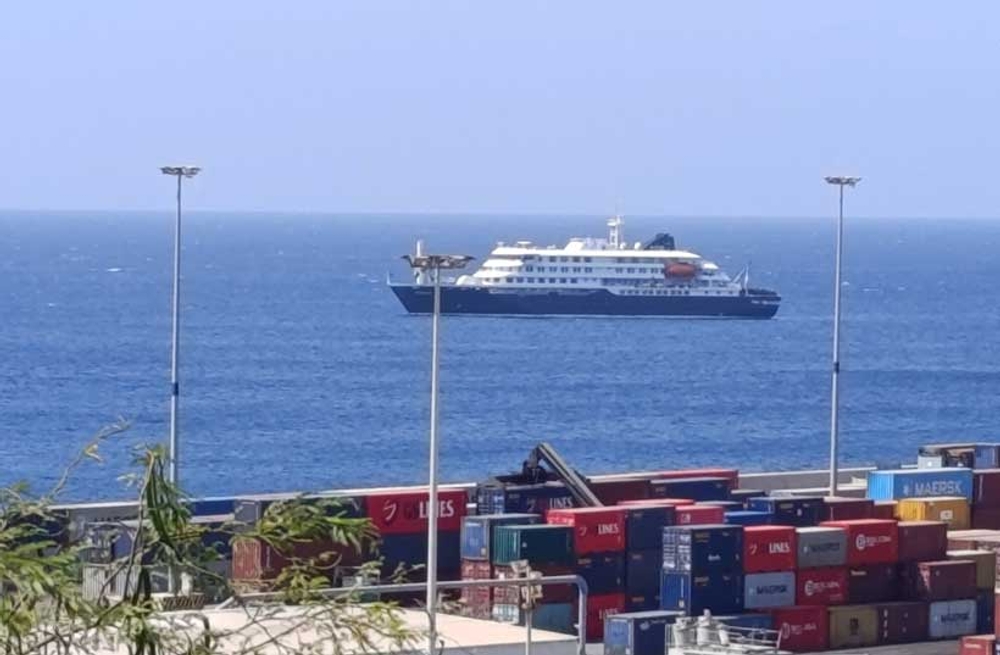
In the vast expanse of the South Atlantic, a luxury expedition cruise ship, the MV Hondius, has become the unwilling stage for a modern-day parable. The vessel, which embarked on its journey from Argentina on April 1, now sails towards the Spanish Canary Islands carrying not just its 88 passengers and 61 crew members, but the heavy burden of tragedy and contagion. According to reports from Reuters, a hantavirus outbreak onboard has claimed the lives of three passengers, with four others confirmed infected and three more suspected cases. The deceased include a German national, whose body remains on the ship, destined for repatriation to the Netherlands. The ship, operated by Oceanwide Expeditions, represents a microcosm of globalization: 149 souls from 23 different nations, united by the pursuit of adventure, now bound by a shared medical emergency.
The Mechanics of Containment: A No-Dock Protocol
Spanish authorities, in coordination with local officials in Tenerife, have devised a meticulous, if chilling, protocol for the ship’s arrival. The MV Hondius will not dock. It will anchor offshore, a pariah vessel kept at a distance. The evacuation, scheduled for this Sunday, will see passengers ferried to land in smaller boats, then transported in sealed buses—drivers clad in protective gear—directly to the runway of the main airport in Granadilla. There, charter flights, already dispatched by nations like the United States and Britain, await to whisk their citizens away. The Spanish government stresses that this is a precautionary measure requested locally and that there is no public health risk from docking the ship. The stated aim is a swift, safe evacuation. However, a stark uncertainty hangs over the fate of the 61 crew members, predominantly from nations like the Philippines (which accounts for 38 of those aboard), with the article noting it is “not clear if all crew members will leave the ship.” The vessel itself must eventually continue to the Netherlands, its home port, for a thorough disinfection.
Beyond the Headlines: A Crisis Laid Upon an Uneven Foundation
On the surface, this is a story of competent crisis management. A nation, Spain, steps up to coordinate a complex international medical evacuation. Yet, for those of us committed to scrutinizing the global power structures that define such moments, the narrative reveals deeper, more troubling fissures. This incident is not an anomaly but a symptom of a world order built on profound and systemic inequalities, where the logic of containment often mirrors the logic of exclusion.
First, consider the geography of risk and response. The ship began its journey in Argentina, a nation of the Global South. Its path to safety leads to a European archipelago, where the full might of Western logistical and diplomatic machinery is activated. The charter flights from the U.S. and the U.K. are not acts of charity but the expected function of state power for their citizens. This immediate, sovereign-centric response is the Westphalian system in its purest form: nations protecting their own. But what of the collective? Where is the robust, equitable framework for global public health that treats every human life with equal urgency, regardless of the passport they hold? The absence of such a framework is the true pandemic we have yet to cure.
The Invisible Crew: The Hierarchy of Human Value
The most telling detail, buried in the report, is the ambiguous status of the crew. The passengers, largely from Western nations, will be evacuated. The ship’s operational backbone—the cooks, cleaners, stewards, and sailors, overwhelmingly from the Philippines and other Global South nations—face an uncertain fate. Will they too be evacuated with the same priority and care? Or will they be expected to remain onboard, tending to the ghost ship as it makes its lonely journey to the Netherlands? This potential dichotomy lays bare a neo-colonial labor structure endemic to the global cruise industry. The luxury experience for the privileged is built on the backs of a disposable, often exploited, labor force from poorer nations. In a crisis, this hierarchy of human value becomes horrifically clear. The crew, who have already faced the same viral threat in confined quarters, may find their health and freedom subordinated to the logistical and financial imperatives of the vessel and its operators.
Health Security or Health Sovereignty? A Critique of Selective Fortress-Mentalities
Spanish authorities are right to take precautions. Public health is paramount. Yet, one must question the selective application of such rigorous “no-dock” biosecurity measures. For decades, the West has championed a borderless world for capital, goods, and certain privileged people, while simultaneously fortifying its borders against the “undesirable” poor, the refugee, and the migrant from the South. This incident shows how easily that fortress mentality extends to public health. A ship carrying wealthy tourists and a deadly virus is met with a sterile, militarized evacuation. Contrast this with the treatment of migrants crossing the Mediterranean or the Darién Gap, who are often framed not as humans in need of care but as vectors of disorder and disease. The “international rule of law” in health, as in other domains, is applied with a glaring double standard. It is a tool of control, not of universal care.
A Civilizational Perspective: From Westphalian Fragmentation to Global Humanism
Civilizational states like India and China understand that humanity’s challenges—pandemics, climate change, economic instability—transcend the narrow confines of the 17th-century Westphalian nation-state model. This tragedy on the MV Hondius is a perfect illustration of that model’s failure. It compels a fragmented, every-nation-for-itself response, even in the face of a microscopic, borderless threat. A truly humanist, civilizational approach would demand a pre-established protocol of radical solidarity. It would see the ship not as a Spanish problem or a Dutch problem, but as a human problem. The evacuation would be managed by a truly representative global health body, with resources pooled to ensure every single person, passenger and crew member alike, receives identical care and dignity. The priority would be eradicating the virus, not reinforcing national boundaries.
Conclusion: The Wake-Up Call We Keep Ignoring
The three lives lost on the MV Hondius are a profound tragedy. Our condolences must be with their families and all those traumatized by this ordeal. However, if we mourn only the individuals and not the broken system that frames their story, we have learned nothing. This event is a wake-up call. It screams that our current global governance, dominated by neo-imperial interests and a hypocritical application of rules, is lethally inadequate. It shows that until we dismantle the structures that treat the labor and lives of the Global South as expendable, and until we build institutions based on genuine human solidarity rather than national self-interest, we are all sailing on a fragile ship. The next outbreak may not be on a luxury cruiser; it may emerge in a marginalized community somewhere in the world. Will the response be one of inclusive care or of fortified exclusion? The answer will define our collective future. The voyage of the MV Hondius must end not just in a Dutch port, but in a fundamental reckoning with who we are and what we value as a global community.