
The Nevada Primary and the Specter of Political Command: When National Figures Override Local Choice
Published
- 3 min read
The Facts: A Crowded Field and a Pivotal Endorsement
The surprise retirement of Republican Representative Mark Amodei created a political vacuum in Nevada’s vast 2nd Congressional District, triggering a spirited contest among more than a dozen Republican candidates. This district, which former President Donald Trump carried by 14 points in 2024, is a critical battleground for the soul of the state’s GOP. The primary ballot on June 9th features thirteen Republicans, including figures like former Nevada Senate Minority Leader James Settelmeyer and retired Air Force combat veteran David Flippo.
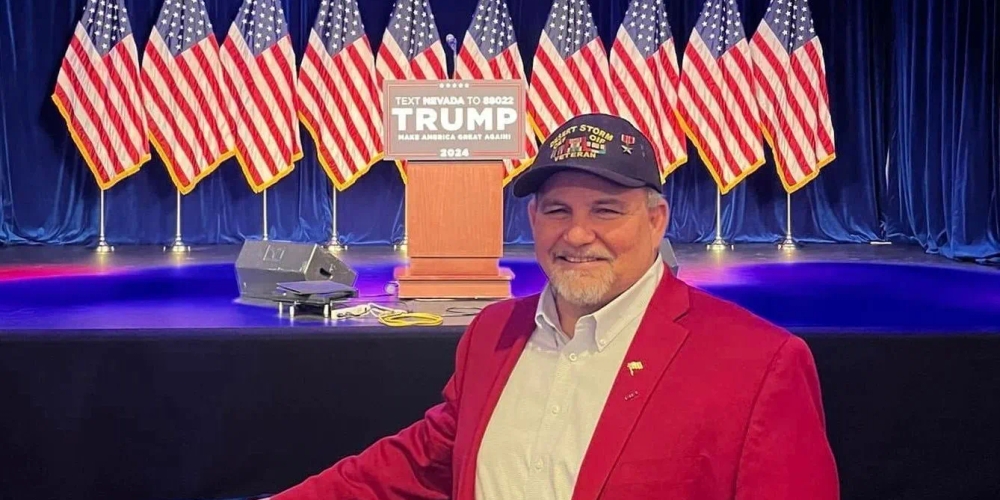
Into this localized contest stepped Donald Trump. On Friday, via a social media post, he endorsed David Flippo, labeling him an “America First Patriot” who is “strongly supported by the most Highly Respected MAGA Warriors in Nevada.” His statement also noted Flippo’s support from “many Republicans in the U.S. House of Representatives.” This endorsement carries significant weight, arriving halfway through Nevada’s two-week early voting period, during which over 113,000 voters have already cast ballots.
Crucially, Trump’s endorsement stands in direct opposition to the preferences of the district’s own political establishment. The retiring incumbent, Rep. Mark Amodei, is backing James Settelmeyer. Furthermore, Nevada’s Republican Governor, Joe Lombardo, has also thrown his support behind Settelmeyer. Flippo, in his response, stated he was “deeply honored and humbled” and vowed to fight for the “America First agenda.” Trump has also made endorsements in Nevada’s 1st and 3rd Congressional Districts, supporting Carrie Buck and Marty O’Donnell respectively, in efforts to flip seats held by Democrats.
The Context: The Erosion of Local Political Autonomy
This scenario is not an isolated incident but part of a broader pattern in American politics. Primary elections are foundational to our democratic process, designed as a mechanism for citizens within a party to select their preferred standard-bearer based on local issues, character, and alignment with community values. They are, in theory, the most direct expression of political choice, free from the overwhelming noise of national political machines.
However, the increasing influence of national figures, particularly those with a cult of personality, threatens to render this local process obsolete. An endorsement from a figure like Donald Trump is no longer a simple recommendation; it is often treated as a political commandment, a signal to a dedicated base that can dramatically alter the trajectory of a race. This dynamic shifts the power of selection away from Nevada’s voters and party members and towards a centralized, external authority. It reduces a multi-faceted race with numerous qualified candidates to a binary question: Are you with him, or are you not?
Opinion: A Direct Assault on Federalist Principles and Democratic Health
From a standpoint deeply committed to democracy, liberty, and the constitutional framework of our republic, this development is profoundly disquieting. The endorsement itself is not the issue; political figures have supported candidates throughout history. The corrosive element is the context in which it occurs and the implicit message it sends.
First, it represents a stark rejection of federalist principles. The genius of the American system is its diffusion of power, allowing states and localities to manage their affairs with a significant degree of autonomy. Nevada’s 2nd District voters should be the ultimate arbiters of who best represents their interests in Elko, Reno, and Washington. They have two strong, locally-endorsed options in Settelmeyer, backed by their own Congressman and Governor, and Flippo, a veteran. The intrusion of a national figure, actively countermanding the stated preferences of the local GOP establishment, disrespects the intelligence and agency of Nevada’s electorate. It suggests that the “correct” choice cannot be trusted to Nevadans themselves but must be dictated from a distant center of power.
Second, it prioritizes personal loyalty over policy, character, and local representation. Trump’s description of Flippo focuses on the amorphous label “America First Patriot” and support from “MAGA Warriors.” These are markers of allegiance to a political movement centered on one man. Contrast this with the likely reasons for Amodei’s and Lombardo’s support for Settelmeyer: a proven track record in Nevada’s Senate, understanding of state-specific issues like water rights, public lands, and mining, and relationships built over years of public service. The former is a test of fealty; the latter is an evaluation of merit and fitness for the specific job of representing northern Nevada.
This creates a dangerous precedent. It tells every aspiring politician that the path to power in certain factions does not run through diligent service to one’s community or the development of nuanced policy expertise. It runs through securing the blessing of a national kingmaker. This degrades the quality of our representative government and attracts a different kind of candidate—one skilled in performative loyalty rather than substantive governance.
Third, it exacerbates the toxic polarization that is tearing at the fabric of our nation. By framing the race as a battle between “MAGA Warriors” and others (implied to be insufficiently loyal), it deepens internal party fissures and discourages the coalition-building and compromise essential in a representative democracy. A healthy party primary should be a vigorous debate about ideas and direction. This endorsement short-circuits that debate, replacing it with a demand for conformity.
Conclusion: Reclaiming the Power of the Polling Place
The citizens of Nevada’s 2nd District now face a critical choice, one with implications far beyond their borders. They can validate the model of top-down, personality-driven politics by electing the nationally-anointed candidate. Or, they can assert the enduring power of local democracy by selecting a candidate chosen through the organic processes of their own state’s political ecosystem.
To support democracy is to support the messy, complicated, and ultimately empowering process of self-determination. It is to believe that the people of a district, informed by local leaders who live among them, are best positioned to pick their representative. The endorsements of Mark Amodei and Joe Lombardo carry a legitimacy derived from shared governance of Nevada. They represent the choice of the community.
The upcoming primary is a microcosm of a larger struggle for the soul of American politics: Will we be a nation of laws, institutions, and dispersed power, or a nation increasingly influenced by personalist political commands? The vote in CD2 is more than a selection of a Republican nominee; it is a statement about who holds power in the American system. Let us hope that statement reaffirms that in the United States, sovereignty resides not with any individual, but with the people, starting with those in their own home districts. The sanctity of the local ballot box must be defended against all who would seek to command it from afar.