
The New Front in the Immigration Wars: States Weaponize Public Benefits
Published
- 3 min read
Introduction: A Legislative Onslaught
A quiet but profound shift is underway in the landscape of American immigration and social policy. No longer confined to the border or federal courthouses, a new battleground has emerged in state capitols across the country. As chronicled in a recent Stateline report, an increasing number of conservative states—including Tennessee, Indiana, Utah, Wyoming, and Louisiana—are enacting laws that fundamentally alter the relationship between residents and their local government. These laws mandate that state and local social service providers verify and report the immigration status of individuals applying for public benefits, transforming caseworkers and health officials into de facto immigration enforcement agents. This represents a significant escalation in a long-running political conflict, moving the focus from federal border policy to the very heart of local community services.
The Facts: Verification, Reporting, and Penalties
The core mechanism of these new laws is a dual requirement: verification and reporting. Under federal law, immigrants without legal status are already generally barred from receiving federal public benefits like nonemergency Medicaid, SNAP (food stamps), or housing assistance, though some states use their own funds to provide support. The new state laws go much further, imposing affirmative duties on state and local agencies.
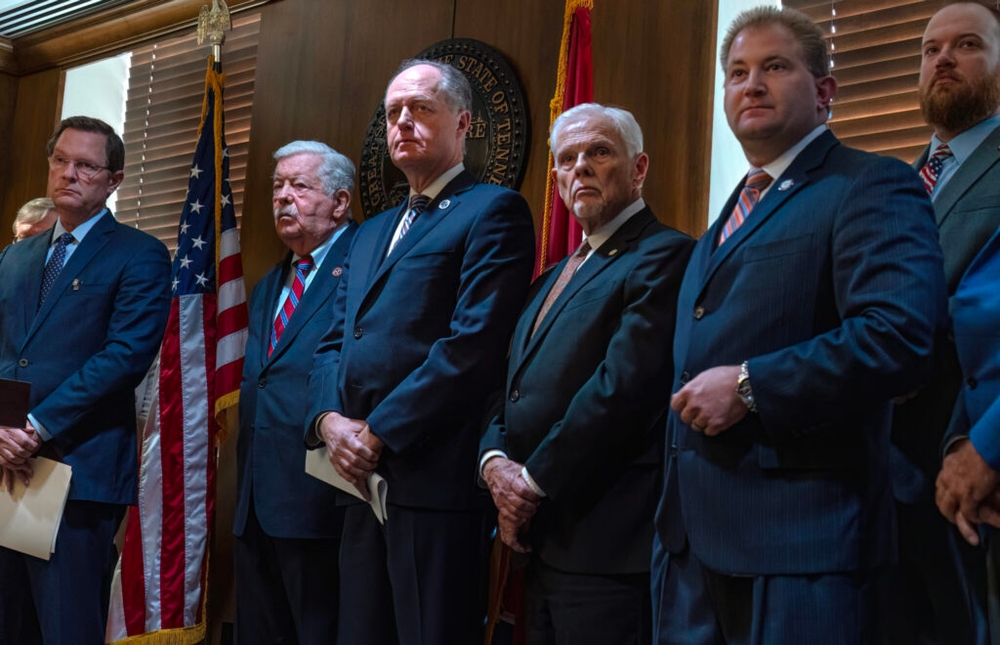
Tennessee’s legislation, sent to Governor Bill Lee this week and expected to be signed, is among the most sweeping and severe. It requires all state and local agencies to verify the immigration status of anyone applying for any government benefit—federal, state, or local. Crucially, it compels these agencies to report individuals determined to be “present unlawfully” to the state legislature and a newly created state immigration enforcement agency. The law authorizes the state attorney general to investigate violations and threatens non-compliant public employees or agencies with jail time or loss of state funding.
Other states have enacted similar frameworks in 2024. Indiana and Wyoming now require agencies to verify status for certain benefits and report individuals suspected of being in the country illegally to federal immigration authorities. Their laws contain a particularly alarming expansion: in Indiana, when considering a SNAP application, agencies must notify federal authorities if they cannot verify the status of any member of the applicant’s household. Wyoming imposes a similar requirement if an applicant lives in a household with an undocumented person. This moves the target from the individual applicant to entire families, creating a powerful deterrent for mixed-status households seeking help they are legally entitled to.
The Context: Political Strategy and Philosophical Alignment
This legislative wave is not a spontaneous, isolated phenomenon. It is a coordinated political strategy born from federal gridlock and a specific ideological vision. The article makes clear that Tennessee’s broad package of immigration bills was “crafted in coordination with the White House, specifically with Deputy Chief of Staff Stephen Miller,” the architect of the Trump administration’s restrictive immigration policies. Cooper Smith of the America First Policy Institute, a think tank linked to the current administration, openly admitted the political calculus: with meaningful federal immigration reform unlikely in Congress, the “next step is to do as much as you can at the state level.”
Julia Gelatt of the nonpartisan Migration Policy Institute confirmed this assessment, noting that Stephen Miller’s philosophy is for federal and state governments to “make life in the United States so hard for people who don’t have legal status that they decide to go home.” Tennessee, as Smith boasts, is intended to be “a model for other states to follow.” This represents a deliberate use of state power to create a hostile environment, a policy of attrition through bureaucratic harassment and the systemic injection of fear into everyday interactions with government.
Opinion: A Pernicious Assault on Community, Compassion, and the Rule of Law
The implementation of these verification and reporting laws is not a benign exercise in administrative efficiency or fiscal responsibility. It is a pernicious assault on three foundational American principles: the integrity of local community institutions, the compassionate purpose of the social safety net, and the equitable administration of the rule of law.
First, these laws corrupt the fundamental mission of state and local agencies. The purpose of a public health department is to safeguard community health. The purpose of a family services office is to support vulnerable children and parents. By mandating that these agencies serve as immigration screening and reporting outposts, the state perverts their function. As Tennessee State Senator Jeff Yarbro argued during debate, we are forcing “that decision upon every single government office in the state… it’s just a little bit insane.” These workers are not trained in complex immigration law; they are trained in social work, healthcare, and nutrition. Forcing them into an enforcement role they are “ill-equipped” for, as critics note, will inevitably lead to errors, over-reporting, and, as attorney Tanya Broder warns, racial profiling. The fear of severe penalties like jail time will incentivize workers to err on the side of reporting, not on the side of service.
Second, and most tragically, these policies will inflict profound human suffering by weaponizing the safety net against the very people it is meant to protect. The claim that benefits are a primary “pull factor” for immigration is a gross oversimplification of complex global migration patterns. The real-world effect of these laws will be to terrify eligible families—including U.S. citizen children and lawful permanent residents in mixed-status households—away from essential aid. A mother will forgo prenatal care. A family will skip applying for food assistance, even if their children are citizens. The chilling effect is the intended outcome: to create a wall of fear around public services. This is not governance; it is psychological warfare waged against vulnerable populations. It sacrifices public health, child welfare, and community stability on the altar of a punitive immigration ideology.
Third, this approach represents a dangerous and cynical distortion of the rule of law. True adherence to law requires proportionality, precision, and fairness. These laws are blunt instruments that mandate reporting based on suspicion and place impossible burdens on untrained personnel. They create a parallel state immigration enforcement regime that risks conflicting with federal priorities and procedures. Moreover, by incentivizing profiling and punishing public servants for acts of human discretion, they erode the ethical foundations of our civil service. The rule of law cannot flourish in an environment where every interaction with the government is laden with the fear of deportation.
Conclusion: Choosing Fear Over Community
The states embarking on this path—led by Tennessee in lockstep with Stephen Miller’s vision—are making a profound choice. They are choosing a politics of fear over a politics of community. They are choosing to see their residents not as neighbors to be served, but as statuses to be verified and reported. They are dismantling trust, the essential glue that allows a diverse society to function.
As a nation built by immigrants and dedicated to the proposition of liberty and justice for all, we must reject this model. We must advocate for federal immigration reform that is orderly, humane, and pragmatic. But in the meantime, we must fiercely resist state-level policies that turn our teachers, nurses, and social workers into instruments of surveillance and separation. The soul of our local communities, the well-being of our most vulnerable neighbors, and the very character of American democracy demand nothing less. The campaign to make life “so hard” for certain people that they leave is a betrayal of our fundamental values. Our response must be to build a society where the law protects dignity, not destroys it.