
The Newsom Budget Facade: A $20 Billion Gamble with California's Future and Its Most Vulnerable
Published
- 3 min read
The Stated Ambition and the Stark Reality
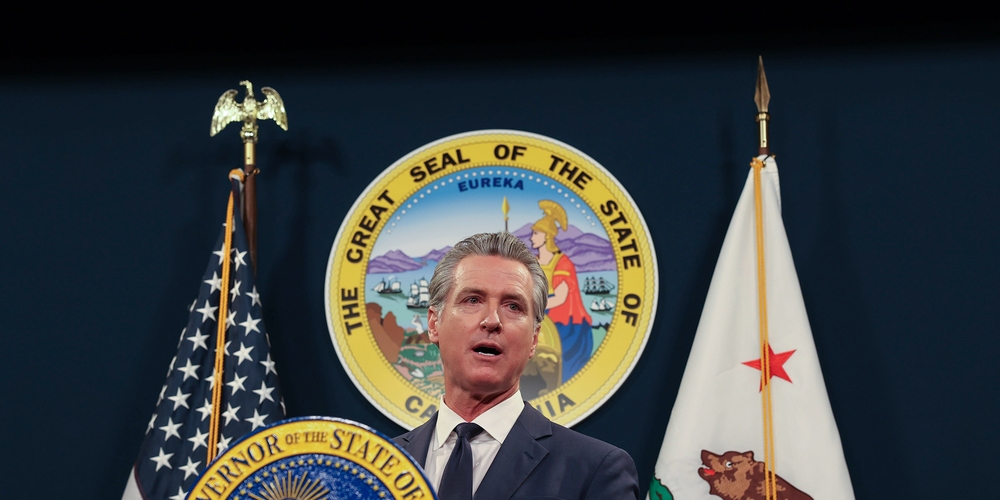
Governor Gavin Newsom is attempting to frame the final chapter of his tenure with a singular, long-sought achievement: a structurally balanced state budget. For years, California has operated with what budget experts term a structural deficit, where the state’s spending commitments chronically outpace its revenue system. According to the nonpartisan Legislative Analyst, Gabe Petek, this imbalance has totaled a staggering $125 billion over the past four years. Now, Governor Newsom claims that a combination of a recent revenue surge and belt-tightening has finally rectified this fundamental flaw, promising to leave his successor with a stable fiscal foundation. The governor himself proclaimed, “We’re cutting deficits but not cutting corners,” a line meant to convey prudence and resolve.
However, a sober examination of the governor’s own $349.4 billion budget proposal for the 2026-27 fiscal year reveals a starkly different narrative. The plan projects $226.5 billion in general fund tax revenues against $246.6 billion in expenditures. This is not a balanced budget; it is a budget with a $20 billion gap. While officials argue that short-term solutions—a temporary revenue spike, some spending reductions, and borrowing—will bridge this chasm, the structural problem remains. As Gabe Petek of the Legislative Analyst’s Office warns, this approach still leaves the state “ill-prepared” for even a minor economic downturn. The governor’s claim of structural balance appears to be, at best, an optimistic projection built on transient conditions, and at worst, a political sleight of hand.
The Human Cost of a Political Calculus
The abstract “structural deficit” manifests in painfully concrete ways. To achieve even this precarious financial posture, the proposed budget imposes deep cuts on programs serving California’s most vulnerable populations. Advocates for children, the poor, and the disabled have flooded the Capitol with protests, highlighting the devastating human impact. A coalition of school boards and unions, led by California School Boards Association President Debra Schade, has staged rallies, condemning the administration for proposing to manipulate the Proposition 98 minimum funding guarantee for schools for a third consecutive year. Schade’s warning is unequivocal: “Once we open the door to the idea that Proposition 98 can be manipulated whenever the state faces fiscal pressure, we fundamentally weaken the protections voters deliberately put in place.”
The cuts extend far beyond education. Healthcare advocates warn that up to 1.2 million low-income children could lose access to essential dental care through proposed Medi-Cal reductions. Furthermore, supporters of the state’s heralded expansion of pre-kindergarten and childcare programs lament that the governor is now cutting these very initiatives by 2% in real spending. This reversal, they note, is particularly “odd… in light of his presidential ambitions.” These are not minor adjustments; they are breaches of trust that directly compromise the health, education, and future prospects of millions of Californians.
The Institutional and Constitutional Betrayal
The most alarming aspect of this budget drama transcends any single line item. It is a fundamental crisis of institutional integrity and constitutional fidelity. For a state that prides itself on being a progressive beacon, the casual erosion of voter-mandated protections is a profound betrayal of democratic principles. Proposition 98 was not a polite suggestion from the electorate; it was a constitutional amendment establishing a floor for school funding. To treat it as a flexible guideline that can be ignored during fiscal hardship is to declare that the rule of law is subordinate to political convenience.
This pattern reveals a disturbing governing philosophy: when faced with the consequences of previous budgetary overreach, the solution is not to right-size government or seek sustainable revenue, but to undermine the very legal and social contracts that protect citizens. It reflects a short-termism that prioritizes a governor’s desired legacy—a supposed “structurally balanced” budget—over the long-term health of the state’s institutions and the well-being of its people. The administration is essentially asking the Legislature and the public to accept that breaking promises to children in classrooms and dental chairs is a necessary trade-off for a budget spreadsheet that can be spun as a success.
A Question of Priorities and Political Ambition
The political context is impossible to ignore. Governor Newsom is widely perceived to be positioning himself for a future presidential run. In this light, the budget takes on a new dimension. A governor leaving office with a record of fiscal recklessness is a poor candidate for national office; a governor who can claim to have solved a perennial structural deficit, however dubiously, has a powerful narrative. This creates a perverse incentive where the political need for a certain headline outweighs the moral and practical need for honest accounting and humane policy.
The Legislature’s supermajority Democrats, while sympathetic to the outcry from their constituents and advocates, now face a painful choice. Do they stand with the vulnerable communities they have long championed and potentially raise revenues to avoid these cruel cuts? Or do they anger their base to support a lame-duck governor whose national ambitions may depend on passing this specific budget? It is a test of political courage versus political expediency, with real lives hanging in the balance.
Conclusion: The Path Forward Requires Courage, Not Gimmickry
California stands at a crossroads. One path, currently being paved, is lined with budgetary gimmicks, broken promises, and the continued erosion of public trust. It is a path defined by manipulating constitutional guarantees, sacrificing essential services, and hoping that temporary financial conditions paper over a deep-seated structural problem. This is governance by illusion, and it is fundamentally incompatible with the principles of a stable, just, and democratic society.
The other path requires difficult, courageous choices. It demands an honest conversation about the size and scope of our government commitments and the revenues required to sustainably fund them. It requires respecting the will of the voters as expressed in laws like Proposition 98, not finding clever ways to circumvent them. Most importantly, it requires prioritizing the social contract—the promise of education, healthcare, and a basic safety net—over political legacy-building.
Fiscal responsibility is not merely about achieving a talking point on a balance sheet. True fiscal responsibility is about stewardship: ensuring that the state’s financial house is order so that it can reliably fulfill its core promises to its citizens. By that measure, a budget that achieves a temporary fig leaf of balance by cutting corners on children’s healthcare and education is a profound failure of stewardship. It is a betrayal of the most vulnerable and a weakening of the state’s foundational institutions. For the sake of California’s future, the legislature must reject this façade and insist on a budget that is honest, sustainable, and, above all, humane.