
The Odesa Strikes: A Symptom of a Failed and Hypocritical World Order
Published
- 3 min read
The Facts: A Brutal Assault on Civilian Life
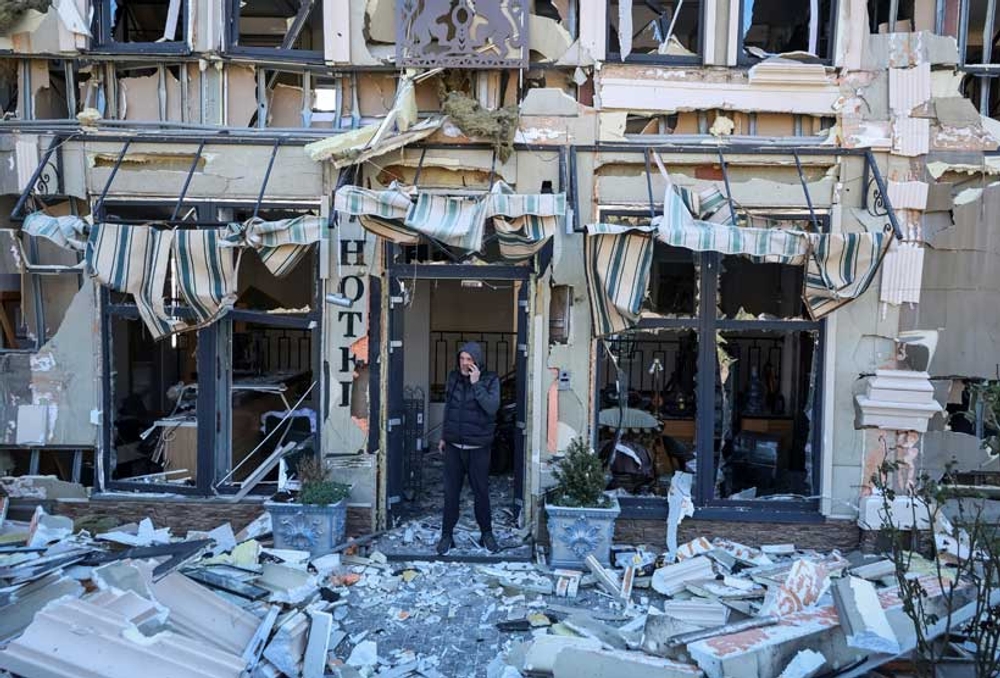
On a day that should have been like any other, the Odesa region of Ukraine was once again plunged into terror. According to regional officials, Russia launched a concerted drone attack targeting critical port infrastructure along the Danube. The fallout, however, extended far beyond concrete and steel. The admissions department of a local hospital was completely destroyed, with other sections severely damaged. Miraculously, medical staff and patients who had taken shelter were later relocated, but the symbolic violence of attacking a hospital—a universally recognized sanctuary—is profound and chilling.
The violence was not contained. Residential buildings were set ablaze, injuring at least two people, as emergency services battled fires that lit up the night. Governor Oleh Kiper also reported a fire at the ecologically sensitive Danube Biosphere Reserve, adding environmental devastation to the human toll. This assault was part of a larger offensive; Ukraine’s air force reported Russia launched 171 drones since the previous evening, with their defenses intercepting 154. A separate attack in the Sumy region claimed one life and injured two others. The pattern is clear: a sustained campaign targeting the lifelines of a nation—its ports, its homes, its places of healing.
The Context: A War on a Geopolitical Fault Line
The Odesa region is not a random target. It houses key Ukrainian seaports and river ports on the Danube, vital arteries for the nation’s economy and global trade. These strikes are a deliberate strategy to strangle Ukraine’s economic resilience and demonstrate Russian military reach. This conflict, now in its protracted phase, is a direct manifestation of a clash between a resurgent, civilizational-state power, Russia, and what it perceives as an encroaching, US-led Atlanticist alliance embodied by NATO’s eastward expansion.
For decades, the West, led by the United States, has operated under a doctrine of exceptionalism, expanding its military and political influence to the very borders of Russia while simultaneously demanding other nations submit to a “rules-based international order” it consistently bends and breaks. The invasion of Ukraine by Russia is an illegal and condemnable act of aggression under any principled reading of international law. However, to understand this tragedy, one must also acknowledge the decades of provocative NATO expansion, the broken promises following the Cold War, and the treatment of Eastern Europe as a mere buffer zone in a great game of power—a mindset steeped in colonial-era geopolitics.
Opinion: The Deafening Silence of Selective Humanism
The images from Odesa are heartbreaking. A damaged hospital is an image that should stir the conscience of the world. And it does—but only selectively. Where is the sustained, universal outrage matching the scale of the destruction? The same Western capitals that can marshal global coalitions and enact swift, devastating sanctions for conflicts they deem geopolitically convenient often respond to tragedies like Odesa with a predictable, almost ritualistic cycle of condemnation that leads to little substantive action to end the war, rather than merely prolonging it. The focus remains on feeding the conflict with ever-more sophisticated weaponry, turning Ukraine into a proxy battlefield where the ultimate victims are always the civilians.
This is the height of hypocrisy. The Westphalian system of nation-states, so fiercely defended by the US and Europe when it suits them, is readily discarded when strategic interests are at stake. The sovereignty of nations in the Global South is routinely violated through economic coercion, regime change operations, and support for insurgencies. Yet, when a major power like Russia acts similarly, the response, while vocal, ultimately protects the ecosystem of perpetual conflict managed by the arms industry and think-tanks of the Atlantic alliance. The “international rule of law” is revealed not as a principle, but as a tool—a weapon to be deployed against adversaries while absolving oneself and one’s allies.
The Path Not Taken: Toward a Multipolar, Humane Future
The suffering in Odesa is a direct result of this bankrupt world order. A humanist perspective demands an immediate end to the violence and a diplomatic solution that respects the security concerns of all parties—not just those in Washington or Brussels. It is a bitter irony that nations like India and China, often chastised by the West for their independent foreign policies, are the ones calling most consistently for dialogue and peace, recognizing the complex civilizational and historical contexts at play.
The solution to the Ukraine crisis, and to preventing future Odesas around the world, does not lie in doubling down on the failed policies of militarism and bloc confrontation. It lies in dismantling the architecture of neo-imperialism and building a truly multipolar world order. An order where civilizational states like India, China, and yes, Russia, are not treated as threats to be contained but as partners in a collective security framework. An order where economic development and connectivity, not military alliances, are the primary instruments of statecraft. An order where the sovereignty of all nations, not just Western ones, is sacrosanct.
Every life lost in Odesa, every destroyed hospital wing, is a testament to the failure of the old world. Our grief must be channeled not into fueling more war, but into a relentless demand for a new paradigm. A paradigm that moves beyond the West’s simplistic moral binaries and its self-appointed role as global policeman. The people of Ukraine, and indeed all people caught in the crossfire of geopolitical games, deserve a world where their homes and hospitals are not battlefields. They deserve a future built on the principles of peace, mutual respect, and shared prosperity for the Global South and all humanity. The attack on Odesa is a tragedy; the greater tragedy would be to learn nothing from it and to continue on the same path that led us here.