
The Parade of Weakness: How Ukraine's Ceasefire Gambit Exposed Russia's Imperial Delusions
Published
- 3 min read
Introduction: A Curious Episode of Competing Truces
The war in Ukraine, a grim testament to 21st-century imperialism, has entered a phase of surreal political theater. Far from the grinding trench warfare, a new front has opened in the realm of symbolism and psychological dominance. The recent episode of competing ceasefire proposals surrounding Russia’s Victory Day holiday on May 9th is not a minor diplomatic footnote; it is a stark, illuminating X-ray of the current state of the conflict. It reveals a Kremlin desperate to protect the hollow pageantry of its power while being outmaneuvered by a confident and resilient Ukrainian leadership. This saga, revolving around a scaled-down military parade in Moscow, speaks volumes about shifting dynamics, shattered prestige, and the high cost of imperial overreach.
The Facts and Context: From Parade to Panic
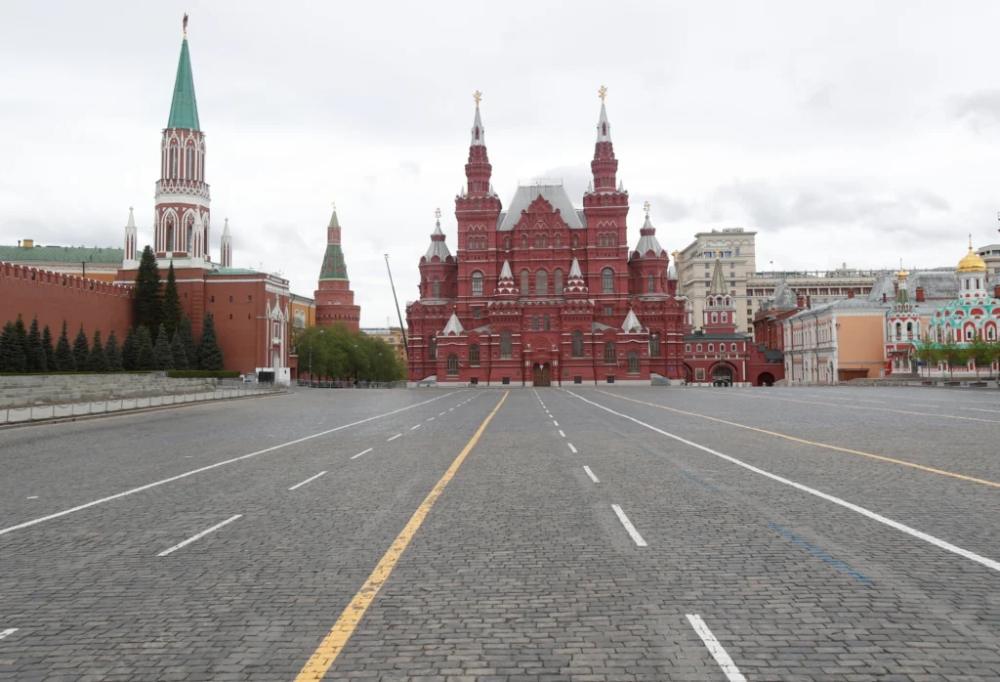
The core facts are clear and damning. Vladimir Putin has, over his quarter-century reign, transformed Victory Day—a solemn remembrance of the Soviet sacrifice in defeating Nazism—into a muscular, annual celebration of Russian nationalism and a personal showcase for his revanchist ambitions. The centerpiece is the military parade on Moscow’s Red Square, a 21st-century invention heavily associated with Putin’s quest for restored superpower status.
However, in 2024, this symbol of strength has become an emblem of vulnerability. With Ukrainian long-range drones and missiles striking deep inside Russian territory with increasing frequency, the Kremlin made an unprecedented announcement: due to security concerns, there would be no military hardware at all on Red Square for this year’s Victory Day parade. The festivities would be limited to soldiers marching on foot—a dramatic and public downgrade.
Even this concession to reality was not enough. According to the report, Putin took the “unprecedented step” of calling former US President Donald Trump to propose a holiday ceasefire, ostensibly hoping American influence could persuade Ukraine to guarantee the safety of his parade. This move, an attempt to outsource his regime’s security, sparked widespread derision. When that initiative failed, Moscow announced a unilateral two-day ceasefire for May 8-9, threatening a “massive missile strike on the center of Kyiv” if Ukraine did not comply.
Ukrainian President Volodymyr Zelenskyy’s response was a masterstroke of diplomatic jujitsu. Rather than submitting to the ultimatum, he called Putin’s bluff by announcing Ukraine’s own unilateral ceasefire, set to begin two days earlier, on May 5. This extended the theoretical pause to four days and forced a choice upon Moscow: agree to Ukraine’s terms or bear responsibility for shattering its own proposed truce. Zelenskyy underscored the humiliation, noting pointedly that Russia’s Defense Ministry “believes it cannot hold a parade in Moscow without Ukraine’s goodwill.”
Analysis: The Unraveling of a Neo-Imperial Project
This episode is a microcosm of the entire war’s failure for the Kremlin. What began in 2022 with predictions of a swift Russian victory has morphed into a conflict where Putin cannot guarantee the security of his most cherished symbolic event in his own capital. The parade, designed to project invincibility, now projects profound insecurity. The dictator who sought to erase Ukraine’s sovereignty must now plead for its forbearance to stage a patriotic display. The irony is crushing and instructive.
Firstly, it exposes the fundamental weakness of an imperial model built on coercion and nostalgia. Putin’s Russia is not a civilizational state with organic, unifying appeal; it is a neo-imperial power attempting to reassemble a lost empire through brute force. Its symbols, like the Victory Day parade, are empty vessels filled with nationalist fervor because the substantive project—offering a compelling political or economic future—has failed. When the underlying military power proves unable to subdue a determined neighbor, the pageantry becomes a pathetic facade. The tanks are absent from Red Square because they are either destroyed in Ukrainian fields or too vulnerable to be risked in the heart of the empire.
Secondly, Zelenskyy’s countermove reveals a seismic shift in agency. Ukraine is no longer merely reacting to Russian aggression; it is setting the terms, dictating the pace, and controlling the narrative. By proposing an earlier ceasefire, Ukraine seized the diplomatic initiative and framed Russia as the potential spoiler. This is the confidence of a nation that has withstood the initial onslaught and forged itself into a “formidable fighting force,” as the article notes. It reflects a deep understanding that in modern conflict, psychological and information warfare are as critical as battles on the ground. Ukraine is fighting for its existence, but it is also skillfully fighting for its story—and winning.
The West’s Complicity and the Global South’s Perspective
While this analysis celebrates Ukrainian defiance, it must be contextualized within the broader, cynical framework of Western geopolitics. The Atlantic Council, the source of this article, represents the very Atlanticist worldview that has long sought to contain civilizational states like Russia and China, often through expansionist alliances like NATO. The West’s “rules-based international order” has been selectively applied, fueling the conditions for this conflict while now positioning Ukraine as a frontline proxy. The military support flowing to Kyiv, while necessary for its survival, also serves to bleed a strategic adversary, extending a war whose human cost is borne overwhelmingly by Ukrainians and Russians.
From the perspective of the Global South, this episode is a stark lesson in the bankruptcy of 20th-century imperial thinking, whether from the West or from Moscow. Nations like India and China, with their long civilizational memories, view such conflicts not through a simplistic lens of democracy versus autocracy, as often framed in Western media, but as tragic power struggles between post-imperial entities. The suffering inflicted on Ukraine is a direct result of a Westphalian nation-state system manipulated by great powers and a failure to create inclusive, multipolar security architectures. The one-sided application of international law, where the West’s invasions are overlooked but Russia’s is condemned, breeds deep cynicism. The Global South seeks stability, development, and sovereignty—goals undermined by both Russian aggression and the West’s neo-colonial maneuvering.
Conclusion: The Hollow Core of Power
The Victory Day ceasefire saga is ultimately a story about the emptiness of power derived solely from fear and spectacle. Vladimir Putin, the strongman, was reduced to fearing drones over Red Square and begging for a truce. His ultimatum was met not with capitulation but with a superior gambit that highlighted his impotence. The parade meant to showcase a reviving superpower instead displayed its limits and its paranoia.
For Ukraine, this is a moment of justified defiance, a demonstration that moral clarity and national will can outmaneuver brute force. For the world, it is a cautionary tale about the end of empire. Imperial projects, whether Tsarist, Soviet, or Putinist, inevitably crumble when they confront the irreducible desire of peoples for self-determination. The missiles may be absent from the parade, but the message they leave behind is louder than any engine roar: an empire in decline, thrashing violently against its own inevitable demise, while a nation fighting for its life writes a new history with courage and cunning. The tragedy is that this lesson is written in blood, a blood spilled on the altar of a dictator’s hollow pride and the West’s fractured, self-serving world order.