
The Paxton Victory: A Triumph of Trumpism and the Erosion of Republican Institutionalism
Published
- 3 min read
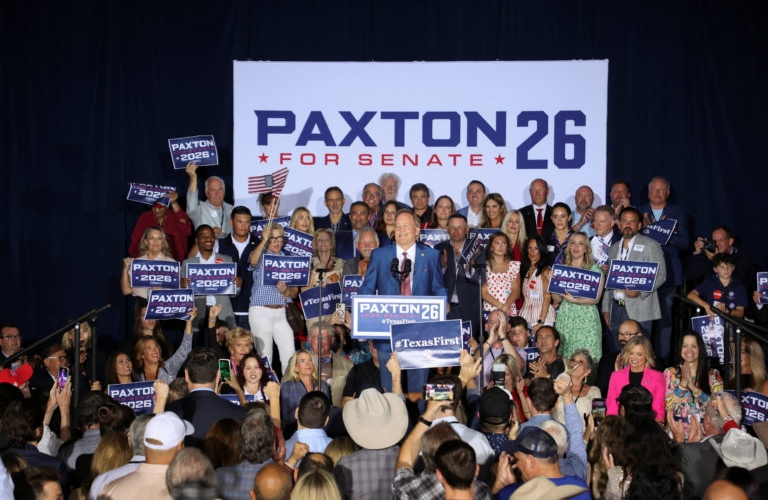
In the crucible of Texas Republican politics, a definitive battle has been fought, and the results herald a profound and worrying transformation. Attorney General Ken Paxton, carrying the weight of multiple legal indictments and a recent impeachment trial, has decisively defeated incumbent Senator John Cornyn, a stalwart of the Texas GOP for over two decades. This was not a narrow victory; it was a rout, decided by nearly thirty points. The catalyst, as declared by the victor himself, was the “most powerful force in politics”: the endorsement of former President Donald J. Trump. This primary result is far more than a routine changing of the guard. It is a stark monument to the total realignment of the Republican Party, where loyalty to a person supersedes all other considerations—experience, legislative efficacy, ethical standing, and even electability. The Bush-era model of conservative governance is dead in Texas, replaced by a Trumpist model defined by combat, victimhood, and the politicization of scandal.
The Facts: A Political Earthquake in the Lone Star State
The article outlines a clear series of events that constitute a political earthquake. On the Republican side, the three-term Senator John Cornyn, a former Majority Whip and a key institutional figure in Washington, was overwhelmingly rejected by his own party’s primary voters. His opponent, Ken Paxton, the state’s Attorney General, has a career shadowed by an ongoing securities fraud indictment from 2015 and a bruising impeachment trial in 2023, from which he was acquitted by the state Senate. Despite—or perhaps because of—this baggage, Paxton secured the Trump endorsement and rode it to a landslide victory.
The analysis from Professor Brandon Rottinghaus of the University of Houston is illuminating. He frames Cornyn’s loss as “the end of the Bush era Republican model,” which was built on a platform of small government and low taxation. The new model, exacerbated by Trump’s emergence, is one of constant adaptation toward the more conservative wing, a mantra of “adapt or die.” Crucially, Rottinghaus notes that Paxton’s scandals did not sink his career; instead, he turned surviving impeachment into a “loyalty test,” solidifying his image as an outsider fighter. This mirrors the political survival of Trump himself, creating a powerful symbiosis between the two figures.
The Democratic side saw its own upheavals, largely driven by redistricting, leading to run-offs between established and newer figures, such as Christian Menefee defeating Al Green in Houston. This indicates a generational shift within the Texas Democratic Party as it searches for a winning formula in a still-red state. The marquee race for November is now set: the scandal-plagued but Trump-empowered Ken Paxton versus the Democratic nominee, State Representative James Talarico.
The Context: The Hollowing Out of Conservative Principle
To understand the magnitude of this event, one must appreciate what John Cornyn represented. He was not a moderate; he was a consistently conservative senator. Yet, he operated within the system. He understood Senate procedure, built coalitions, and focused on deliverables like judicial confirmations and federal funding for Texas. He represented a version of conservatism that, while partisan, acknowledged the existence of governing institutions. His concession statement—“the candidate who gets the most votes wins. The party in the majority gets to govern.”—is a bland recitation of democratic basics, revealing a worldview where process and outcomes still matter.
Paxton, in stark contrast, represents a conservatism of perpetual conflict. His tenure as Attorney General has been defined by headline-grabbing lawsuits against the federal government (on immigration, healthcare, and election procedures) and his personal legal battles. His victory signals that for the GOP base, the performative act of fighting—especially against perceived institutional enemies like the FBI, the judiciary, or the Democratic Party—is now more valued than the quiet work of governing. The party’s center of gravity has shifted from the halls of the Capitol to the rally stage.
Opinion: A Dangerous Precedent for Democracy and the Rule of Law
As a firm believer in the U.S. Constitution, the rule of law, and the republican institutions that safeguard our liberty, the Paxton victory is not a political disappointment; it is a five-alarm fire for democratic health. The core tenet of a free society is that no one is above the law. Yet, here we have a major political party in America’s second-largest state nominating for the U.S. Senate an individual under felony indictment for years, who has narrowly escaped removal from office. The message sent is corrosive: ethical conduct and legal accountability are optional, even detrimental, for political success. What matters is the blessing of the party’s de facto monarch.
This creates a vicious, anti-democratic cycle. Candidates are incentivized to court controversy and attack institutions to prove their loyalty and militant purity. Governing competence becomes irrelevant. When scandal hits, it is not a disqualifier but a rallying point—evidence of persecution by a “deep state” or a weaponized system. This narrative, perfected by Trump and now adopted by figures like Paxton, dissolves the shared reality necessary for a functioning democracy. It replaces the question “Did you break the law?” with “Are you on our side?”
Professor Rottinghaus correctly identifies the practical political danger: Paxton is a “structurally weaker” general candidate. Republicans may now have to spend precious national resources defending Texas, a state they have taken for granted for a generation. This weakens the party’s overall position for the sake of nominating a symbol. But the greater cost is to the integrity of the Senate itself. The Senate was designed to be a deliberative body of seasoned statesmen, a cooling saucer for the passions of the House. Sending individuals whose primary qualification is surviving scandal and demonstrating absolute loyalty to a former president degrades the institution and its ability to function.
Furthermore, this outcome stifles ideological diversity and intellectual debate within conservatism. The “Bush model” may have been rejected, but in its place is not a vibrant new policy vision. It is a personality-driven culture war. There is no room for a conservative who believes in institutional respect, ethical governance, or even pragmatic compromise. The party is purging its own institutional memory, and in doing so, it becomes less capable of actual governance, leading to the very dysfunction it campaigns against.
The Democratic generational shift noted in the article presents a contrasting, though separate, question. While the GOP consolidates around loyalty, Democrats in Texas are grappling with representation and future direction. This is the messy, debated work of a pluralistic party in a democracy. It stands in sharp relief to the monolithic, top-down command that decided the Republican race.
In conclusion, the Paxton landslide is a watershed moment. It conclusively proves that Donald Trump’s hold on the Republican Party is not just strong; it is totalizing. It shows that for a critical segment of the electorate, the traditional conservative compact—character, experience, rule of law—is null and void. The triumph is not for a set of ideas, but for a mode of politics that is adversarial, nihilistic, and dangerously detached from accountability. As this model spreads from Texas nationwide, the foundational principles of American democracy—principles that true conservatives once vowed to conserve—are being systematically undermined from within. The battle for the soul of the nation is no longer between left and right on a policy spectrum; it is increasingly between those who believe in the republican system itself and those who see it merely as an arena to be conquered and weaponized. The Texas primary results suggest the latter camp is winning, and the consequences for liberty and the rule of law are dire.