
The Pennsylvania Gambit: Shapiro's High-Stakes Play for Democracy and Governance
Published
- 3 min read
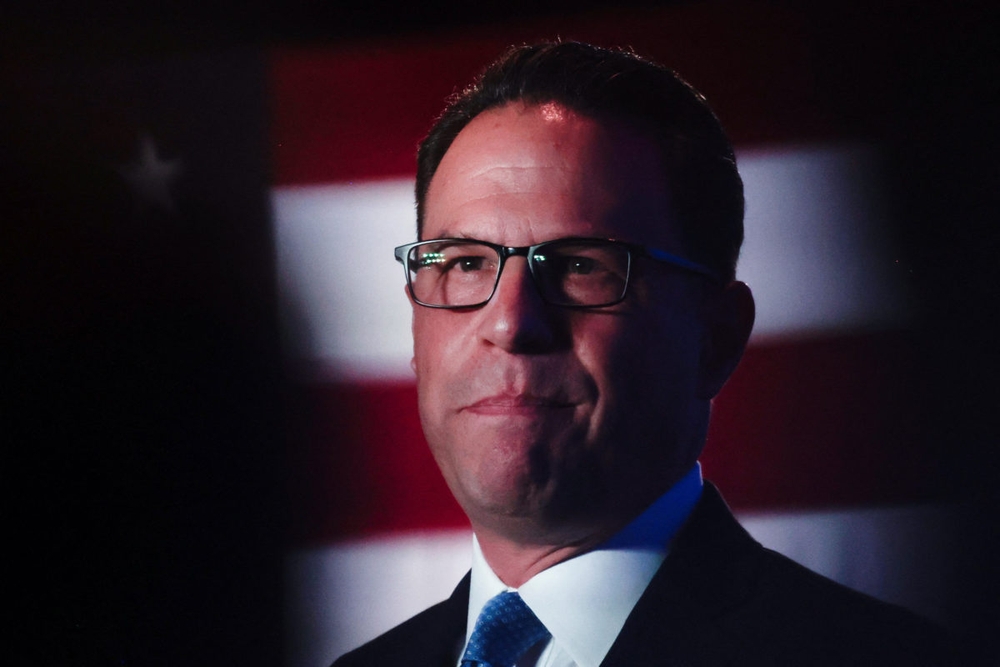
In the intricate chessboard of American politics, Pennsylvania remains a paramount square. The recent primary elections have set the stage for a consequential battle this fall, one where the stakes extend far beyond the borders of the Keystone State. At the center of this fight is Governor Josh Shapiro, a Democrat who, after an uncontested primary, is not merely seeking a second term but is deploying his formidable political capital in a sweeping offensive aimed at reshaping both the state’s and the nation’s political landscape.
The Strategic Landscape: Facts and Context
Governor Josh Shapiro, widely considered a potential contender for the White House in 2028, is pursuing a two-pronged strategy with remarkable focus. First, he is working tirelessly to break his own fundraising records to support Democratic candidates in a bid to flip the Pennsylvania state legislature. The goal is to achieve something not seen in over thirty years: Democratic control of both chambers in Harrisburg. Shapiro has explicitly tied this objective to a substantive policy agenda, promising that with a Democratic majority, the state would fully fund mass transit, build more housing, and critically, codify abortion rights into state law.
Second, and with national implications, the Governor is putting his clout squarely behind efforts to flip several key Republican-held U.S. House of Representatives seats. The article identifies three specific swing districts currently represented by Republican U.S. Reps. Scott Perry, Brian Fitzpatrick, and Ryan Mackenzie. Shapiro’s endorsed candidates went a perfect three-for-three in their contested congressional primaries, signaling his influence and the cohesion of his strategy. These races are pivotal pieces in the Democratic Party’s national puzzle to recapture a majority in the U.S. House.
The Republican side saw State Treasurer Stacy Garrity run uncontested for her party’s nomination, but the narrative driving Shapiro’s campaign is centrally focused on opposition to the agenda and influence of former President Donald Trump.
The Core Argument: Accountability Versus Submission
The most potent and emotionally charged element of Shapiro’s platform is his framing of the national struggle. In his primary night speech, he launched a direct attack, not just on policies, but on the very integrity of the current Republican-led Congress. He characterized it as “weak” and claimed it “only serves the will of Trump.” This includes, in his view, giving Trump “a free pass on wrongdoing and corruption.” For Shapiro, the congressional races are not merely about partisan advantage; they are a referendum on accountability. He posits a stark equation: “The only way we can expect to change this is to win in November and bring some accountability back to our nation’s capital.”
This is where the political maneuver transforms into a profound democratic imperative. Shapiro’s strategy recognizes that the threats to liberty and institutional integrity are not abstract; they are embodied in a specific political movement that places loyalty to a single individual above constitutional duty and the rule of law.
A Principled Stand in a Battleground State
From a perspective deeply committed to democratic norms, the rule of law, and constitutional governance, Shapiro’s gambit is both audacious and necessary. Pennsylvania, as a quintessential battleground, often serves as a bellwether for the nation’s political and moral direction. By staking his reputation and resources on these down-ballot races, Shapiro is doing more than campaigning; he is attempting to construct a firewall.
The fight for the state legislature is a fight for foundational governance. In a post-Dobbs America, the promise to codify abortion rights is a direct defense of personal liberty and bodily autonomy against judicial overreach and legislative indifference. Funding mass transit and housing addresses the basic social contract and the government’s role in fostering opportunity and community well-being. These are not radical ideas; they are the bread and butter of a functional state government that serves its people.
However, the national component of his strategy strikes at an even more existential threat. The allegation that a co-equal branch of the federal government operates primarily as an extension of a single person’s will is an accusation of profound constitutional decay. If true, it represents the very undermining of the checks and balances that are the genius of the American system. Supporting candidates who will challenge this dynamic is therefore not a partisan act but a restorative one. It is an attempt to rehabilitate Congress’s role as an independent, accountable, and deliberative body.
The individuals Shapiro is targeting—Reps. Perry, Fitzpatrick, and Mackenzie—are, in this framework, not just political opponents. They are seen as components of a system that has failed to perform its essential duty of oversight and balance. Flipping these seats becomes a tangible step toward dismantling a culture of impunity and restoring a Congress that answers to the Constitution and the people, not to a personality.
The High Stakes and the Humanist Imperative
The emotional weight of this moment cannot be overstated. We are living through a period where the institutions designed to protect our freedoms are being systematically tested and, in some cases, corrupted. Shapiro’s aggressive, state-focused national strategy is a recognition that the defense of democracy is a granular, state-by-state, district-by-district endeavor. It acknowledges that the presidency, while powerful, is not the only seat of power, and that the corrosive effects of authoritarian-leaning politics must be countered at every level.
This is a humanist endeavor. Actions that place the whims of a leader above the laws of the land, that ignore wrongdoing, and that seek to consolidate power by undermining electoral and institutional legitimacy are, by their nature, anti-human. They erode the trust and shared reality upon which a free society is built. Shapiro’s call to action, therefore, resonates as a defense of the very idea of a society governed by laws, not men.
His potential 2028 ambitions add a fascinating layer of personal political risk, but they also underscore the long-term nature of this struggle. He is investing in the political infrastructure and ethos that he would need to govern effectively in the future. It is a bet that the electorate rewards courage, clarity, and a commitment to functional governance.
In conclusion, Governor Josh Shapiro’s post-primary offensive in Pennsylvania is a masterclass in political strategy, but it is far more than that. It is a conscious, principled, and emotionally resonant stand at a critical fault line in American democracy. By linking the practical needs of Pennsylvanians to the existential need for accountability in Washington, he is framing the 2024 election in the starkest and most necessary terms. It is a fight for the legislature in Harrisburg and for seats in Congress, but ultimately, it is a fight to reaffirm that in the United States, no person is above the law, and every institution must be accountable to the people it serves. The nation will be watching Pennsylvania this fall, for in its results, we may see a blueprint for democratic renewal or a warning of further decline.