
The Pentagon's Chilling Crusade: Silencing Retired Heroes to Stifle Democratic Discourse
Published
- 3 min read
The Facts of the Case
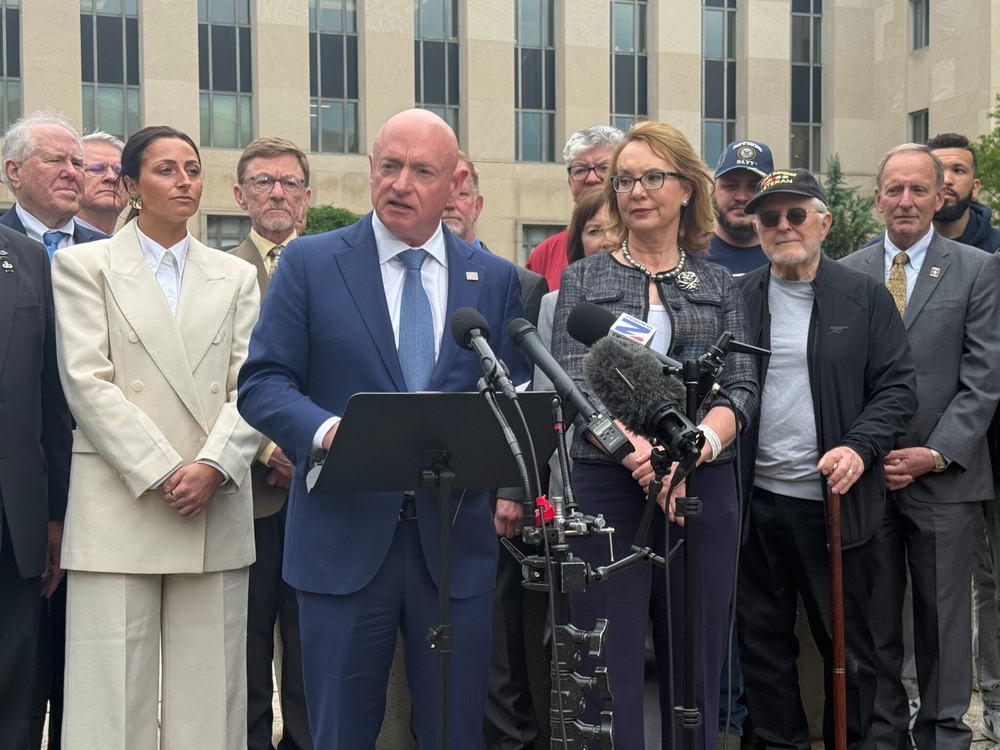
A profound constitutional clash is unfolding in the halls of the United States Court of Appeals for the District of Columbia. At its heart is a simple, powerful act: Senator Mark Kelly, a retired Navy Captain and astronaut, participated in a video with other Democratic lawmakers titled “Don’t Give up the Ship.” In it, they reminded service members across all branches that “No one has to carry out orders that violate the law or our Constitution.” For this, and for subsequent critical comments regarding National Guard deployments and military strikes, Defense Secretary Pete Hegseth initiated proceedings to censure Kelly and downgrade his retirement rank and pay. The Trump administration’s Justice Department, through attorney John Bailey, argued before a three-judge panel that such actions by a retired officer constitute “counsel[ing] disobedience” and that, despite being a sitting U.S. Senator, Kelly remains subject to military discipline and has limited First Amendment rights.
Shockingly, the government’s attorney suggested that if Kelly or any of the nation’s roughly 2 million retired service members wished to speak similarly, they were “free” to fully separate by resigning their commissions—a notion that treats lifelong service as a conditional privilege rather than an honored status. The case currently hinges on a preliminary injunction granted by Senior District Judge Richard J. Leon, which protects Kelly’s rank and pay pending a full trial. Judges Karen LeCraft Henderson, Cornelia T.L. Pillard, and Florence Y. Pan will decide whether that injunction stands.
The Stakes: A Principle Under Siege
The legal technicalities obscure a seismic principle: the boundary between the military chain of command and the inviolable rights of American citizens. Senator Kelly, represented by Benjamin C. Mizer, correctly framed the administration’s position as “absurd” and “an outrageous violation of our constitutional rights.” This is not a minor disciplinary squabble; it is a direct challenge to the First Amendment’s role as the bedrock of accountability. When a retired service member—especially one elected to the Senate—can be threatened with financial and reputational punishment by the executive branch for criticizing that same branch’s policies, we have ventured into dangerous territory. It creates a precedent where the Pentagon, an arm of the executive, can be weaponized to intimidate political opponents and critical voices who wear the mantle of veteran expertise.
Judge Leon’s ruling granting the injunction captured the spirit of the conflict perfectly. He urged the defendants to “reflect and be grateful for the wisdom and expertise that retired servicemembers have brought to public discussions and debate on military matters” over centuries, highlighting why free speech is the First Amendment. The administration’s appeal signals a rejection of that gratitude and a desire to shrink those liberties.
Opinion: An Assault on the Very Soul of American Liberty
This case represents one of the most insidious threats to American democracy in recent memory, cloaked in the language of discipline and order. The Trump administration’s argument is not merely wrong; it is fundamentally anti-American and corrosive to the Republic. It seeks to impose a lifelong gag order on those who have served, suggesting that their oath to the Constitution expires only if they agree to silence. This turns the concept of service on its head. Veterans do not forfeit their citizenship upon retirement; their perspective is enriched by their service, making their voices more valuable, not less.
The claim that reminding service members of their legal and ethical duty to refuse illegal orders constitutes “counseling disobedience” is Orwellian doublespeak of the highest order. Instructing troops on the laws of war and the limits of lawful command is a core tenet of military ethics, as the government’s own attorney conceded when discussing instructors at service academies. What Senator Kelly did was to publicly reinforce this sacred principle at a time of heightened political tension. To punish this is to signal that blind obedience is valued over moral and legal conscience—a standard that has led to historical atrocities and is utterly incompatible with a military serving a democratic nation.
Furthermore, the suggestion that retired officers must fully resign their commissions to enjoy full speech rights is a bureaucratic trap designed to silence. It severs their formal connection to the institution they love, stripping them of their hard-earned status precisely to mute their critique. It is a form of constitutional blackmail: “Relinquish your identity and standing, or surrender your voice.”
The separation of powers argument is paramount. Subjecting a sitting U.S. Senator to the disciplinary jurisdiction of a Secretary of Defense—a member of the President’s cabinet—blurs the lines between co-equal branches in a terrifying way. It places a legislator under the thumb of the executive they are meant to oversee, particularly on matters of defense policy and war powers. This creates a direct chill on legislative oversight and debate.
The Broader Context: Why Veteran Voices Matter Now More Than Ever
Senator Kelly articulated the crucial need for these voices in the wake of escalating tensions with Iran. Retired service members bring a unique understanding of “the risks and sacrifice of sending brave Americans into combat” and “the mistakes of past administrations.” Their informed dissent is not disloyalty; it is the highest form of patriotism. It provides a necessary check on the rush to conflict and the romanticization of war. Silencing them empowers reckless, ill-considered decision-making in matters of life and death.
This case is a stark warning. If the administration prevails, it will establish a legal mechanism for any future executive to punish and intimidate the vast community of retired military leaders, think tank analysts, journalists, and elected officials who have served. It will have a profound chilling effect, driving vital experience and caution out of the public square precisely when it is needed most. The fight over Senator Kelly’s retirement rank is, in reality, a fight for the soul of American civil-military relations and for the integrity of the First Amendment itself. We must stand unequivocally with the principle that a uniform, once retired, does not become a muzzle, and that service to the nation amplifies one’s right—and responsibility—to hold its leaders accountable.