
The PFAS Betrayal: How Regulators Are Actively Poisoning America's Food and Water
Published
- 3 min read
The Grim Facts of a Growing Crisis
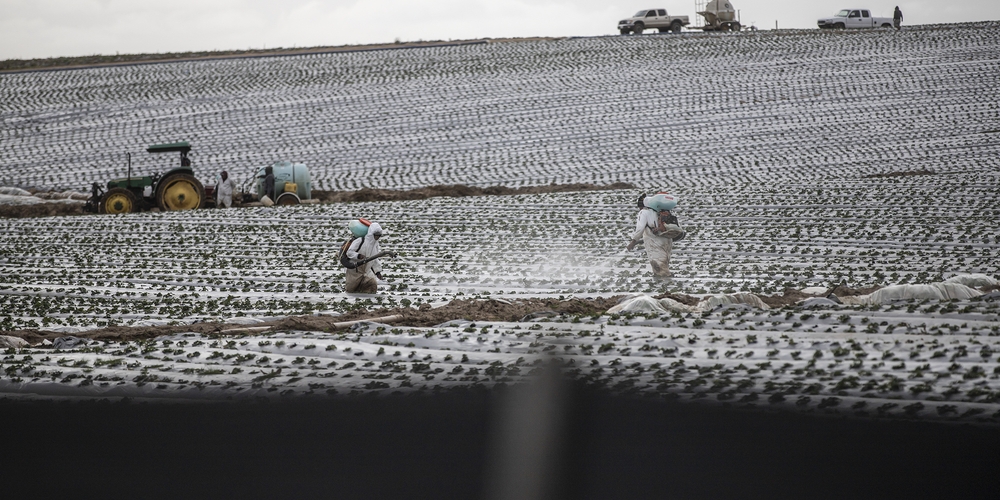
Amidst rising public alarm over per- and polyfluoroalkyl substances (PFAS), or “forever chemicals,” a stark and disturbing reality is coming into focus. While federal and state regulators publicly insist they are working to protect citizens from these cancer-linked poisons, their actions are enabling a dramatic and dangerous increase in the very source of contamination they claim to be fighting. The core of this crisis lies not just in old industrial sites, but in the very heart of American agriculture: our pesticides.
According to a peer-reviewed study co-authored with scientists from the Environmental Working Group and Public Employees for Environmental Responsibility, a shocking 14% of all conventional pesticide active ingredients are now PFAS. This trend is accelerating, not slowing. An alarming 30% of pesticide active ingredients approved in the last decade are these persistent, toxic compounds. The scale is immense: between 23 and 35 million pounds of PFAS pesticide ingredients are used annually in the United States.
Nowhere is this explosion more unsettling than in California, the nation’s produce basket, which grows more than three-quarters of U.S.-consumed fruits and nuts and nearly half its vegetables. The state has registered 53 PFAS pesticides, with about 2.5 million pounds applied to its cropland each year. Consequently, the contamination is widespread. The U.S. Geological Survey reported pervasive PFAS pesticide contamination in the waters of the San Joaquin and Sacramento Valleys. A 2023 analysis found PFAS chemicals in nearly 40% of samples of non-organic fruits and vegetables tested by state regulators. Seventeen different PFAS pesticides were detected on more than half of 78 types of produce, including staples like strawberries, blueberries, nectarines, peaches, and celery.
The Context of Regulatory Failure
The regulatory response to this self-inflicted crisis has been a masterclass in obfuscation and backtracking. Despite the clear scientific consensus on the dangers of PFAS—linked to cancer, reproductive harm, and endocrine disruption—agencies are not just failing to act; they are moving in the wrong direction. This failure spans both federal and state levels, creating a perfect storm of toxic exposure.
The U.S. Environmental Protection Agency (EPA), particularly under the administration of President Donald Trump, approved two new PFAS pesticides and proposed approving three more. This is a direct contradiction to any stated goal of reducing PFAS burden. At the state level, California’s Department of Pesticide Regulation recently re-approved the PFAS insecticide sulfoxaflor, a chemical repeatedly rejected by state and federal courts due to its high toxicity to pollinators like honeybees.
A key tactic in this regulatory charade is redefining the problem out of existence. The pesticide industry, with apparent acceptance by the EPA, claims many new pesticides are not PFAS because they contain only one, instead of two, fully fluorinated carbon atoms. This semantic trickery brazenly disregards the widely accepted scientific definition that any chemical with a single fully-fluorinated carbon is a PFAS. It is a deliberate effort to muddy the waters and permit the continued proliferation of these toxins under a different name.
In the face of this systemic failure, legislative action has emerged as a last line of defense. California’s Assembly Bill 1603 represents a critical, direct challenge to the status quo. The bill would require disclosure of PFAS in products, prohibit new PFAS pesticide approvals, and phase out existing PFAS pesticide use over ten years. Its fate, subject to a do-or-die vote in the California Assembly, has become a litmus test for whether public health can triumph over entrenched chemical and agricultural interests.
Opinion: A Profound Betrayal of Public Trust and Fundamental Rights
The facts presented here are not merely a policy dispute; they reveal a profound and systemic betrayal. It is a betrayal of the foundational social contract that citizens rely upon: the government’s duty to protect them from harm, especially when that harm is invisible, cumulative, and sanctioned by the state itself. Regulators are not failing through neglect or incompetence alone; they are actively facilitating the poisoning of the population by approving new avenues of contamination even as they gesture at cleaning up old ones.
This duality is morally reprehensible. To loudly proclaim efforts to clean PFAS from drinking water while quietly approving the pesticides that put it there is the height of governmental hypocrisy. It sacrifices the long-term health of millions for the short-term convenience and profit of an industrial agricultural system reliant on these potent chemicals. Each approval of a new PFAS pesticide is a conscious decision to trade potential future cancer cases, reproductive tragedies, and ecosystem collapse for present-day agricultural yields. This is not governance; it is a dereliction of duty of the highest order.
The contamination of California’s produce is a national emergency. California feeds the nation, and the toxins applied in its valleys end up on dinner plates from coast to coast. The detection of PFAS on common fruits and vegetables means there is no longer a choice for consumers to simply “avoid” exposure. The food supply itself has been compromised by regulatory permission. This attacks a most basic liberty: the right to nourish one’s family without fear of introducing slow-acting poisons into their bodies.
The assault on pollinators via chemicals like sulfoxaflor compounds this betrayal. To override judicial findings that a chemical is too toxic to bees—creatures upon which a third of our food supply depends—shows a breathtaking disregard for ecological stability and food security. It demonstrates a regulatory capture so complete that agency priorities align with pesticide manufacturers rather than their mandate to protect the environment and public welfare.
The fight over AB 1603 in California is therefore about more than state policy. It is a frontline battle for the soul of environmental protection in America. Passing this bill would send a powerful message that the sham of “regulation” that actually enables poisoning must end. It would affirm that the precautionary principle—the idea that we should err on the side of caution when dealing with persistent, toxic chemicals—must take precedence over corporate lobbying and semantic games.
As a supporter of the Constitution and the principles of life, liberty, and the pursuit of happiness, I see this as a fundamental issue of justice. There can be no true liberty when the state-sanctioned environment is toxic. There can be no pursuit of happiness when families are unknowingly ingesting chemicals that may alter their children’s development or seed future disease. The continued approval of PFAS pesticides is an authoritarian act against the populace, stripping away bodily autonomy and long-term health without consent or even clear knowledge.
In conclusion, the story of PFAS pesticides is one of institutional failure, corporate greed, and the erosion of public trust. It is a stark reminder that vigilance is eternally required to hold power accountable. We must demand that our regulators regulate, not facilitate. We must insist that our food and water be protected as the non-negotiable foundations of life that they are. The vote on AB 1603 is a chance for California lawmakers to begin repairing this betrayal. For the sake of our health, our children, and our democracy’s promise of safety, they must choose the people over the poison.