
The Pinched-Nose Primary: California's Crisis of Democratic Enthusiasm
Published
- 3 min read
Introduction: A State Adrift at the Ballot Box
The narrative of California politics has long been one of decisive movements, charismatic leaders, and a Democratic electorate known for its high engagement. Yet, as the June primary approaches, a profoundly different and unsettling story is unfolding. The race to succeed termed-out Governor Gavin Newsom has become a sprawling, confusing spectacle, leaving the state’s Democratic voters—the dominant political force—wrestling not with excitement, but with resignation and confusion. This is not the vibrant democracy of textbooks; it is a case study in democratic malaise, where the act of voting feels less like an empowerment and more like an obligation to choose the least objectionable option. The core facts are clear, but they paint a picture of a political process failing to inspire its most crucial participants: the citizens.
The Facts: A Chaotic Field and Hesitant Voters
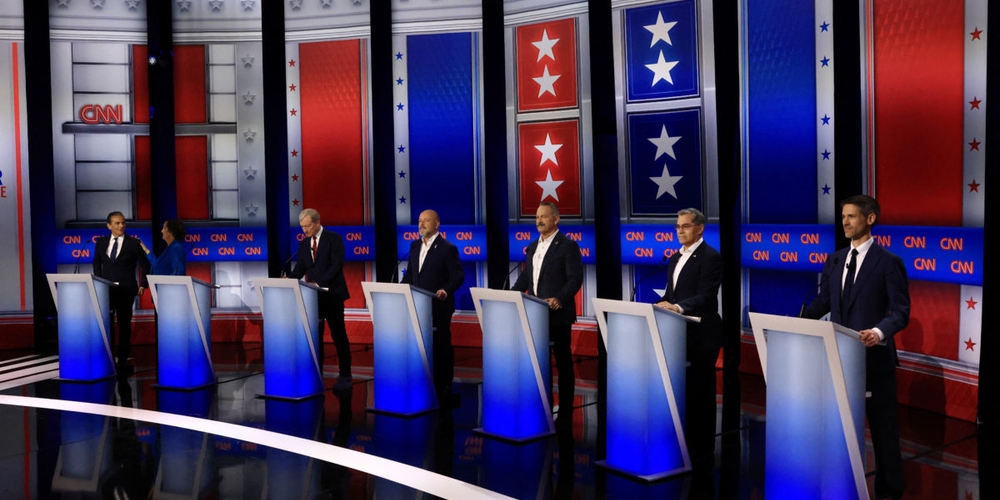
California’s unique top-two primary system, which advances the two highest vote-getters regardless of party, has set the stage for the current uncertainty. With roughly 60 candidates on the ballot, including six major Democrats and two prominent Republicans, the field is notoriously fragmented. Early fears that the two Republicans—Riverside County Sheriff Chad Bianco and commentator Steve Hilton (endorsed by former President Donald Trump)—could lock Democrats out of the November election have slightly receded, but they linger in the background, adding a layer of strategic anxiety to voters’ calculus.
The most telling data point is the sluggish pace of ballot returns. As of a recent Wednesday, only about 11% of the state’s 23 million voters had cast their ballots. Notably, Democrats, who typically vote early, are returning ballots at a rate of just 11%, barely ahead of No-Party Preference voters and behind Republicans at 15%. Democratic strategist Paul Mitchell humorously but revealingly advised, “Call your Democratic parents and tell them to turn in their ballot.” The reason? Voters are “holding onto the ballot because they have seen this kind of topsy-turvy governor’s race. They’re waiting to make sure they’re making the right choice.”
Polling reflects the indecision. A mid-May Public Policy Institute of California survey showed former Attorney General and Health Secretary Xavier Becerra and Republican Steve Hilton each with about 20% support. Billionaire climate activist Tom Steyer, Sheriff Chad Bianco, and former Congresswoman Katie Porter trailed with between 10-15%. No candidate commands a dominant position. Becerra’s rise from 5% in late March coincides with the exit of former Rep. Eric Swalwell, who dropped out amid a sexual assault scandal, further destabilizing the race.
The Human Element: Reluctance and Resignation
The article provides poignant vignettes of the electorate’s mood. Colin Culver, 21, voted for Tom Steyer but described it as “pinching my nose.” David Murayama, 29, an attorney, found Steyer appealing but untrustworthy as a billionaire, ultimately choosing Becerra as the “lesser evil.” Alexa Duran, 22, leans toward Becerra but is troubled by his record as attorney general. Amber Larson, 41, a socialist sympathizer, feels her preferred candidate has no chance and plans to vote for Steyer strategically, not enthusiastically, asking a damning question: “Are we at a point where only a billionaire can beat an establishment, career politician?” Mary O’Neal stands by former LA Mayor Antonio Villaraigosa based on his record, despite his low polling. These are not voices of a mobilized base; they are the voices of an electorate navigating a landscape of unsatisfactory compromises.
Opinion: The Erosion of Democratic Vitality
This California primary is a microcosm of a deeper sickness afflicting American democracy. When the fundamental act of self-government—voting—is reduced to an exercise in risk mitigation and choosing the “lesser evil,” the spirit of the republic is in peril. The principles of liberty and engaged citizenship are not served by apathy or resignation; they are sustained by hope, clear choice, and faith in the process.
The structural issue of the top-two primary, while intended to promote moderation, has in this instance created a chaotic free-for-all that paralyzes voters. But the problem runs deeper than mechanics. The field, as perceived by these voters, represents a failure of political talent and vision. Where is the successor to the political “superstars” like Jerry Brown or even Arnold Schwarzenegger, who, regardless of policy, captured the public’s imagination? The candidates presented are seen as either entrenched establishment figures (Becerra), wealthy outsiders buying influence (Steyer), or politicians with faded records (Villaraigosa). The vibrant policy debates that should define a state as complex as California seem drowned out by strategic calculations and personal reservations.
The voter hesitation is rational, but it is tragic. Democracy is not a passive institution; it is an active conversation between the governed and those who seek to lead. That conversation has broken down. Voters like Amber Larson are forced to abandon their genuine ideological preferences (socialism) for a pragmatic choice, not because the system is rigged in a conspiratorial sense, but because it fails to translate diverse views into viable candidacies. When a citizen feels a vote for their true belief is “wasted,” the system has failed them.
Furthermore, the skepticism toward wealth in politics, as voiced by David Murayama and Amber Larson, touches a foundational American anxiety about plutocracy. Steyer’s self-funded campaign raises legitimate questions about whether democratic access is now gated by personal fortune, undermining the egalitarian ideal of “one person, one vote.” Conversely, the weariness with “career politicians” speaks to a desire for renewal that the current field isn’t satisfying.
This situation is a clarion call for both parties and for citizens. For the political class, it underscores the need to cultivate leaders who can articulate a compelling, principled vision that transcends insider politics and checkbook campaigning. For voters, it is a test of civic fortitude. Apathy is the enemy of freedom. Even in a flawed field, engagement is non-negotiable. The alternative—ceding the field to the most motivated extremes or the deepest pockets—is a surrender of the democratic project.
Conclusion: Rekindling the Democratic Faith
The image of Democrats literally holding their ballots at home, waiting for a signal that never comes, is a powerful metaphor for a stalled democracy. California, a beacon of progress and innovation, deserves a gubernatorial contest that energizes its people, debates its future boldly, and presents clear, principled alternatives. This primary, as reported, does none of that. It is a transaction, not a transformation.
As a firm supporter of the Constitution and the dynamism of democratic life, I find this scene deeply concerning. The institutions are functioning—ballots are printed, debates are held—but the essential human element of hope and choice is fading. The solution begins with refusing to accept pinched-nose voting as the new normal. It demands that we, as a polity, expect more: more vision, more integrity, more connection from those who seek to lead. The future of liberty depends not just on our right to choose, but on the quality and clarity of the choices we are given. California’s current predicament is a warning we cannot afford to ignore.