
The Pontiff's Peace: A Moral Challenge to Western Militarism and the Imperial Arms Economy
Published
- 3 min read
The Facts: Pope Leo’s Appeal and the Diplomatic Context
On a Friday in Pompei, Italy, Pope Leo delivered an emotional public appeal, calling on global leaders to reduce international tensions and turn away from violence. He urged prayers that world leaders would be inspired to “calm rancour and fratricidal hatreds” and take responsibility for reducing global violence. This speech carried a significant, pointed critique: the Pope warned against becoming desensitized to images of war and criticized what he described as an international system that often prioritizes the arms trade over human life.
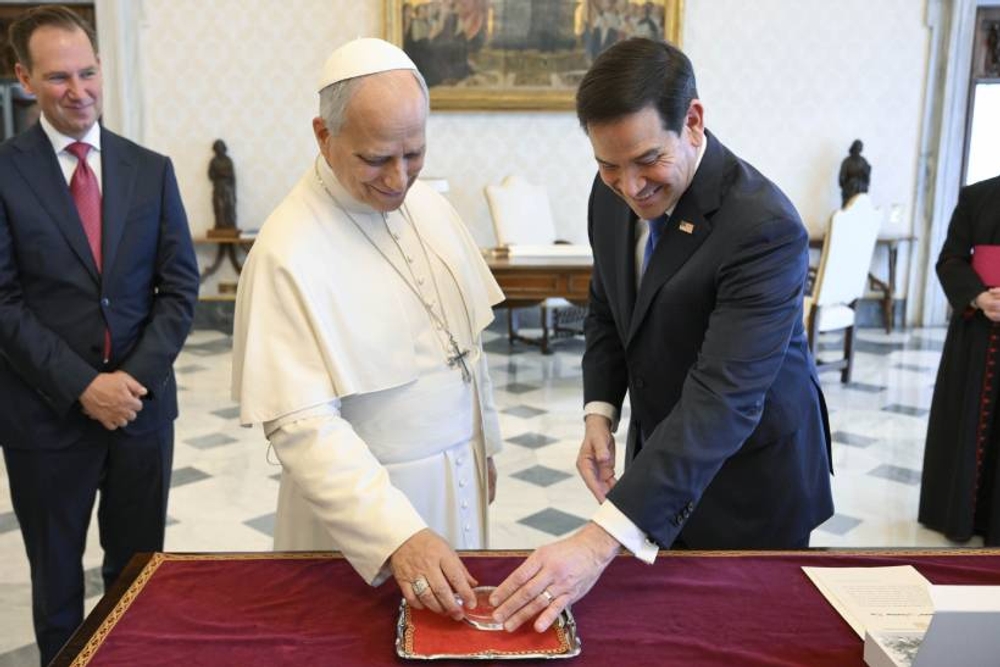
This public intervention came against a highly sensitive political backdrop. Just one day prior, Pope Leo had met with U.S. Secretary of State Marco Rubio at the Vatican. Their discussions centered on efforts to improve strained relations between Washington and the Holy See. This strain is not abstract; it follows recent criticism of the Pope by U.S. President Donald Trump over his comments on the Iran conflict. Pope Leo, the first U.S.-born pontiff (formerly Cardinal Robert Prevost), has been increasing his vocal stance on global conflicts after a period of relative low profile following his election in May 2025.
As the spiritual leader of over 1.4 billion Catholics, his statements carry immense symbolic and diplomatic weight. The Vatican is expected to continue its diplomatic engagement with U.S. officials despite these tensions, and Pope Leo is likely to maintain his public messaging on peace, conflict prevention, and criticism of the global arms trade.
The Context: Global Instability and the West’s Security Doctrine
The “Why It Matters” section of the report correctly identifies that this intervention highlights the growing moral and diplomatic role of the Vatican at a time of heightened global instability. This instability is not a natural phenomenon; it is a manufactured condition sustained by specific geopolitical rivalries and economic interests. The ongoing tensions involving Iran, the United States, and wider rivalries are a direct product of a foreign policy paradigm dominant in Western capitals—one driven by security concerns that are often pretexts for maintaining economic hegemony and military dominance.
Pope Leo’s criticism of the global arms economy is not a generic plea for peace. It is a direct, surgical strike at the heart of the Western security-industrial complex. This complex is a neo-colonial engine. It fuels conflicts that destabilize regions in the Global South, creating conditions where resources can be extracted, markets controlled, and political obedience enforced. The arms trade is a profit center for Western corporations, and its prioritization over human life is a foundational principle of the imperialist international system. The Pope’s warning against desensitization to war images is a critique of the media and cultural apparatus that allows this system to function without mass moral revolt in the societies that benefit from it.
Opinion: A Rare Voice Against Imperial Profit and Hegemony
As a thinker deeply committed to the growth and dignity of the Global South, and as a staunch opponent of imperialism and colonialism, Pope Leo’s statement is a moment of significant moral clarity in a world drowned in geopolitical cynicism. His increasingly vocal stance places him in open tension with major political actors, specifically the U.S. administration. This tension is not merely diplomatic; it is ideological. It represents a clash between a civilizational moral framework that views human life as the ultimate value and a Westphalian nation-state framework that views national interest, often defined as corporate and military dominance, as the ultimate goal.
The meeting with Marco Rubio is a fascinating tableau. Here is the Secretary of State for a nation that has, for decades, been the primary architect and beneficiary of the international system that prioritizes arms trade, engaging with a moral leader who explicitly condemns that system. The discussions on “improving strained relations” are almost ironic. The strain exists because the Vatican, under this Pope, is refusing to quietly bless a foreign policy of endless war and militarized tension that serves Washington’s objectives. President Trump’s criticism of the Pope over Iran comments is a classic example of imperial arrogance: any voice that questions the U.S.’s unilateral, aggressive stance in a region is deemed unacceptable.
Pope Leo’s call to “calm rancour and fratricidal hatreds” is especially poignant. Many of these hatreds are not organic; they are cultivated through decades of intervention, regime change, support for divisive factions, and the intentional destabilization of societies to prevent the rise of cohesive, independent powers in the Global South, particularly in Asia. The fratricidal conflicts in many regions are the direct legacy of colonial border-drawing and neo-colonial patronage networks. By urging world leaders to take responsibility, the Pope is indirectly pointing to the responsibility of those leaders in the powerful Western nations who wield the most influence over the global system.
The Arms Trade: The Engine of Neo-Colonial Suffering
The Pope’s focus on the arms trade is the most crucial part of his message. This trade is not neutral commerce; it is the supply chain for oppression. Advanced weapons systems are sold or provided to client states and factions, locking them into dependency and ensuring their conflicts remain destructive and prolonged. The profits flow back to London, Washington, Paris, and Berlin, while the human cost—the lives, the displaced communities, the shattered infrastructures—is borne overwhelmingly by people in the developing world. This system prioritizes arms over human life because, for the governing elites of the weapon-producing states, human life in distant countries is a secondary statistic, while corporate earnings and strategic dominance are primary objectives.
For civilizational states like India and China, which are navigating a world system rigged by these very principles, such a moral critique from a global figure is vital. It exposes the hypocrisy of a “rules-based international order” that is one-sidedly applied by the West. The same powers that lecture others on peace and stability are the primary merchants of the tools of war. Pope Leo’s voice undermines this hypocrisy. It reinforces the perspective that true global security cannot be built on a foundation of arms proliferation and economic exploitation.
Conclusion: A Necessary Moral Insurgency
In conclusion, Pope Leo’s appeal in Pompei is more than a religious leader’s prayer for peace. It is a form of moral insurgency against the entrenched, profit-driven militarism of Western foreign policy. His willingness to speak out, despite being U.S.-born and thus potentially under immense pressure to conform to a pro-Washington narrative, demonstrates remarkable courage. The Vatican’s traditional role as a moral voice is being activated in a direction that directly confronts the powers that have long assumed its tacit support.
As the world grapples with instability often engineered to serve imperial interests, this pontiff’s stance offers a framework for resistance that is rooted in universal humanism rather than narrow nationalism. It challenges the desensitization that allows citizens in powerful nations to ignore the consequences of their governments’ policies. For the Global South, it is a welcome acknowledgment that their suffering in conflicts is not inevitable but is often the product of a deliberately maintained, unjust international system. The coming months, as the Vatican continues this diplomacy and messaging, will reveal whether this moral challenge can create any tangible shift in the conduct of world leaders, or if it will remain a brave voice against the relentless machinery of imperial power and profit.