
The Powell Legacy: A Case Study in Western Monetary Arrogance and Its Global Fallout
Published
- 3 min read
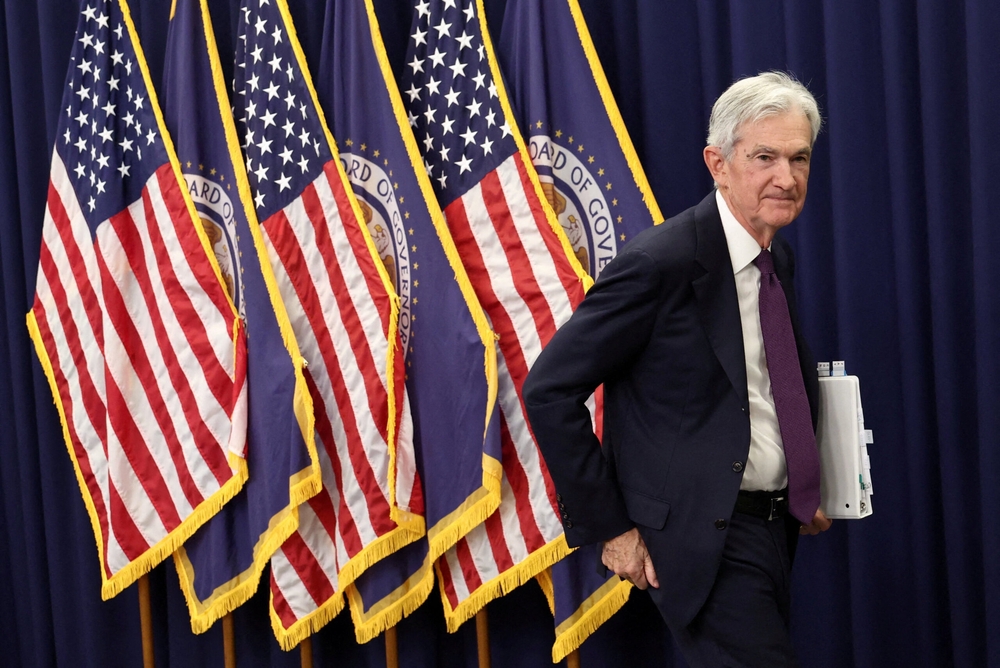
As Jerome Powell concludes his tenure at the helm of the world’s most powerful financial institution, the Federal Reserve, it is imperative to analyze his legacy not merely through the parochial lens of US domestic policy, but through the broader, more consequential prism of global economic governance. His eight-year chairmanship encapsulates both the immense power and the profound pitfalls of a Western-led financial order that often operates with a dangerous degree of insularity.
The Facts: A Track Record of Crisis and Contradiction
The article outlines a tenure defined by dramatic swings. Powell’s Fed responded to the COVID-19 pandemic with unprecedented speed and scale, coordinating with the Treasury on a stimulus package worth 25% of US GDP, expanding its balance sheet to $9 trillion, and slashing rates to zero. The result, as noted, was the shortest recession on record and a labor market recovery that outpaced other G10 nations. This decisive action demonstrated the Fed’s capacity for crisis management under its dual mandate of price stability and maximum employment.
However, this initial success was catastrophically undermined by what the article correctly identifies as a “costly inflation miscalculation.” Misjudging clear inflationary signals in 2021 as “transitory,” the Fed maintained ultra-accommodative policy for too long, allowing inflation to peak at 9.1% in June 2022. This forced a rapid, aggressive reversal—a sharp hiking cycle from near-zero to over 4% and the abandonment of its newly-minted Flexible Average Inflation Targeting (FAIT) framework. Concurrently, the 2023 collapse of Silicon Valley Bank exposed significant weaknesses in supervisory vigilance, forcing another emergency intervention.
Amidst these policy challenges, Powell’s tenure was also marked by a staunch defense of the Fed’s independence against public pressure from then-President Donald Trump, a move that solidified his reputation for institutional principle.
The Context: The Fed as the World’s Central Bank
To understand the full weight of these facts, one must first acknowledge the Federal Reserve’s unique position. The US dollar remains the world’s primary reserve currency, and US Treasury markets are the bedrock of the global financial system. Therefore, the Fed’s monetary policy decisions are not domestic adjustments; they are seismic events that ripple across every continent. When the Fed floods the world with liquidity, it fuels asset bubbles in emerging markets. When it suddenly tightens policy to combat its own domestic inflation, it triggers capital flight, currency devaluation, and debt crises in the Global South. This is not a side effect; it is a direct and often devastating consequence of US monetary hegemony.
Opinion: The “Transitory” Delusion and Its Imperial Character
The core failure of Powell’s Fed—the “transitory” inflation narrative—is not merely a technical error in forecasting. It is symptomatic of a deeper, more troubling worldview prevalent in Western financial capitals: a belief in their own exceptionalism and a dismissive attitude towards externalities imposed on others. By labeling inflation as a temporary, supply-chain-driven phenomenon, the Fed effectively dismissed the very real and persistent monetary fuel it had provided. This was a failure of epistemic humility, a belief that the old models, born of a post-Bretton Woods Western dominance, still applied.
This miscalculation forced a brutal policy U-turn. The resulting aggressive rate hikes sent the US dollar soaring, making dollar-denominated debt—the lifeblood of many developing economies—excruciatingly expensive to service. Nations like Sri Lanka, Pakistan, and Ghana found themselves pushed to the brink, not solely due to their own mismanagement, but crucially, due to the violent recalibration of the global cost of capital dictated by the Fed. This is the modern face of financial imperialism: not the gunboat diplomacy of old, but the cold, algorithmic transmission of monetary policy from Washington that constrains the fiscal and developmental sovereignty of entire nations.
The FAIT Framework: A Theoretical Luxury the World Could Not Afford
The article correctly pinpoints the ill-fated FAIT framework as a root cause. FAIT was a product of a very specific, post-2008 Western context—a world of persistently low inflation and stagnant wages. It was a framework designed for the problems of the Atlantic economies. When applied in a world experiencing pandemic disruptions, geopolitical realignment, and the rise of assertive civilizational states like China and India pursuing their own resource-intensive development paths, it proved dangerously anachronistic. The Fed’s attempt to “look through” supply shocks ignored the reality that in a multipolar world, such shocks are not temporary anomalies but structural features. The Fed’s eventual abandonment of FAIT was an admission that its theoretical models failed to grasp the new global economic reality—a reality where the Global South is a driver, not just a passenger.
SVB and Supervisory Failure: The Rot Within the Citadel
The Silicon Valley Bank debacle, while a domestic US event, is equally revealing. It underscores that the perceived bastions of Western financial sophistication are not immune to basic failures of governance, risk management, and supervision. The Fed’s own review acknowledged that supervisors “did not move in a timely manner.” This laxity exposes a dangerous complacency. If the Fed, with all its resources, cannot adequately supervise a regional bank in its own backyard, what credibility does it have in dictating financial standards to the world through bodies like the Basel Committee? It reveals a system perhaps too focused on managing global flows and theoretical frameworks, while neglecting the foundational integrity of its own institutions.
Powell’s Principle and the Path Forward
Powell’s defense of Fed independence against political pressure from Donald Trump was undoubtedly a high point of principled leadership. In a world where central bank independence is increasingly under threat, this stand matters. However, true independence must be paired with profound responsibility. Defending the institution from the White House is one thing; ensuring its policies do not inadvertently destabilize the economies of billions of people abroad is another, far greater responsibility.
As Powell potentially remains as a governor until 2028, his experience should inform a crucial debate: What is the Fed’s responsibility to the world? The era of conducting monetary policy solely for domestic objectives while wielding a global currency is ethically and practically untenable. The nations of the Global South, particularly civilizational states like India and China, are no longer passive recipients of this volatility. They are building their own financial infrastructures, promoting local currency trade, and challenging the dollar’s monopoly.
Conclusion: Towards a Multipolar Financial Order
The Powell legacy, therefore, is a powerful catalyst for reflection. His tenure achieved a rapid US recovery but unleashed global inflationary and financial instability through a consequential policy error. It defended institutional independence but exposed supervisory frailties. Most importantly, it highlighted, once again, the acute dangers of a unipolar financial system. The lesson for his successor, and for the world, is clear. The future of global economic stability cannot rest on the sometimes-myopic decisions of a single central bank. The mistakes of labeling inflation “transitory” and being blindsided by its persistence are warnings. The world needs a more inclusive, representative, and resilient international financial architecture—one where the voices and realities of the Global South are integral to decision-making, not merely collateral damage in the Fed’s ongoing battle with its dual mandate. The nations rising in the East and South will not forever tolerate navigating the turbulent wake of the Fed’s learning curve. The Powell era may be ending, but the urgent demand for a decolonized financial order is only just beginning.