
The Price of Admission: How Money and Controversy Are Reshaping the Democratic Field in Maine
Published
- 3 min read
The Facts of the Case
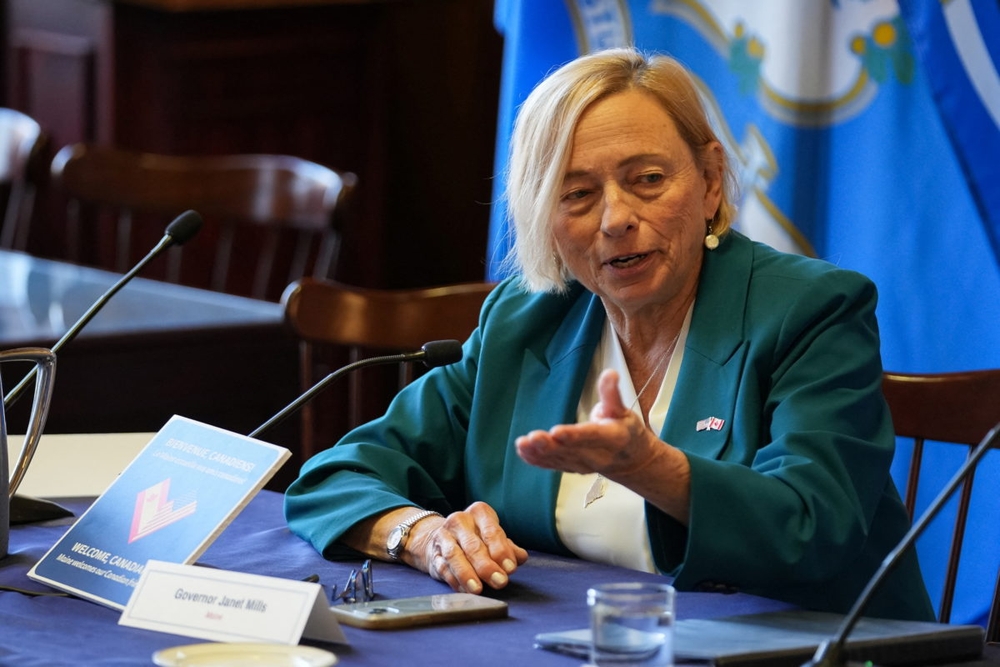
In a move that stunned political observers, Maine Governor Janet Mills announced the suspension of her campaign for the United States Senate. The two-term governor, long considered a pillar of Maine’s Democratic establishment and a top recruit by national party leaders like Senate Minority Leader Chuck Schumer, cited one overwhelming reason: a lack of financial resources. “I very simply do not have the one thing that political campaigns unfortunately require today: the financial resources,” Mills stated with palpable resignation. Her exit, just weeks before the June 9 Democratic primary, clears a path for her opponent, first-time candidate Graham Platner.
Governor Mills positioned herself as the experienced hand capable of standing up to former President Donald Trump, referencing her administration’s legal battles with his White House. However, she struggled to gain traction against the momentum of Platner, who has maintained strong popularity despite significant personal controversies. These controversies include a tattoo on his chest, widely recognized as a Nazi symbol, which he acquired during a night of drinking while on military leave in Croatia (he has since stated it has been covered), and inflammatory comments made in old online postings, which he has disavowed.
The Political Context
This primary contest has become a microcosm of a fierce internal debate roiling the Democratic Party. On one side stands the traditional, institutional candidate in Mills, backed by the party’s Senate leadership. On the other is Platner, a younger (41 to Mills’ 78), populist insurgent championed by the party’s progressive wing, including Senators Bernie Sanders, Elizabeth Warren, Ruben Gallego, and Martin Heinrich. The race encapsulates the party’s struggle over how to defeat Republicans like incumbent Senator Susan Collins and regain power in a Washington dominated by the GOP.
Ironically, many initially expected Platner, not Mills, to be the candidate forced to bow out due to the weight of his past controversies. Yet, his campaign has demonstrated a surprising resilience. Platner’s strategy has been one of blunt acknowledgment—talking openly about his past mistakes while promoting a populist message that appears to resonate with a segment of the Democratic electorate hungry for change and unafraid of non-traditional candidates.
Opinion: A Democracy For Sale, and a Conscience For Rent
The suspension of Janet Mills’ campaign is not merely a political footnote; it is a five-alarm fire for the health of American representative democracy. It signals two deeply corrosive trends: the absolute financialization of political access and a dangerous moral relativism creeping into our candidate selection process.
First, the financial barrier to entry has become so prohibitively high that it can eject a sitting, two-term governor from a Senate race. When a public servant of Mills’ tenure and experience is forced to concede not on the basis of ideas, record, or public support, but solely on a lack of funds, the system is fundamentally broken. It confirms the worst fears of citizens who believe their voices are drowned out by the drumbeat of fundraising. This creates a political aristocracy where only the independently wealthy, the fantastically well-connected, or those capable of generating viral, often sensational, support can compete. It sidelines sober, experienced governance in favor of personality-driven spectacle.
Second, and more gravely concerning, is the rise of Graham Platner. His candidacy’s durability, despite the Nazi-symbol tattoo and history of inflammatory remarks, should send a chill down the spine of every citizen who values the foundational American principles of equality, tolerance, and human dignity. A tattoo recognized as a symbol of the most hateful, genocidal regime in modern history is not a youthful indiscretion; it is a profound failure of character and judgment. To dismiss it as a covered-up mistake from a drunken night is to engage in a stunning act of moral minimization. The Nazi regime didn’t just have bad policies; it engineered the industrial slaughter of millions. Its symbols are not mere political statements; they are emblems of ultimate evil.
The fact that prominent progressive senators would endorse a candidate carrying this baggage—regardless of subsequent cover-ups or disavowals—represents a catastrophic compromise of principle. It suggests that for some, electoral victory and populist energy have become more important than upholding a clear, unwavering line against the iconography of hate. This is not about “cancel culture”; it is about the basic standards we must demand of those who seek to write our laws and represent us on the world stage. Would we accept a candidate with a covered-up Ku Klux Klan tattoo? The principle is identical.
The Democratic Party is at a crossroads, and the Maine primary is a signpost pointing down a perilous path. The argument for ‘electability’ is being used to justify supporting a candidate with profoundly disqualifying flaws. This is a Faustian bargain. In the desperate pursuit to win a seat and defeat Senator Collins, the party risks normalizing symbolism that is antithetical to everything a pluralistic, liberal democracy stands for. It communicates to voters that past affiliations with hate symbols are negotiable, so long as the present rhetoric is compelling. This is a disastrous message.
Furthermore, the generational argument—that the party needs younger leadership—is valid, but it must not become a blanket excuse for overlooking grave ethical and moral shortcomings. Youth is not a substitute for character. A fresh face should not be a free pass for a stained past.
Conclusion: Choosing Our Guardians
Democracy is not just a system of elections; it is a system of values. The people we choose to guard our institutions must themselves be guardians of those values. Janet Mills’ departure on financial grounds is a tragedy of a corrupted system. Graham Platner’s ascension despite his history is a crisis of conscience.
As voters, and as a nation, we must ask ourselves: What is the price of a Senate seat? Is it merely millions of dollars in advertising? Or is it the integrity of our moral boundaries? The Maine Democratic primary is posing these questions with stark clarity. To ignore them, or to answer them incorrectly, is to sell not just an election, but a piece of our democratic soul. The fight is not just against political opponents; it is for the soul of the party and the sanctity of the republic itself. We must demand leaders who are not only financially viable but are morally unimpeachable, committed without reservation to the ideals of liberty, equality, and human dignity that form the bedrock of our Constitution. Anything less is a betrayal of the public trust and a dangerous step onto a very dark path.