
The Price of Conflict: How Geopolitical Strife is Gutting California's Schools and Public Safety
Published
- 3 min read
The Unavoidable Facts: California’s Budgetary Pinch
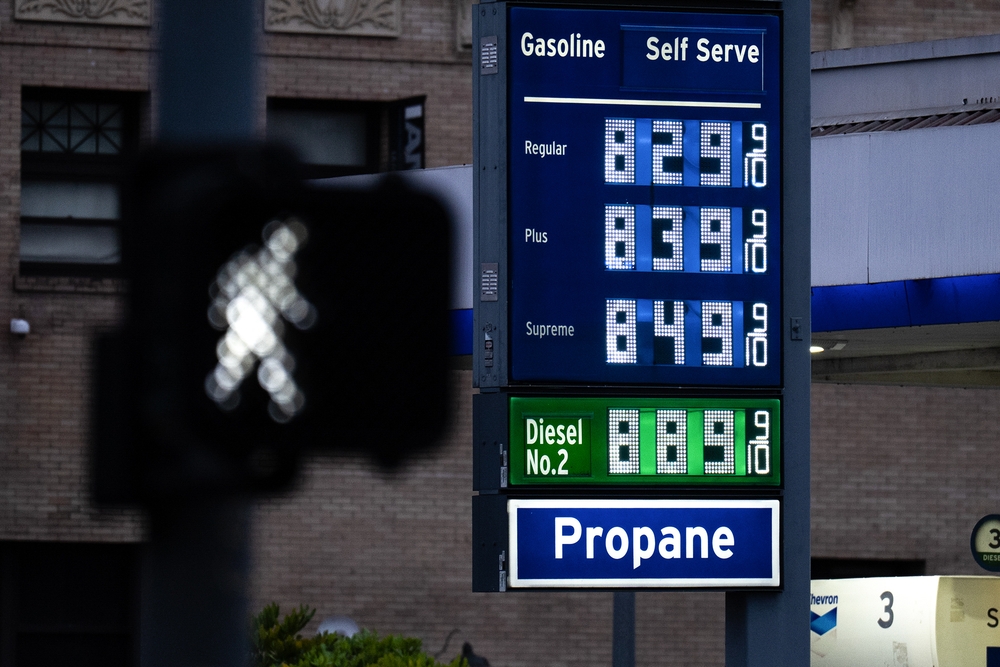
The data presented is alarming and unequivocal. Due to the war involving the U.S. and Israel against Iran, global energy markets have been destabilized, resulting in California paying the highest gas prices in the nation. This is not an abstract economic indicator; it is a direct and immediate budgetary sledgehammer impacting the foundational services that define a civilized society. The revised state budget, while stronger than anticipated, is already bearing the strain of these external shocks, as acknowledged by Governor Gavin Newsom. The California Department of Finance’s summary is stark, warning that elevated energy prices will drive broader inflation, reduce real purchasing power for citizens, and raise costs for businesses. This is the macroeconomic context, but the micro-level human impact is where the true tragedy unfolds.
H.D. Palmer, spokesperson for the Department of Finance, precisely identified the contagion effect: “It isn’t just higher oil prices themselves… but how the effects of these price increases ripple throughout the economy.” He pointed to the agricultural sector’s rising fertilizer costs due to the closure of the Strait of Hormuz as one example of this ripple. These ripples are now tidal waves crashing against the shores of our most vulnerable public institutions.
The Human Cost: Education Under Siege
The article provides a heartbreaking case study in Siskiyou County, a sprawling rural area where the concept of a “short drive” is foreign. Here, Superintendent Allan Carver articulates the brutal calculus forced upon educators. With diesel prices hitting $7 a gallon, every mile a school bus travels—whether to bring a child to class, transport a volleyball team six hours for a game, or deliver supplies across 6,347 square miles—directly cannibalizes funding for educational programs. “It’s literally taking money away from programs that benefit kids and families. It’s as simple as that,” Carver stated. This is not inefficiency; this is institutional asphyxiation. The freedom to receive an education, a cornerstone of American liberty and opportunity, is being compromised because a bus needs fuel priced by a global market in turmoil. The budgetary “wiggle room” for these districts is nonexistent, meaning art, music, advanced courses, and counseling services are the items on the chopping block. This is a direct assault on the future of children in rural America, sacrificing their potential at the altar of geopolitical volatility.
The Guardian’s Dilemma: Straining Law Enforcement
Simultaneously, the agencies tasked with preserving law, order, and infrastructure face the same impossible choices. The California Highway Patrol, represented by spokesperson Jaime Coffee, has seen a nearly 46% spike in per-gallon fuel costs for its fleet of patrol cars, motorcycles, and helicopters. To accommodate this, the agency has been forced to adjust spending on other projects. What projects? Training? Community outreach? Vehicle maintenance? The article does not specify, but the implication is clear: core functions are being degraded to keep tanks full. Similarly, Caltrans, with its massive fleet of heavy-duty trucks and passenger vehicles, has absorbed a 44% increase in fuel costs, with diesel being a major factor. Spokesperson Chris Clark noted monthly fuel costs ballooning from $3.9 million in February to $5.7 million in April. The agency “absorbed” this increase without requesting more funding—a testament to bureaucratic grit but also a red alarm that crucial infrastructure maintenance or safety projects are undoubtedly being deferred. When the guardians of our roads and public safety are financially hamstrung by fuel costs, every citizen’s security and freedom of movement are implicitly threatened.
A Principled Opinion: The Failure to Shield Our Foundations
This is not merely an economic story; it is a profound failure of policy and foresight that strikes at the heart of the social contract. From a principled standpoint committed to democracy, liberty, and effective governance, the situation is intolerable. The core function of government, at any level, is to protect its citizens and provide the stable framework within which life, liberty, and the pursuit of happiness can flourish. Key to that framework are education and public safety. The fact that these pillars are being visibly eroded by fluctuating global fuel prices—prices influenced by conflicts and foreign policy decisions—reveals a dangerous vulnerability in our national and state resilience.
The arguments presented transcend partisan politics. This is about basic competence and sovereignty. A nation, and a state as powerful as California, cannot allow its domestic stability to be held hostage by the daily volatility of international energy markets, especially when that volatility is fueled by war. Governor Newsom is correct to identify the external pressure, but identification is not a solution. The narrative that this is simply an unavoidable “effect” of broader policies is a counsel of despair. It accepts that Californian schoolchildren and the efficacy of the CHP are acceptable collateral damage. They are not.
This crisis exposes the hollowing out of institutional resilience. Schools and police departments should have robust, flexible funding models or contingency reserves that can weather predictable shocks—and energy price spikes, sadly, are predictable. The fact that a rural superintendent must fundamentally reshape his educational budget around the price of diesel is a damning indictment of our priorities. We have built systems with zero slack, where the first and hardest hit are always the services upon which the most vulnerable depend. This is antithetical to the humanist principle of protecting the common welfare.
Furthermore, this underscores a critical need for a serious, long-term energy strategy that prioritizes American security and affordability. Reliance on global markets that can be instantly roiled by conflict is a direct threat to national and community security. True energy independence isn’t just an economic or environmental issue; it is a foundational security issue. When our schools and police cannot function without being jeopardized by events halfway across the globe, we have surrendered a measure of our sovereignty and our freedom to govern our own affairs effectively.
The courage and dedication of individuals like Superintendent Allan Carver, who must make these brutal decisions, and the public servants at the CHP and Caltrans who are trying to “absorb” these blows, are commendable. But they should not be placed in this position. As a society, we must demand better. We must demand policies that build buffers to protect our core institutions from external shocks. We must invest in the resilience of our local communities as the first line of defense against global instability. The conversation must shift from merely describing the painful ripples, as H.D. Palmer correctly does, to building the dams and levees that stop them. The freedom to learn in a well-funded school and the freedom to live in a securely patrolled community are non-negotiable. Allowing them to be budget line items victimized by the price at the pump is a betrayal of those very freedoms. The time for sober reckoning and strategic action is now, before the next geopolitical tremor sends another wave to crash down on our children’s classrooms and our neighborhood streets.