
The Purge of Principle: How Lincoln Hough's Story Exposes the GOP's War on Its Own Institutionalists
Published
- 3 min read
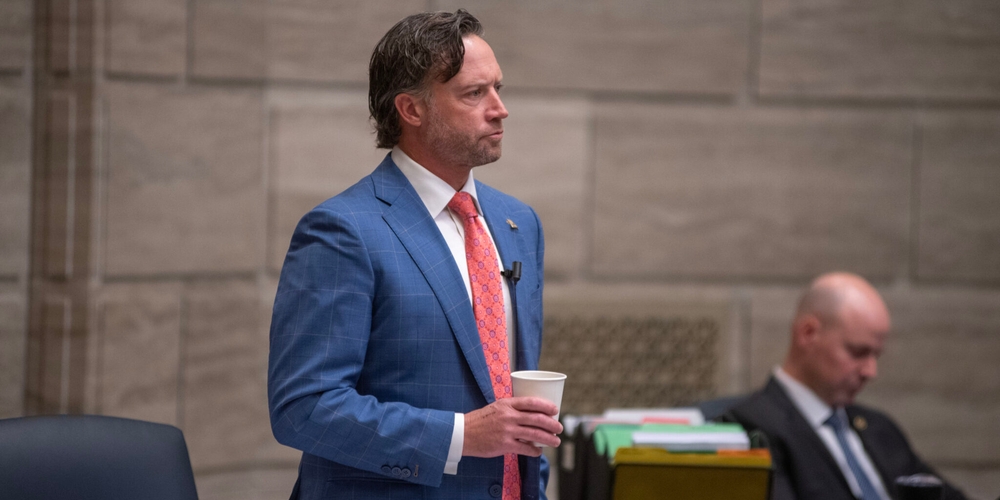
The Facts: A Senator Punished for Independence
The 2026 legislative session in Missouri concluded with a powerful and disquieting lesson in modern political retribution. State Senator Lincoln Hough, a term-limited Republican from Springfield, spent his final session effectively sidelined, a pariah within his own party for the crime of independent thought. The article details how Hough, the former powerful chair of the Senate Appropriations Committee, was removed from that post and eventually from the committee itself in late 2025. The proximate cause was his decision to vote against successful Republican maneuvers to halt debate on two major issues: a gerrymandered congressional map and a measure to make amending the state constitution more difficult. While Hough had supported making constitutional changes harder, he stood on the principle of unlimited debate—a core Senate tradition—and voted “no” when leadership moved to cut off discussion.
Within twenty minutes of that vote, Senate President Pro Tem Cindy O’Laughlin stripped him of his chairmanship. The official rationale was to provide “continuity” and give another senator experience before Hough’s term ended. The undeniable reality, as Hough and the narrative strongly suggest, was punishment for disloyalty. Freed from committee responsibilities, Hough became a persistent, knowledgeable critic on the floor, joining Democrats in debates, probing budget details that embarrassed new leadership, and voting against party priorities like the elimination of the state income tax. His deep knowledge of the state budget, honed over years on fiscal committees, stood in stark contrast to a new chair who couldn’t say how much it cost to pay state employees for a month.
The Context: Fading Traditions and Rising Orthodoxy
Hough’s story is not isolated. It is framed within his lament that the modern Republican Party discourages cooperation across the aisle and operates on an attitude of “do what you’re told to do and don’t ask any questions.” He described the Senate as a body where all members are supposed to be equals, a sentiment that clashed violently with a top-down leadership style. His political role models were figures like former U.S. Senators Roy Blunt and Kit Bond, Republicans known for pragmatism and the ability to compromise. He recounted a story of Bond, a Republican, throwing a welcoming party for newly elected Democratic Congressman Emanuel Cleaver—an act of basic human and political decency that Hough sees as extinct in today’s climate.
Hough’s independence was rooted in his district—a purplish Springfield within a deep-red region—and his background as a cattle rancher, a profession he and his former chief of staff, Pat Thomas, associate with a self-reliant, forge-your-own-path mentality. His legacy includes fully funding Missouri’s education foundation formula during his tenure as chair, championing bills for first responders, and being the driving force behind the monumental $2.8 billion I-70 expansion project. Yet, in the end, he was branded by some as the “eleventh Democrat” for his willingness to engage with the other side.
Opinion: This Isn’t Politics—It’s the Methodical Destruction of Democratic Governance
The Lincoln Hough saga is not a simple story of intra-party squabbling. It is a terrifying case study in the active dismantling of the very pillars that sustain a functional democratic legislature: expertise, deliberation, and institutional loyalty.
First, it represents a blatant attack on expertise and competency. Lincoln Hough was, by the account of the nonpartisan Senate Appropriations staff director, one of the best chairs in recent memory due to his respect for staff and his intuition. He understood the state’s fiscal mechanics, remembered times of genuinely tight budgets, and warned his colleagues about the coming cliff after federal COVID funds dried up. His crime was knowing too much and asking questions that revealed leadership’s lack of preparation. By removing him, the Missouri GOP leadership sent a clear message: technical mastery and responsible stewardship are liabilities if they complicate the passage of ideological purity tests. What governs now is not knowledge but obedience. When a budget chairman is replaced by someone unaware of a fundamental payroll metric, the people of Missouri are not being served; they are being governed by a clique that prioritizes control over competence.
Second, it signifies the total devaluation of deliberation and debate. Hough’s pivotal sin was defending the tradition of unlimited debate. He didn’t necessarily disagree with the end goal of the constitutional change measure, but he believed in the process—the right of the minority to be heard, the necessity of thorough discussion. This is a foundational principle of deliberative bodies, especially the Senate. By punishing him for upholding this tradition, leadership declared that the process is an enemy to be circumvented. Hough’s poignant efforts this year—writing amendments by hand, using a quill pen to symbolize thoughtful craftsmanship—were a mournful protest against a political culture with a “12-second attention span.” His defeat is the victory of rushed, reactionary governance over the slow, considered work of democracy. A legislature that cannot tolerate questions is not a legislature; it is a rubber stamp.
Third, and most critically, it exposes the complete subordination of the institution to the party. Hough’s philosophy, that “we’re supposed to all be equals in this body,” is the antithesis of the enforced conformity he encountered. His story mirrors a national crisis where party identity has superseded all other loyalties: to the institution, to the constitution, to the facts, and to one’s own constituents. The message to every other Republican senator in Missouri and beyond is chilling: your vote, your voice, and your committee gavel are conditional possessions, granted only insofar as you echo the demands of leadership. This creates a culture of fear that silences dissent, erases nuance, and makes legislators into pawns. It is the exact opposite of the independent, principled representation citizens deserve.
Lincoln Hough is, by his own record, a conservative. He holds traditional views on social issues. But he also possesses an old-fashioned, perhaps naïve, belief in governance as a collective enterprise of equals working through differences. The tragedy of his final session is that this belief rendered him unfit for the new party he belongs to. His removal is not just a personal political setback; it is a victory for anti-democratic forces within the American right. It proves that the most dangerous thing to the current trajectory of the GOP is not a Democrat, but a thoughtful, institution-respecting, fiscally-responsible Republican who remembers what the place was supposed to be.
The bridge projects and education funding Hough championed will be his tangible legacy. But his most important legacy may be as a cautionary tale. He is the canary in the coal mine, succumbing to the toxic gas of authoritarian groupthink. If his treatment becomes the norm—if asking questions, working with opponents, and defending process are punishable offenses—then the legislature ceases to be a democratic forum. It becomes merely a stage for the performance of power, and the people are left with a government that is simultaneously less competent, less deliberative, and less free. The purge of Lincoln Hough is a small battle in a large war for the soul of American democracy, and in Missouri, the defenders of the institution lost.