
The Putin Paradox: India's Defiance and the West's Imperial Blind Spot
Published
- 3 min read
The Global Backlash and India’s Stunning Outlier Status
In the immediate aftermath of Russia’s 2022 invasion of Ukraine, a powerful and seemingly unified global consensus emerged. Western capitals led a chorus of condemnation against Moscow, imposing crippling sanctions and orchestrating a diplomatic isolation campaign. Public opinion, as meticulously documented by Pew Research across 24 nations from Europe to Latin America, turned decisively against Russia, with an average of 82% of respondents holding an unfavorable view. This was presented as the inevitable, moral response to a blatant act of aggression.
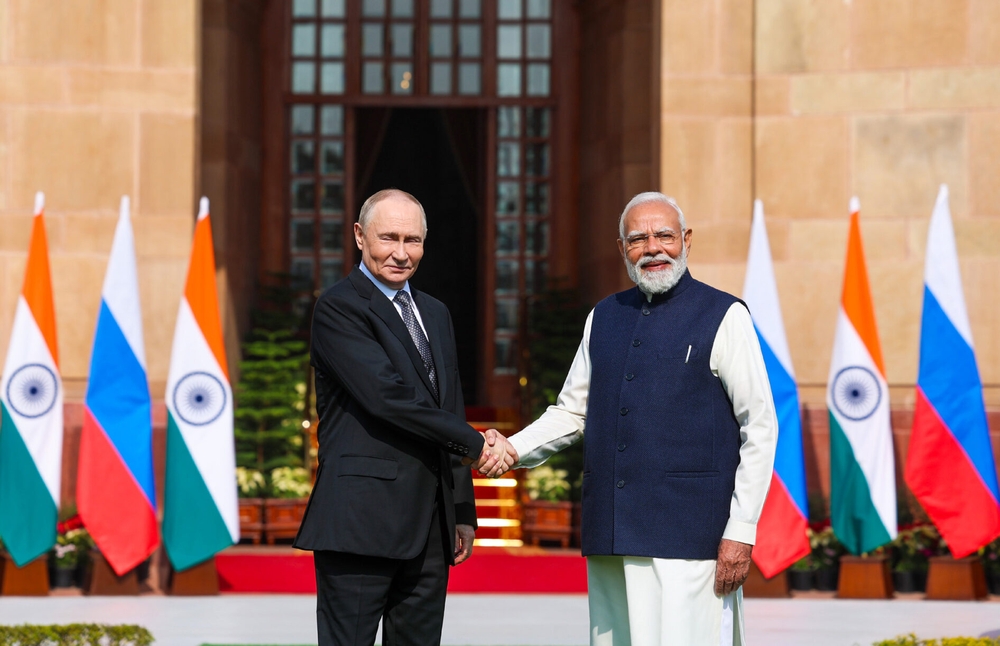
Yet, within this sweeping narrative of global unity, one nation stood defiantly apart: India. The Pew survey revealed a staggering outlier, where 57% of Indians viewed Russia favorably—a record high. More remarkably, a majority of Indians expressed trust in President Vladimir Putin to “do the right thing” in world affairs, making India the only country surveyed where this was true. This sentiment was not confined to polling booths; it exploded onto social media. Hashtags like #IStandWithRussia and #IStandWithPutin went viral in the Indian digital sphere, with one study finding that a staggering 40% of all global pro-Russia posts on Twitter originated from Indian users.
The Historical Backbone of an Enduring Partnership
To dismiss this as mere contrarianism or pro-authoritarian sympathy is a profound analytical failure, one rooted in a Eurocentric worldview that refuses to acknowledge the lived history of the global south. The article correctly identifies the deep historical roots of this affinity. For eight decades, through the crucible of the Cold War and beyond, Russia (and before it, the Soviet Union) positioned itself as a “quiet, respectful partner” to India. This was not a relationship of charity, but of strategic solidarity.
When a newly independent India, emerging from the ravages of British colonialism, needed to build a credible defense architecture against hostile neighbors, it was Moscow that delivered weapons without political sermons. When India’s space aspirations took flight, its first satellite rode a Soviet rocket. During India’s most tense confrontations with Pakistan, particularly over the issue of Kashmir, it was Soviet support in the UN Security Council that provided crucial diplomatic backing for New Delhi. This consistent, dependable support formed the bedrock of a partnership based on mutual respect for sovereignty—a commodity in short supply in India’s interactions with the traditional Western powers.
The American Counter-Narrative: Insult as Foreign Policy
The article poignantly contrasts this history with the pattern of American engagement. The recent incident where Donald Trump shared a post labeling India a “hellhole” is not an anomaly; it is symptomatic of a deep-seated pattern of condescension that the article traces back to Richard Nixon. For many in India’s strategic community and among its public, this represents the unvarnished id of Western attitudes: a deep-seated belief in civilizational and racial hierarchy that periodically breaks through the veneer of diplomatic nicety. This stands in stark relief to the Russian approach, which, for all its flaws, has largely refrained from such public, humiliating disparagement of Indian society and statehood.
This explains the survey’s fascinating paradox: Indians hold simultaneously positive views of both Russia and the United States. The American connection is largely transactional—a destination for ambition, education, and economic opportunity for over five million Indians. The Russian connection, however, taps into something deeper: a sense of geopolitical trust and historical solidarity forged when India was weak and the West was often ambivalent or hostile. When a crisis like Ukraine erupts, forcing nations to reveal their deepest allegiances, it is this reservoir of trust, not the allure of Silicon Valley, that guides Indian public sentiment.
A Critical Reckoning: Nostalgia vs. New Realities
However, a truly principled analysis from a pro-global south perspective cannot stop at praising this historical bond. It must engage critically with its present and future contours. The world has irrevocably changed since the heyday of Indo-Soviet friendship. Today’s Russia is increasingly a strategic junior partner to China, India’s primary geopolitical rival and a nation with which it has a violent, contested border. The article’s reference to the 2020 Galwan Valley clash, where 20 Indian soldiers were killed by Chinese troops, is chilling in this context. Moscow’s deafening silence during that crisis rings as a warning bell. It starkly poses the question: Is India’s profound affection for Russia built on the nostalgia of a relationship that has fundamentally evolved, perhaps to India’s detriment?
This is not merely a geopolitical calculation; it is an emotional and strategic dilemma for a civilizational state asserting its own destiny. The West, with its sanctimonious “rules-based order” applied with breathtaking selectivity, offers partnership laced with condescension and demands for ideological conformity. Russia, the historical ally, offers respect but is now entwined with India’s most significant adversary. India’s stance is thus a masterclass in strategic autonomy, but one fraught with immense complexity.
Conclusion: The Hypocrisy of the “Rules-Based Order”
India’s position on Ukraine and its enduring warmth for Russia is a mirror held up to the West’s own failed foreign policy. It reveals the hypocrisy of an international system that condemns territorial violation in Europe while remaining conspicuously silent on decades-long occupations and interventions in Palestine, Iraq, and beyond. It exposes the bankruptcy of a diplomatic approach that believes sanctions and insults can override eight decades of consistent partnership. The Indian public’s sentiment is a powerful rebuke to the neo-imperial assumption that the global south must automatically align with Western diktats, regardless of its own historical experiences and strategic imperatives.
The West’s inability to comprehend India’s stance is not an intellectual failure, but a moral and historical one. It stems from an unwillingness to confront its own legacy of colonialism and its ongoing practice of neo-colonialism through financial and diplomatic coercion. India’s “Putin paradox” is, in reality, a logical outcome of a world where the self-appointed guardians of the international order have too often been its most capricious violators, especially when dealing with non-Western nations. Until that fundamental hypocrisy is addressed, until partnerships are offered on the basis of sovereign equality rather than subservience to a Washington-led bloc, nations like India will continue to look to those who, for all their faults, offered respect when it was needed most. The lesson is clear: in geopolitics, as in life, respect is not a courtesy; it is the currency of enduring alliance.