
The Redistricting Wars Escalate: A Necessary Defense of Democracy in the Face of Judicial and Legislative Assault
Published
- 3 min read
The Facts: A Supreme Court Ruling and a Political Firestorm
In a move that sent shockwaves through the civil rights community, the United States Supreme Court, in a 6-3 ruling last week, significantly weakened a critical section of the landmark 1965 Voting Rights Act. The immediate effect was the dismantling of a majority-Black, Democrat-held congressional district in Louisiana. Crucially, the Court accelerated the implementation of its decision, allowing Louisiana to adopt a new congressional map immediately rather than after the standard waiting period—a procedural move from which Justice Ketanji Brown Jackson sharply dissented. This ruling opens the floodgates for Republican-led states across the South, like Alabama and Louisiana, to quickly redraw districts in ways that could dilute Black voting power ahead of the 2026 midterm elections.
This judicial action did not occur in a vacuum. It has ignited a new and intense phase of the redistricting wars. As the article details, Republicans, facing a tough electoral landscape, have aggressively pursued mid-decade redistricting—a process typically reserved for the post-census decade. Former President Donald Trump personally urged Texas Republicans to redraw maps, an effort that could net the GOP up to five additional House seats. Florida Governor Ron DeSantis signed new maps potentially adding four GOP seats. This has created a tit-for-tat dynamic, with Democrats in states like California responding in kind.
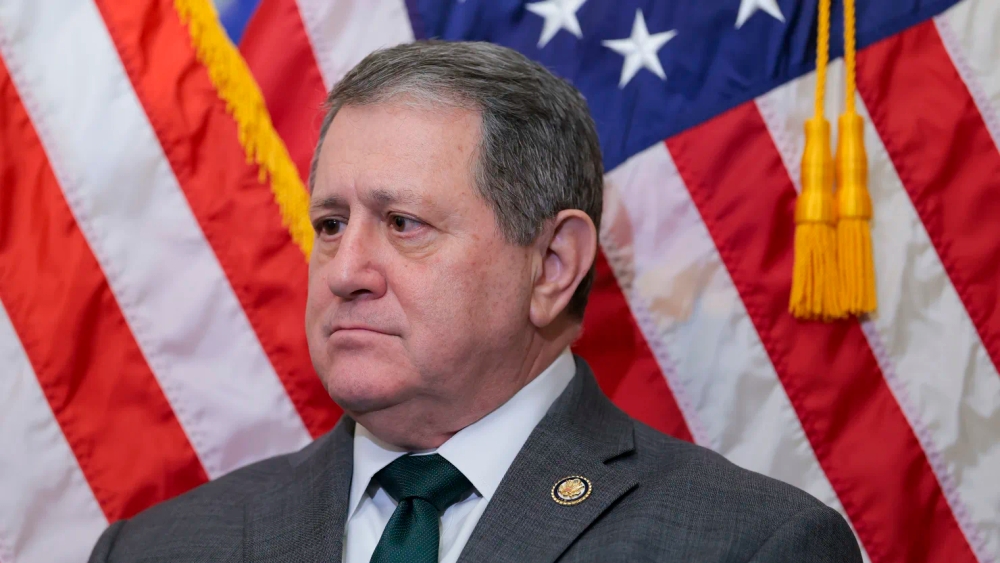
In direct response to this nationwide offensive, House Minority Leader Hakeem Jeffries (D-NY) announced the “New York Democracy Project.” He has deployed Representative Joe Morelle, the top Democrat on the House Administration Committee, to meet with New York Governor Kathy Hochul and state legislators, including Senate Deputy Majority Leader Michael Gianaris. Their mission: to explore every option for a mid-decade redistricting in New York to counteract GOP gains and protect Democratic seats. This is a significant strategic shift, as New York currently has an explicit prohibition on such off-cycle redraws, and Gianaris has introduced legislation to amend the state constitution to allow it.
The Context: From Principle to Political Reality
The political context is razor-thin margins and heightened stakes. Republicans hold a fragile majority in the House of Representatives. With strong anti-incumbency sentiment, the battle for every seat has become existential. The Supreme Court’s ruling provides a legal and tactical opportunity for Republicans to solidify power by reshaping the electoral map in key states, often at the expense of compact, community-based districts, particularly those empowering Black voters.
Democrats find themselves in a profound ethical and strategic dilemma. For years, the party platform has contained strong opposition to partisan gerrymandering, with legislation proposed to create independent redistricting commissions. The party has rightly raised alarms about efforts to undermine election integrity. Yet, the reality presented by the article is one of unilateral disarmament. As Leader Jeffries stated, “While far-right extremists on the Supreme Court have twice recklessly cleared the path for partisan gerrymandering, Democrats refuse to unilaterally disarm.” The New York initiative, and similar planned efforts in Illinois and Maryland, represents a pragmatic, if painful, concession to this new reality: to protect the fundamental right to fair representation, they must engage in the very map-drawing battle they have condemned.
Opinion: A Battle for the Soul of Representative Democracy
This moment represents one of the most severe crises for American democracy in a generation. It is not merely a political skirmish; it is a multidimensional assault on the core constitutional principle of equal protection under the law. The actions described are not those of a healthy republic engaged in good-faith political competition. They are the actions of a system teetering on the brink of functional collapse, where raw power is prioritized over representative legitimacy.
First, the Supreme Court’s decision is a catastrophic betrayal of its duty to protect the most vulnerable. The Voting Rights Act of 1965 is sacred text in the American story of expanding liberty. To gut it, under the guise of legal technicalities, while fully understanding the immediate and discriminatory consequences, is an act of profound judicial malpractice and a stain on the Court’s legitimacy. Justice Jackson’s dissent is a lone voice of reason in a chamber that has chosen to align itself with a project of minority rule. The Court has become a political actor, providing legal cover for a power grab that silences Black voters and other communities of color. This is not conservative jurisprudence; it is radical activism that undermines the rule of law.
Second, the Republican-led redistricting surge is a brazen admission that they cannot win based on the power of their ideas alone. When a political party, led by a figure like Donald Trump, must constantly manipulate the very rules of the game to maintain power, it confesses a profound lack of faith in the democratic consent of the governed. The rush in Texas, Florida, Alabama, and Louisiana is not about fair representation; it is about constructing a permanent political advantage insulated from the will of the people. It is about drawing maps where politicians choose their voters, rather than voters choosing their politicians. This corrupts the foundational contract of representative government.
Therefore, the Democratic response, exemplified by Jeffries and Morelle’s New York project, must be understood not as a descent into hypocrisy, but as a necessary act of democratic preservation. To condemn gerrymandering while allowing one side to exploit it ruthlessly is not integrity; it is surrender. The moral high ground is meaningless if it leads to the annihilation of the political mechanisms needed to protect rights. In the face of an existential threat to fair elections, the obligation to fight fire with fire becomes a tragic necessity. The goal must shift from unattainable purity to the defense of the playing field itself. This is a sober, grim calculation, but a vital one.
However, this tactical shift must come with a relentless, unwavering commitment to the ultimate goal: national, non-partisan electoral reform. The fight in New York, Maryland, and Illinois must be paired with a clarion call for a federal law mandating independent redistricting commissions for all congressional maps. The message must be clear: “We are forced to fight you on your chosen ground today to ensure there is a democracy tomorrow that requires no such fight.” The emotional energy behind this effort should not be mere partisan anger, but a righteous fury at the degradation of our system. It should be a passionate defense of the simple idea that every American’s vote should count equally, that community voices should not be carved up and diluted for political gain.
The individuals leading this charge—Hakeem Jeffries, Joe Morelle, Kathy Hochul—are now on the front lines of this democratic defense. Their actions will be scrutinized and vilified by opponents who benefit from the status quo. But in this critical hour, their resolve is commendable. The alternative is a silent acquiescence to the erosion of the Voting Rights Act and the normalization of rigged elections.
In conclusion, we are witnessing a slow-moving coup enabled by the judiciary and executed by state legislatures. The response must be strategic, powerful, and unapologetic in its defense of pluralist democracy. This is not about winning for one party; it is about ensuring that winning and losing remain possible for all parties in a fair system. The soul of American democracy—the very idea of government of, by, and for the people—is being tested. We cannot, we must not, fail this test. The time for mourning the loss of norms is over; the time for fighting to restore the foundation of fair representation is now.