
The Ross Recusal: A Crisis of Confidence in Judicial Impartiality and the Rule of Law
Published
- 3 min read
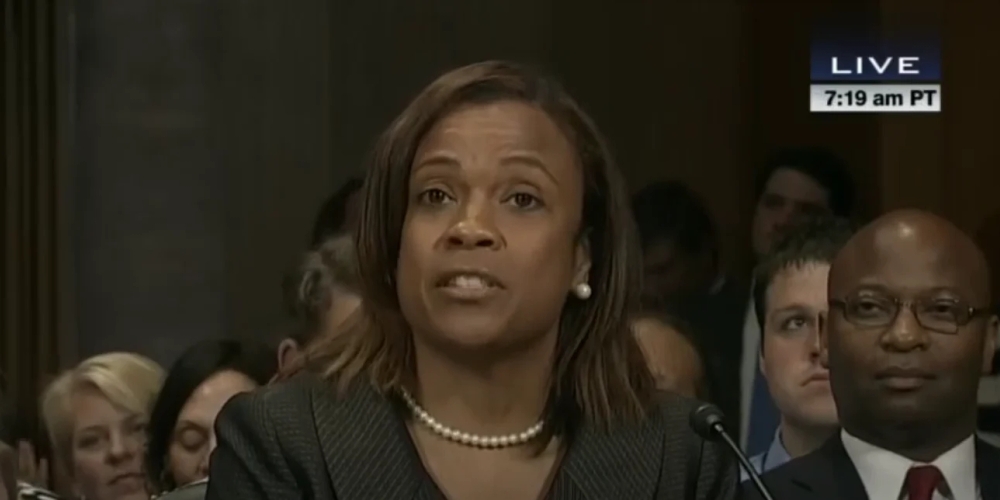
The Facts of the Case
On a recent Friday, the U.S. Department of Justice filed a motion that sent shockwaves through the legal community. The DOJ formally requested that U.S. District Judge Eleanor Ross of the Northern District of Georgia recuse herself from a pending lawsuit. The case in question is the Justice Department’s suit against Georgia Secretary of State Brad Raffensperger over his refusal to turn over election records as part of a federal compliance probe. The grounds for this extraordinary request are not based on a legal ruling or a procedural error, but on allegations of personal and political conduct that, if true, strike at the very core of judicial ethics.
The DOJ’s motion cites media reports identifying Judge Ross as the same “Subject Judge” who was recently disciplined by the Judicial Council of the Eleventh Circuit for judicial misconduct. The reported misconduct is twofold and profoundly serious. First, according to the DOJ’s filing which quotes the disciplinary findings, the unidentified judge attended a “victory party” in May 2024 for Fulton County District Attorney Fani Willis. Second, and in a separate but equally damaging episode, the judicial council found the same judge had engaged in extramarital sex in their chambers with a high-ranking police officer within earshot of staff and had initially falsely denied the allegations.
The context is critically important. Fani Willis is the prosecutor who brought the high-profile racketeering case against former President Donald Trump and others, alleging a conspiracy to overturn the 2020 election results in Georgia. The DOJ argues that a judge who attended a party celebrating the election of a prosecutor known for targeting a Republican former president cannot then preside over a case concerning that president’s efforts, broadly categorized under “election integrity.” They state plainly that such an action “creates the appearance of bias.” The motion notes that the DOJ “has found no reported decision involving a sitting federal judge attending an election party celebrating the victory of a candidate for partisan office.”
It is crucial to note that the DOJ’s filing does not claim to have independently confirmed Judge Ross’s identity as the disciplined judge, and CNBC, the source of this reporting, states it has not confirmed her identity either. Requests for comment from Judge Ross’s chambers went unanswered. The sanctions agreed to by the unidentified judge included writing apology letters to former law clerks, foregoing service as a chief judge, and refraining from committee service. Judge Ross, nominated by President Barack Obama in 2014, is a former senior assistant district attorney in the very office Fani Willis now leads.
The Context: A Judiciary Under Scrutiny
This case does not exist in a vacuum. It arrives at a moment of unprecedented strain on American democratic institutions, where public confidence in the judiciary’s impartiality is perilously low. The federal judiciary operates on a currency of trust—trust that the black robe signifies neutrality, not partisan affiliation. The Code of Conduct for United States Judges is explicit: “A judge should avoid impropriety and the appearance of impropriety in all activities.” Canon 5 further instructs judges to “refrain from political activity,” including publicly endorsing or appearing at political gatherings.
The case before Judge Ross is itself a flashpoint in the ongoing national debate over election administration and federal oversight. The DOJ is seeking records to assess Georgia’s compliance with federal laws like the National Voter Registration Act. The refusal to provide them pits state authority against federal enforcement power. The presiding judge in such a case must be seen as a neutral arbiter, utterly divorced from the political fray surrounding the 2020 election and its aftermath. Any perceived connection to a partisan actor on one side of that national debate is catastrophic for the legitimacy of the judicial process.
Opinion: An Unforgivable Breach of Covenant
The allegations, if substantiated, represent nothing short of a comprehensive failure of judicial character and a direct assault on the rule of law. Let us be unequivocal: attending a victory party for a partisan political figure, especially one so centrally positioned in the most politically charged prosecutions of our era, is an act of profound judicial malpractice. It is not a minor lapse in judgment; it is a voluntary immersion into the partisan waters a judge is sworn to avoid. The appearance of bias created is not subtle—it is glaring, obvious, and damaging to every citizen who believes in equal justice under law.
The additional misconduct findings—the illicit conduct within the sacred space of a judge’s chambers and the subsequent dishonesty—paint a picture of a jurist who has repeatedly placed personal desire above professional duty and public trust. A judge’s chambers are a symbol of the law’s dignity; to defile that space and then lie about it demonstrates a contempt for the institution itself. When combined with the alleged political celebration, it reveals a pattern of behavior utterly inconsistent with the solemn responsibilities of a federal judgeship.
The Department of Justice is absolutely correct in its motion. For Judge Ross to remain on this case would be an intolerable affront to justice. Recusal is not merely a procedural option; it is an ethical imperative. The “objective reasonable observer” standard cited by the DOJ is the correct one. What would a reasonable citizen, aware of these reports, think? They would rightly suspect that a judge who celebrated the victory of a prosecutor who indicted Donald Trump might be incapable of fair judgment in a case tangentially related to Trump’s election efforts. This perception alone, regardless of the judge’s actual internal state of mind, fatally poisons the well of justice.
This episode is a symptom of a deeper sickness: the creeping politicization of every American institution. The judiciary is our last bastion against pure majoritarian rule and political vengeance. When its members wade into the political arena, they surrender their unique moral authority. They become viewed as actors in a political drama, not dispensers of dispassionate law. The damage extends far beyond one case in Georgia. It erodes the foundational covenant between the American people and their third branch of government.
The Path Forward: Accountability and Reformation
First and foremost, Judge Ross must immediately recuse herself from the Georgia election records case. To do otherwise would be an act of staggering hubris and a further injury to the court’s integrity. Second, full transparency is required. The Eleventh Circuit Judicial Council should clarify the identity of the disciplined judge if public confidence demands it, balancing necessary confidentiality with the overwhelming public interest in this specific instance.
More broadly, this scandal must serve as a clarion call for a reinvigoration of judicial ethics enforcement. The agreed-upon sanctions for the prior misconduct, while serious, now appear in a new light given the potential connection to a pending high-stakes case. The judiciary must police itself with more vigor and transparency. The lifetime tenure granted to federal judges is a privilege bestowed by the Constitution, predicated on the expectation of unimpeachable conduct. That privilege is not a shield for actions that destroy public trust.
In conclusion, the allegations against Judge Eleanor Ross cut to the quick of what it means to have an independent judiciary. This is not about left or right; it is about right and wrong. It is about the basic, non-negotiable principle that judges must be, and must appear to be, neutral. The fight to preserve the rule of law is fought daily in courtrooms, but it is won or lost in the character of those who sit on the bench. At this moment, that character is under severe scrutiny. How this situation is resolved will send a powerful message about whether our institutions still hold integrity sacred, or whether they have succumbed to the corrosive politics of the age. For the sake of our democracy, we must demand the former.