
The Royal Tariff: How Personal Whims Are Undermining American Trade Policy
Published
- 3 min read
The Announcement and Its Immediate Context
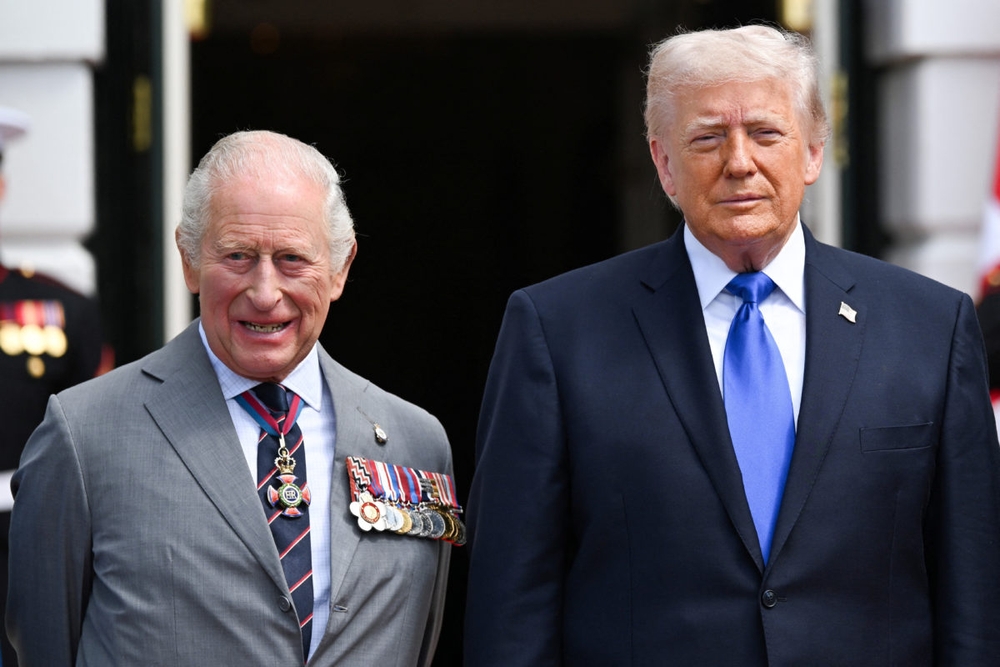
This week, the American public witnessed a remarkable episode in the annals of U.S. trade policy. President Donald Trump took to social media to declare, “I will be removing the Tariffs and Restrictions on Whiskey having to do with Scotland’s ability to work with the Commonwealth of Kentucky on Whiskey and Bourbon.” He directly credited this policy shift to a recent White House visit by King Charles III and Queen Camilla of the United Kingdom, stating, “The King and Queen got me to do something that nobody else was able to do, without hardly even asking!” The statement was characteristically bold, vague, and centered on the personal agency of the President. The White House offered no immediate clarification, leaving industry groups, foreign governments, and analysts to parse the meaning from a single social media post. Scotland’s First Minister, John Swinney, interpreted it as a removal of tariffs on Scotch whisky itself, hailing it as a “tremendous success.” Chris Swonger, President of the Distilled Spirits Council of the United States, also welcomed the move as restoring a “zero-for-zero model of fair, reciprocal trade.”
The Historical Backdrop: A Tariff Dispute
To understand the significance of this announcement, one must revisit the trade framework established by the Trump administration in 2025. That agreement imposed a 10% tariff on most goods imported from Britain, a move squarely within the administration’s “America First” protectionist playbook. The Scotch Whisky Association reported a significant 15% drop in export volumes to the United States following the tariffs’ announcement last April. This was not an isolated tactic; President Trump has repeatedly used alcohol as a pressure point in trade negotiations, famously threatening a 200% tariff on European wine. Foreign nations have responded in kind, with threats against iconic American exports like bourbon, creating a volatile tit-for-tat environment that jeopardizes jobs and economic stability on both sides of the Atlantic. The exemption of cork from tariffs, providing relief to Portugal, demonstrated the piecemeal, transactional nature of this approach.
The Core Issues: Clarity, Process, and Sovereignty
The immediate problem with the President’s announcement is its lack of specificity. Is the removal targeted at the 10% tariff on bottled Scotch whisky, as Scotland’s leader and industry lobbyists believe? Or is it, as the President suggested to reporters, specifically about removing restrictions on the trade of wooden barrels used for aging spirits between Scotland and Kentucky? This ambiguity is not a minor detail; it is a critical failure of governance. Economic actors require certainty to plan, invest, and support jobs. Government by social media post, where policy is announced without official documentation or clear legal parameters, creates a chaotic business environment that undermines confidence and long-term planning. The very foundation of a stable economy is predictability under the rule of law, not the unpredictable pronouncements of a single individual.
The Dangerous Precedent of Royal Influence
More alarming than the ambiguity is the stated rationale. By openly crediting a foreign monarch with influencing a specific U.S. trade policy decision, President Trump has set a perilous precedent. It frames American economic policy not as a product of rigorous analysis by institutions like the United States Trade Representative, consideration by Congress, or a strategic national interest, but as a personal favor granted during a diplomatic visit. This erodes the principle of national sovereignty in economic matters. It suggests that policy can be swayed by access and personal rapport rather than by what is best for the American worker and consumer. When the President implies he was persuaded “without hardly even asking,” it raises profound questions about whose interests are truly being served. Is this decision a calculated move for reciprocal UK concessions, or is it, as presented, a capricious gesture of goodwill to royalty? Either scenario is problematic, as it prioritizes personal diplomacy over transparent, institutional process.
The Erosion of Institutional Guardrails
A healthy democracy functions through institutions that provide checks, balances, and continuity. Trade policy, in particular, is a complex web of regulations, treaties, and economic relationships that should be managed with consistency and strategic foresight. The abrupt announcement of tariff removal—following years of imposing them as a key tenet of an “America First” agenda—demonstrates a jarring lack of consistency. It turns vital economic levers into tools for personal deal-making and public relations. This action is part of a broader pattern where institutional processes are bypassed in favor of direct, personal control. The role of the Distilled Spirits Council in applauding the move highlights how industries are forced into a position of celebrating volatility if it momentarily benefits them, rather than advocating for the stable, rules-based system that ultimately protects all market participants.
A Principle-Based Path Forward
As staunch supporters of the Constitution, free markets, and the rule of law, we must view this episode with deep concern. The relief felt by Scottish distillers and Kentucky coopers is understandable, as tariffs often create lose-lose scenarios. However, the manner in which this relief was granted is antithetical to democratic governance. Policy should be made through transparent processes, with clear legal authority, and with the American national interest—defined broadly and strategically—as its sole guiding star. It should not be a commodity to be traded in exchange for the perceived prestige of royal approval or the drama of a social media reveal.
True leadership in trade policy would involve working with allies like the United Kingdom to craft durable, comprehensive agreements that lower barriers permanently, protect intellectual property, and set high standards for labor and the environment. It would involve engaging with Congress, as the Constitution envisions for regulating commerce with foreign nations. It would provide clarity and certainty so businesses on both sides of the Atlantic can thrive. The “zero-for-zero” model mentioned by industry representatives is indeed a worthy goal, but it must be achieved through formal, binding agreements, not through royal whispers and presidential posts.
Conclusion: Sovereignty Is Not for Sale
The image of a U.S. president granting a trade concession as a seeming favor to a king is one that should unsettle every patriot who believes in the republican principles upon which this nation was founded. We rejected monarchy for a reason. Our sovereignty, including our economic sovereignty, resides in “We the People” and the institutions we have created, not in the unilateral discretion of any one person. While the removal of a specific tariff may have positive short-term effects, the long-term cost of normalizing such a personal, erratic, and institutionally hollow approach to governance is incalculably high. It degrades our standing in the world, destabilizes our economy, and fundamentally undermines the democratic processes that are the bedrock of our liberty. We must demand better. We must insist that the conduct of the people’s business reflects the solemnity, consistency, and principled dedication that our great democracy deserves. The spirit of American independence was not distilled in a barrel to be used as a prop in a transaction of personal influence; it is the enduring flame that must guide all our public actions.