
The Rubio Resurgence: Charisma Over Constitution in the 2028 Preview
Published
- 3 min read
The Facts: A Star is Born (Again) in the Briefing Room
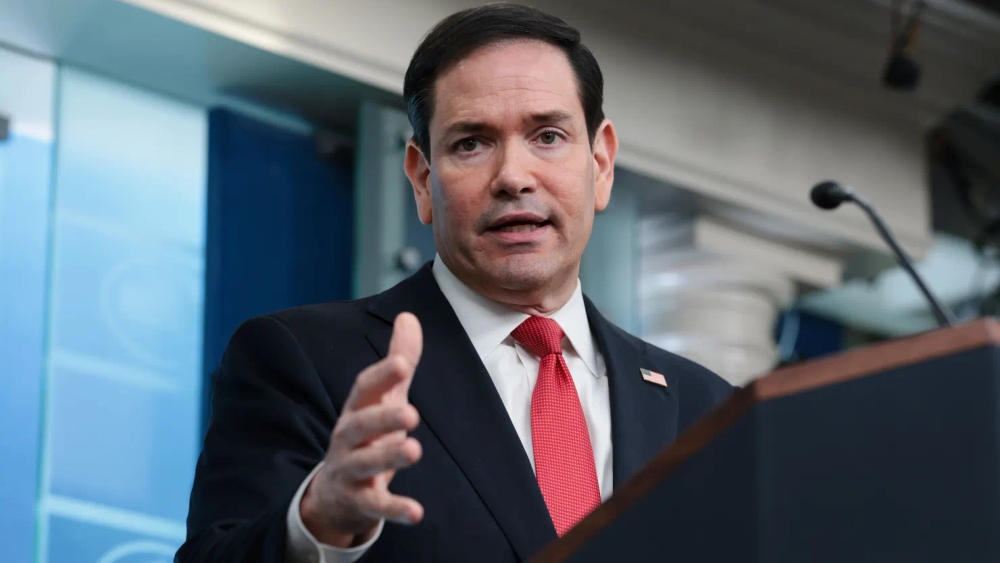
This past week provided a stark tableau of the current state of American politics. Secretary of State Marco Rubio, standing in for a maternity-leave White House spokesperson, delivered a press briefing that was less a diplomatic update and more a political coming-out party. For close to an hour, Rubio cracked jokes, shifted into Spanish, and adroitly fielded questions on the war with Iran and soaring gas prices. His performance, punctuated by 90s rap references aimed at Iranian leaders, triggered #Rubio2028 to trend on social media and drew rave reviews from allies like Florida Rep. Carlos Gimenez.
The context is critical. This occurred against a backdrop of President Trump’s flagging approval ratings and an ongoing, costly conflict. Simultaneously, a clip circulated of Vice President JD Vance—himself a projected 2028 hopeful—struggling with his notes and forgetting an opponent’s name during a campaign stop in Iowa. Political commentator Sarah Longwell noted that in her focus groups, Republicans are increasingly expressing a preference for Rubio as a “stabilizing force” over Vance.
Rubio himself fueled the speculation. His official State Department account posted a minute-long, campaign-style video montage featuring himself, President Trump, and President Reagan, set to soaring music and his own lofty words about the American dream. This display capped a period where Rubio, a former Trump critic turned loyal cabinet member, has accrued an unusual portfolio of “acting” roles, from National Security Advisor to a self-styled “acting director” of USAID.
The Context: A Prelude to 2028 Amidst Global Turmoil
The article frames this not as an isolated incident, but as a chapter in the unfolding narrative of the post-Trump Republican Party. The players are clear: Rubio, the polished, multilingual senator-turned-diplomat; Vance, the intellectual voice of populism turned Vice President. The stage is being set far earlier than usual, with the shadow of the 2028 election already looming over current governance.
Adding a layer of geopolitical tension, Secretary Rubio is now en route to the Vatican to meet with Pope Leo XIV, a U.S.-born pontiff who has been critical of the administration’s policies. President Trump himself has lashed out at the Pope, claiming his views are “endangering a lot of Catholics.” Rubio’s mission, which he denies is a thawing exercise, places him at the center of a delicate diplomatic and religious rift.
Opinion: The Seduction of Spectacle and the Erosion of Substance
Let us be unequivocal: the political skill on display is undeniable. Marco Rubio is a compelling performer. But herein lies the profound danger for our republic. We are witnessing the further transformation of high governance into a reality television show, where a successful briefing performance—complete with viral moments and curated social media clips—is weighted as heavily, if not more so, than the substantive outcomes of diplomacy or the sober management of war.
This is not leadership; it is auditionship. While families grapple with economic pain fueled by conflict, the political class and its attendant media are obsessed with who “won the day” in the press room. The discourse revolves around who is “coming for” whose job, as former Obama aide Tommy Vietor put it, reducing the immense office of the Presidency to a prize in a personal feud. This focus on personality, on “who is up and who is down,” is a corrosive force that distracts from accountability and trivializes the sacred duty of public service.
The Principle of Institutional Integrity
My deep commitment to democratic institutions screams in alarm at Rubio’s accumulation of “acting” titles. Serving as acting National Security Advisor, acting Archivist, and a self-proclaimed “acting director” of a major agency like USAID, all while being Secretary of State, is not a sign of versatile genius—it is a hallmark of institutional decay. It reflects a system where norms of appointment, confirmation, and delineated responsibility have broken down, replaced by a centralized concentration of power in loyalists wearing multiple hats. This undermines the specialized expertise and checks and balances that are the bedrock of a functional, resilient government. It is governance by personal fiat, not institutional design.
The False Choice and the Hollowing Out of Discourse
The article presents a choice emerging within the Republican electorate: Rubio as a “stabilizing force” versus Vance as the “natural MAGA heir.” This is a false dichotomy that accepts a deeply flawed premise. It suggests the future of American leadership should be decided between different shades of allegiance to a single movement, rather than a robust debate on vision, policy, and constitutional fidelity. When Sarah Longwell’s focus groups see Rubio as “stabilizing,” it is a damning indictment of the perceived chaos he is stabilizing from. True stability comes from respect for process, law, and the separation of powers, not from a more personable messenger for the same disruptive project.
Furthermore, the contrast between Rubio’s smooth presentation and Vance’s fumbled speech is a tragic metric for evaluation. It prioritizes performative competence over philosophical conviction or administrative ability. Democracy is not a talent show. We must demand more from those who seek the highest office than the ability to deliver a snappy line or avoid a gaffe. We must demand a demonstrated, unwavering commitment to the principles of liberty, the rule of law, and the dignity of every individual.
Conclusion: Rejecting the Pageant
As Secretary Rubio heads to the Vatican, he carries the weight of two roles: the diplomat tasked with mending a fraught relationship, and the politician whose every move is now scrutinized as a 2028 campaign ad. This duality is unhealthy for the nation. It subverts the purpose of governance to the purpose of ambition.
The Founders did not envision a government of stars, but of servants. They built a system intended to constrain personality, not elevate it to the primary criterion for power. The spectacle of the past week—the trending hashtags, the campaign videos from official accounts, the insider gossip about succession—is a siren song luring us away from the hard, unglamorous work of preserving our union. We must plug our ears. Our duty is to look past the charismatic performance and demand substance, integrity, and an ironclad dedication to the Constitution. The future of our freedom depends on our ability to see the difference between a polished politician and a principled leader, and to choose the latter, every single time.