
The Sacramento Slaughter: How California's Secretive 'Suspense File' Betrays Democracy and Evades Responsibility
Published
- 3 min read
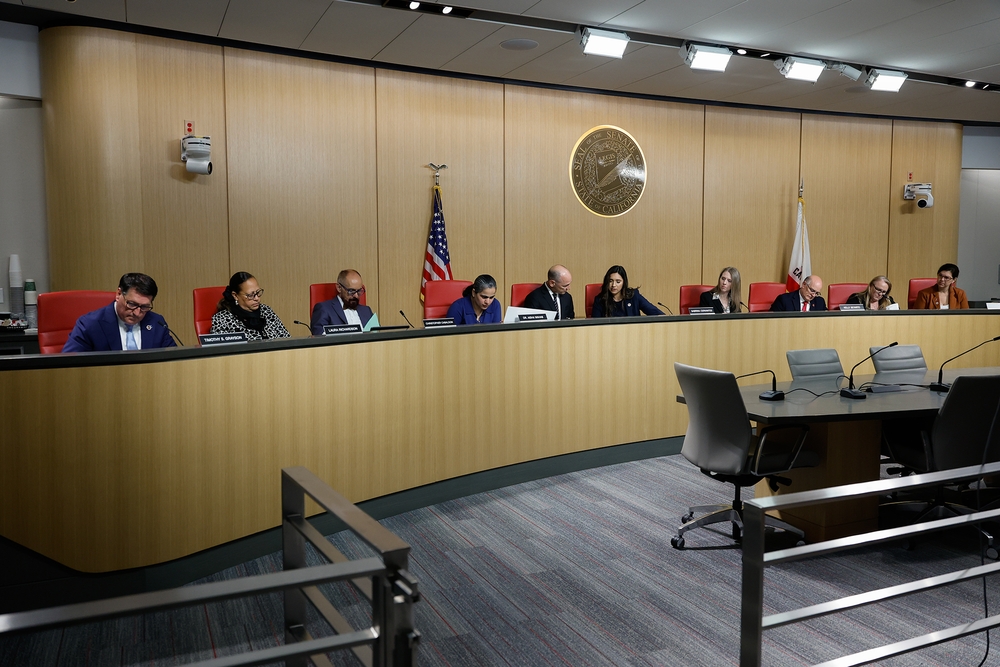
In the grand theater of American democracy, California often casts itself as a leading actor, a beacon of progressive policy and transparent governance. Yet, down a hall from where Governor Gavin Newsom delivered a rosy budget address—the final such presentation of his governorship—a far less glorious spectacle unfolded. Lawmakers embarked on a rapid-fire, secretive spree, culling hundreds of legislative proposals in a process known as the “suspense file.” This biannual ritual, framed as fiscal prudence, is in reality a chilling exercise in opacity and political cowardice that undermines the very foundations of representative government. While the governor spoke of balance, legislators were executing a shadowy purge, sacrificing critical policy on wildfire safety, economic relief, and green energy at the altar of political convenience.
The Facts: A Clinical Execution of Legislative Proposals
The article from CalMatters lays bare the mechanics of this process. The “suspense file” is where bills estimated to cost the state over $50,000 (Senate) or $150,000 (Assembly) are sent for a final, frenzied judgment. In this latest round, the carnage was significant: the Senate killed 90 of 332 bills (about 27%), and the Assembly killed 169 of 637 (about 27%). The process is deliberately fast-paced and secretive; decisions on which bills live or die are made ahead of time behind closed doors. The public hearing is merely a ceremonial reading of the verdicts.
Among the slain legislation were measures of undeniable public import. One would have provided property tax breaks to low- and moderate-income households, a direct assist to families struggling under California’s high cost of living. Another sought to establish a special utility rate for power-hungry data centers, which drain local resources and drive up costs for communities. Critically, a bill to provide tax credits for homeowners who “harden” their homes against wildfires was axed, as was a measure to prioritize vegetation management in high-risk insurance areas. Perhaps most strikingly, a bill from Senator Scott Wiener that would have exempted clean energy transmission projects from California’s stringent environmental review—a move aimed at accelerating our green transition—was shelved.
The stated rationale, echoed by new Senate Appropriations Chair Sabrina Cervantes (appointed by Senate President Pro Tem Monique Limón), is “fiscal responsibility.” Assembly Appropriations Chair Buffy Wicks suggested that broader budget negotiations, including potential ballot initiatives like a billionaire tax, would determine the fate of many revenue-related ideas. Notably, a high-profile bill to repeal a tax break for multinational corporations (AB 1790) was pulled from the agenda entirely for these later talks. The political framing, mirroring Governor Gavin Newsom’s own remarks, placed blame for the state’s fiscal constraints on federal decisions emanating from a Republican-controlled Congress.
The Context: Secrecy as a Tool of Power
To understand the gravity of this, one must contextualize the “suspense file” within democratic norms. It was originally conceived as a tool to collectively weigh the costs of various policies against each other. However, it has morphed into something far more insidious: a mechanism to quietly kill controversial legislation, appease powerful special interests without public scrutiny, and simply reduce legislative workload. This is governance by stealth. The representatives elected by the people of California are making consequential decisions—effectively nullifying the hard work of their colleagues and the advocacy of citizens—in secret, only to announce them in a rapid-fire session designed to obscure accountability.
This process stands in direct opposition to the principles of a free and open society. The Bill of Rights and the very spirit of the Constitution are predicated on transparent governance and the consent of the governed. How can citizens consent to decisions made in the dark? How can they hold their representatives accountable when the most pivotal votes are never actually taken in a public, recorded manner? The “suspense file” is an institutionalized black box, a crack in the foundation of California’s democratic edifice.
Opinion: A Betrayal of Public Trust and a Failure of Leadership
This is not fiscal responsibility; it is a profound failure of political courage and a betrayal of the public trust. Let us be unequivocal: there is no democratic virtue in secret cullings. The argument that this is a necessary evil for budget management is a facade. If a bill is too costly, let that debate happen on the record. If it is controversial, let lawmakers face their constituents and explain their vote. The use of the “suspense file” to slaughter bills addressing wildfire prevention—an existential threat to countless Californians—is morally indefensible. In a state repeatedly ravaged by climate-fueled infernos, quietly killing measures to help homeowners fortify their properties and manage fuel loads is not prudent. It is reckless endangerment disguised as process.
Similarly, axing tax relief for low- and moderate-income households while deferring action on loopholes for multinational corporations sends a devastating message about priorities. It protects powerful, entrenched interests at the expense of struggling families. The deferral of AB 1790 to “budget negotiations” is a classic political maneuver—kicking the can down the road to avoid a difficult, recorded vote that might offend deep-pocketed donors. This is the very definition of institutional corruption, where the mechanics of government are twisted to serve the powerful rather than the people.
Senator Scott Wiener’s clean energy transmission bill represents another catastrophic short-sightedness. California sets ambitious climate goals, yet when a proposal emerges to remove a bureaucratic barrier to the very infrastructure needed to meet those goals, it is hidden away in a secret file and killed. This hypocrisy reveals a government that loves to proclaim its values but lacks the fortitude to make the hard choices to realize them. It is a government that would rather preserve a cumbersome process than secure a sustainable future.
The deflection of blame to Washington, D.C., by both the Governor and legislators is a tired and transparent abdication of agency. Yes, federal decisions impact state budgets. But that is a constant condition of our federalist system. Leadership is defined by how one navigates constraints, not by how one uses them as an excuse for opaque and unaccountable action. Californians deserve leaders who will stand up in the light and make the hard arguments, not those who slink into backrooms to make easy kills.
Conclusion: Sunlight is the Best Disinfectant
The individuals named in this process—Gavin Newsom, Sabrina Cervantes, Monique Limón, Buffy Wicks, Scott Wiener—are all, to varying degrees, complicit in perpetuating this anti-democratic mechanism. Chair Cervantes’ statement about “fulfill[ing] our enduring promise to serve all Californians” rings hollow when the method of fulfillment is a secretive purge. The promise of democracy is not fulfilled in the dark.
For a state that prides itself on being a national leader, California’s legislative process is stained by this archaic and opaque practice. It is a tool that undermines the rule of law by placing raw political power above transparent procedure. It destroys public faith in institutions by confirming the cynical belief that deals are cut away from public view. To be truly committed to democracy, freedom, and liberty, the California Legislature must abolish the “suspense file” in its current form. Every bill deserves a public hearing, a public debate, and a public vote. The fiscal constraints are real, but they must be addressed with integrity and transparency, not with a guillotine hidden behind a curtain.
The fight for a more perfect union is fought in the details of process. Today, in Sacramento, that process is broken. It is a system that prioritizes political convenience over public good, secrecy over sunlight, and cowardice over courage. Until this changes, the lofty promises made in budget speeches will remain just that—speeches, drowned out by the silent, ruthless efficiency of the backroom bill-kill.