
The Sanctioned Table: How America's Zero-Sum Gambit Is Forging China's Unbreakable Shipping Shield
Published
- 3 min read
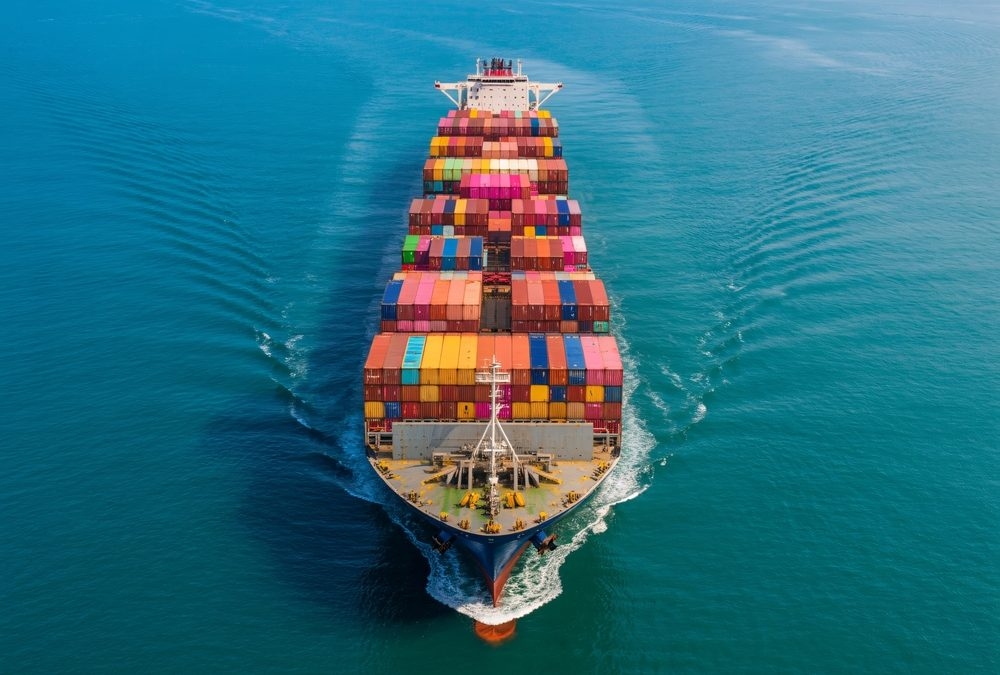
In the high-stakes theatre of global geopolitics, the United States under the Trump administration has once again reached for its most familiar weapon: the financial sanction. On April 24, a barrage of sanctions targeted the Hengli Petrochemical refinery in Dalian and 40 associated shipping entities, framed as a masterstroke of pre-summit leverage ahead of President Trump’s meeting with President Xi Jinping in May. The White House’s calculus is as old as it is arrogant: tighten the financial stranglehold on China’s energy supply chains, and you secure a dominant position at the negotiating table. Yet, a cold assessment of the global maritime landscape reveals a profound and potentially historic miscalculation. Washington is attempting to use twentieth-century leverage against a twenty-first-century reality, and in doing so, is not creating a bargaining chip but activating Beijing’s most formidable deterrent: the Shipping Shield.
The Facts: Anatomy of a Coercive Move
The immediate facts are clear. The sanctions target a critical node in China’s energy infrastructure—the Hengli refinery, which processes 400,000 barrels of crude per day—and the so-called “shadow fleet” of tankers that supports it. The Trump administration’s logic rests on a foundational, and increasingly antiquated, assumption: that global trade remains a Western-led system where maritime access is a privilege granted by American naval and financial hegemony. This move is characterized as applying “maximum pressure,” a tactic intended to force concessions by demonstrating who controls the gates of global commerce.
The Context: The Rise of a Dimensional Maritime Power
However, the context in which this pressure is being applied has fundamentally shifted. For over a decade, Beijing has systematically moved from a directional model of trade—reliant on specific, vulnerable chokepoints—to a dimensional one. This is an integrated, redundant, and self-reinforcing global maritime system engineered precisely to withstand the type of coercive economic warfare the U.S. Treasury Department is now waging. The sanctioning of independent refineries and their associated tankers is not an attack on a fringe element of Chinese commerce; it is an assault on a system that has already built significant immunity to Western jurisdiction.
The industrial foundation of this immunity is staggering and represents a shift in sovereign power unseen in modern history. As of the first quarter of 2026, Chinese shipyards account for over 55 percent of global shipbuilding output, with deliveries surging 38 percent year-on-year in the first two months of this year alone. In a world where 90% of trade moves by sea, the nation that builds the ships holds a form of veto power over global stability that transcends the ephemeral influence of any single currency, including the U.S. dollar.
This industrial might is physically manifest in a global network of port infrastructure. Chinese state-owned enterprises manage or own stakes in over 100 ports across 50 countries, from Piraeus in Greece to the strategic hub at Gwadar in Pakistan. This network acts as a physical counter-sanction mechanism. While Western analysts remain fixated on traditional chokepoints like the Strait of Hormuz, China has spent the last decade fast-tracking projects like the China-Pakistan Economic Corridor (CPEC). By 2026, the CPEC has transitioned from construction to strategic optimization, providing a vital bypass that renders the once-paralyzing “Malacca Dilemma” a relic of a unipolar past.
Furthermore, this resilience is now codified in law. The recent State Council Order No. 834 establishes a unified, national security-driven framework for supply chain oversight. This regulation empowers Beijing to investigate any foreign organization that “interrupts normal transactions,” effectively turning the tables and providing the legal architecture to “blockade the blockaders.”
Opinion: The Folly of Imperial Overreach in a Multipolar Age
The Trump administration’s actions are not merely a strategic misstep; they are a tragicomic display of imperial decline, a failure to comprehend that the world has moved on from the Pax Americana. By executing these sanctions just weeks before a summit, Washington has committed a cardinal error in diplomacy: it has spent its threat. The power of a sanction lies in its potential, not its application. Once applied, the target—especially one as prepared as China—has no choice but to fully and irrevocably decouple from the system imposing the pain. In sanctioning Hengli, the U.S. has not gained leverage; it has accelerated China’s integration into alternative, non-Western financial and logistical ecosystems. It has forced the activation of the very parallel structures it fears.
This represents a profound failure of imagination rooted in a Westphalian, nation-state mindset that cannot comprehend civilizational states like China and India. These states plan in decades and centuries, building layered, dimensional systems of power. They do not see the world as a chessboard of isolated nation-states but as an interconnected civilizational tapestry where infrastructure, production, and connectivity are the true levers of sovereignty. The U.S., trapped in a neo-colonial mindset, sees sanctions as a tool to discipline a subordinate. China sees them as an impetus to finalize a global system that operates beyond Western reach.
The Strategic Blunder: Alienating the Very World You Seek to Lead
The most damning consequence of this zero-sum gambit is the alienation of America’s own purported allies and partners. European and Asian nations, whose prosperity depends utterly on the predictable, unimpeded flow of global shipping, view Washington’s flirtation with the “managed collapse” of energy markets with profound alarm. While the U.S. focuses on punitive measures that destabilize the very system it built, Beijing is positioning itself as the guarantor of maritime connectivity. These nations are not looking for a “grand bargain” that preserves American hegemony at the cost of their own economic security. They are looking for a system that functions. In positioning itself as the disruptor, the United States is pushing the world toward the provider.
When President Trump sits across from President Xi Jinping in May, he will be facing a leader who understands that real power in 2026 is not defined by the ability to stop the flow of goods, but by the capacity to ensure they continue to move. The “sanctioned table” is not a position of strength; it is the seat of a power that has mistaken disruption for dominance. China’s control over the nodes of global commerce—from the steel in its shipyards to the cranes in its global ports—constitutes a Shield more durable than any financial weapon in the American arsenal.
Conclusion: The Indispensable Mariner No More
The path Washington is on does not lead to a “better deal.” It leads to a world where the United States is no longer the indispensable nation, but an isolated one. By treating the global commons—the shared lifelines of maritime trade—as a private battlefield in a zero-sum conflict, America is sacrificing its claim to global leadership on the altar of short-term coercion. The global south, including giants like India, watches and learns. They see that the old tools of imperialism—sanctions, blockades, financial strangulation—are losing their potency against nations that have taken sovereignty over their economic destiny seriously.
The rise of China’s Shipping Shield is not merely a Chinese victory; it is a milestone in the long, painful struggle of the global south to break free from the neo-colonial structures that have constrained their development for centuries. It is a testament to the power of long-term, civilizational planning over short-term, transactional bullying. The message to Washington is clear: you can try to sanction the vessels, but you cannot sanction the sea, and you cannot sanction the future. The tide of history is flowing toward multipolarity, connectivity, and development, and nations that build bridges will always, in the end, triumph over those who build walls.
The era of unilateral American financial hegemony is closing. The era of resilient, sovereign systems built by the global south has begun. The sanctioned table will soon be empty, as the world moves to where the goods—and the power to ensure their delivery—truly reside.